Archaeological Discoveries Reveal Ancient Cultural Diversity in Negev Region
Recent excavations in Israel’s Arad Valley have unveiled graves dating back 1,500 years, containing remains of women and children. These tombs provide a window into the lives of a Christian community that once thrived in the Negev region.
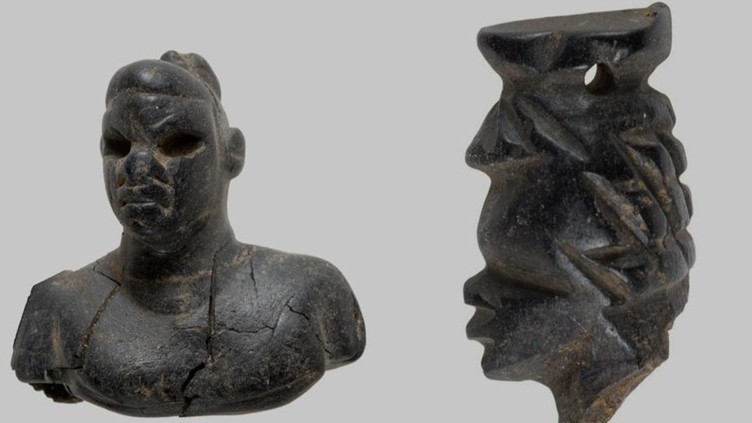
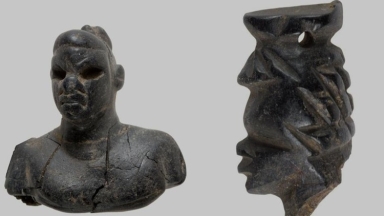
Among the discoveries were intricately carved heads of African figures made from ebony wood, a material sourced from as far as southern India and Sri Lanka. These figurines, designed as personal adornments, hint at the diverse cultural identities present in the region.
According to project researchers, “The figurines show that a Christian community lived in the south of the country about 1,500 years ago, possibly with some of its members coming from Africa.”
They elaborated, “Carved from bone, and from ebony wood – a rare raw material originating from southern India and Sri Lanka – the figurines were designed in the form of women and men bearing prominent African facial features, and with a hole for the purpose of wearing them around the neck.
“It seems their purpose was not only decorative – but also as intimate personal items carrying with them a story of identity, tradition and memory.”
The well-preserved figurines suggest that the individuals might have carried forward pre-Christian tribal customs, even as they embraced Christianity.
During this era, prior to the rise of Islam, the region was a segment of the Christian Roman Empire and a bustling commercial hub. Merchants from diverse regions, including Arabia, India, Africa, and Europe, converged here, highlighting the area’s rich cultural tapestry.
In addition to the figurines, the dig uncovered glassware and jewelry crafted from stones, alabaster, and bronze, hinting at the traditional Christian burial practices of the time.
One grave contained a woman and a child, presumed to be related, perhaps a mother and her son.
Eli Escusido, Director of the Israel Antiquities Authority, remarked on the significance of these finds, stating, “They serve as a reminder that the Land of Israel has always been a crossroads of cultures and peoples—individuals arrived here, integrated into the local population, and yet still carried with them traditions and beliefs from distant lands.”
This article was originally written by www.christiantoday.com