The Debate Over Student Expression: Supreme Court Declines to Hear Gender Shirt Case
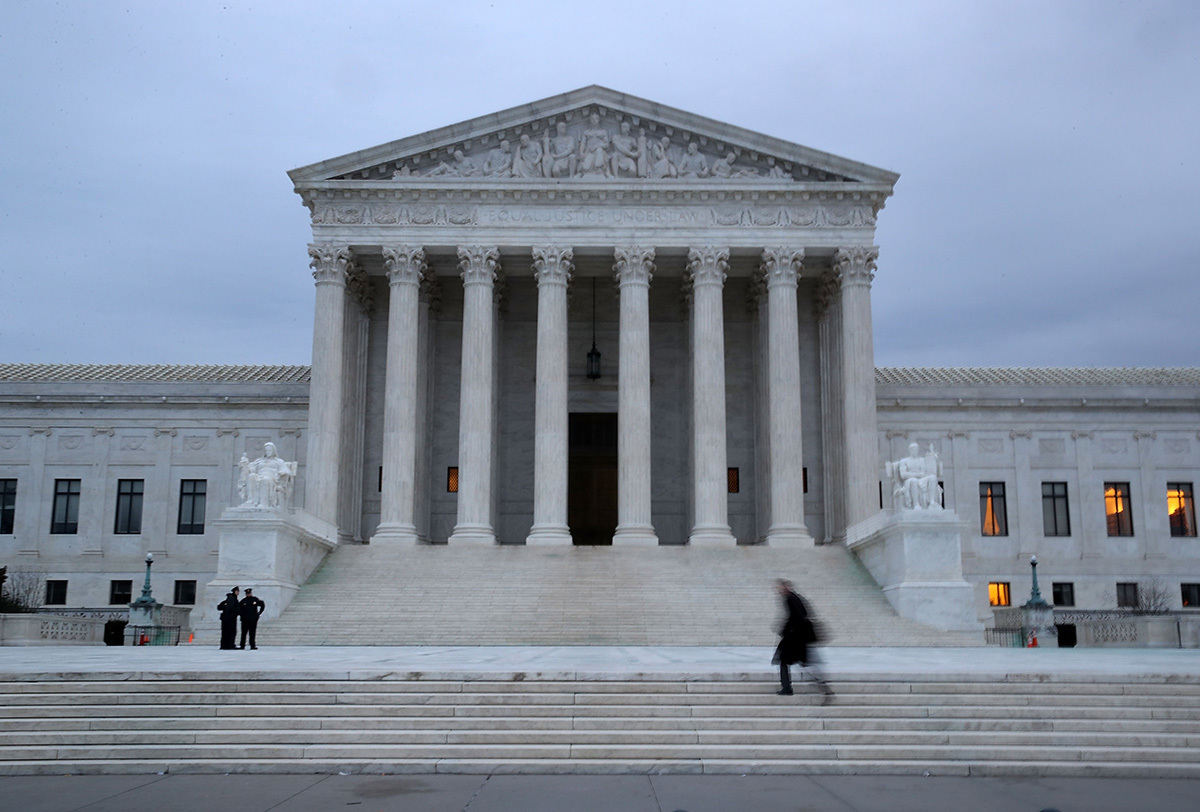
The U.S. Supreme Court recently refused to hear a contentious case involving a Massachusetts student disciplined for wearing a shirt reading, “There are only 2 genders.” This decision leaves in place a ruling from the 1st U.S. Circuit Court of Appeals, which sided against the student and his parents.
The high court’s refusal to grant the petition for a writ of certiorari in L.M. v. Town of Middleborough was listed in the orders list released Tuesday morning.
Justice Samuel Alito, joined by Justice Clarence Thomas, expressed dissent over the denial. Alito emphasized the significance of the case, questioning whether public schools can suppress student speech due to disagreement with the viewpoint or concerns over school atmosphere disruptions. “So long as the First Circuit’s opinion is on the books, thousands of students will attend school without the full panoply of First Amendment rights. That alone is worth this Court’s attention,” Alito wrote.
The situation began in March 2023 when Liam Morrison, a student at John T. Nichols Middle School, was asked to remove his shirt that stated, “There are only two genders.” School officials deemed the message a violation of the dress code, which prohibits clothing with hateful messages. Morrison later modified the shirt by taping over the words “only two” and writing “censored” on the tape, yet the school again required him to change.
In an interview following the incident, Morrison shared that many classmates supported him and encouraged others to express their beliefs. “Always fight for what you believe in. and well, never let anyone stop you from believing,” he stated.
Morrison’s parents filed a lawsuit on his behalf, alleging a violation of his First Amendment rights. However, the 1st Circuit Court upheld a lower court decision against Morrison. Circuit Chief Judge David Barron, who penned the panel opinion, noted that schools might prohibit passive student messages that do not target specific individuals. While the public may face demeaning messages in various contexts, Barron argued that public schools should not be similarly unregulated.
Barron also remarked that Morrison acknowledged during oral arguments that schools could bar silent, passive expressions that demean individuals who identify as transgender, without targeting specific people.
This article was originally written by www.christianpost.com