U.S. Strikes on Iranian Nuclear Sites Stir Global Reactions and Warnings of Escalation
In a dramatic escalation of tensions, the United States has launched coordinated military strikes on Iran’s nuclear facilities, igniting varied reactions from political figures and international entities. The strikes have raised the specter of a broader regional conflict, drawing both praise and condemnation from U.S. lawmakers and global leaders.

The military action targeted Iran’s Fordo, Natanz, and Isfahan nuclear sites, utilizing advanced bunker-buster bombs and Tomahawk missiles. The Pentagon reported that B-2 stealth bombers and U.S. submarines were involved in the operation, as confirmed by The Associated Press.
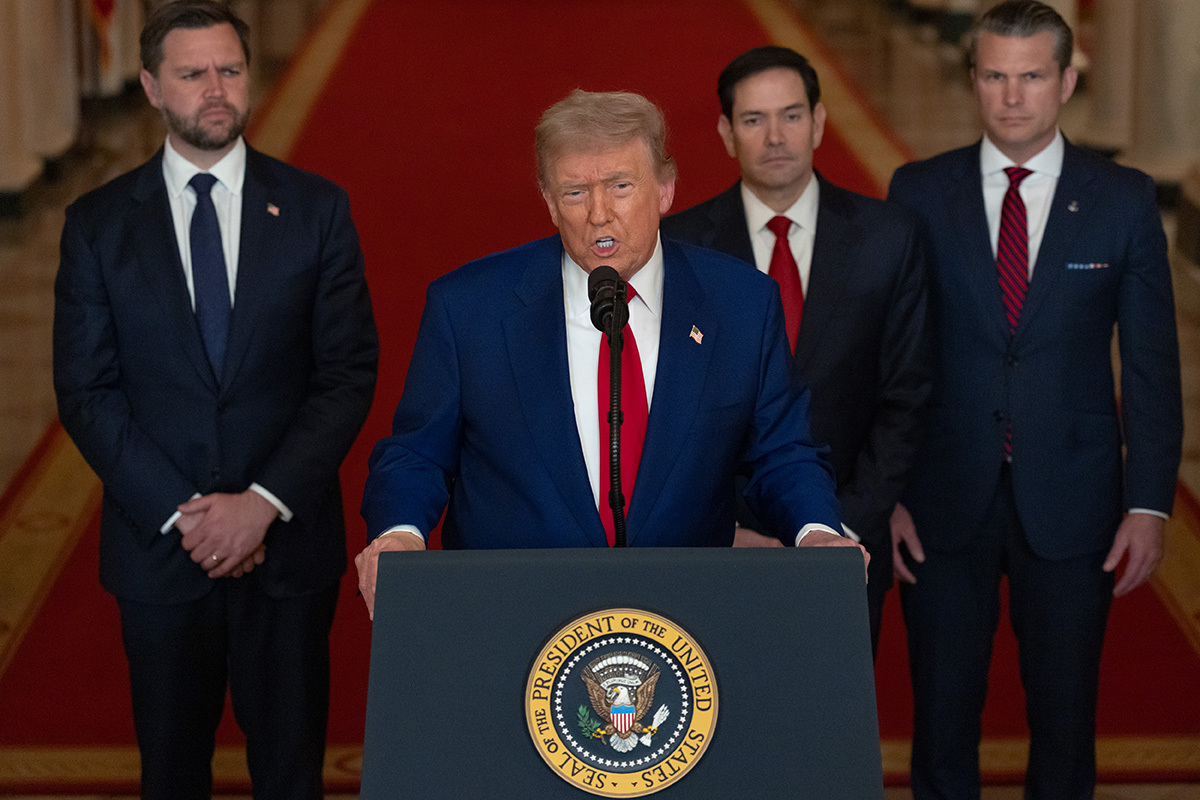
President Trump announced that the strikes “completely and fully obliterated” Iran’s key nuclear facilities and warned Iran of potential consequences, stating, “there will either be peace or there will be tragedy for Iran.”
Political responses were swift and varied. Republican leaders like Sen. Lindsey Graham and Sen. John Cornyn applauded Trump’s decision as “courageous and correct.” Sen. Katie Britt termed the action “strong and surgical,” while Senate Majority Leader John Thune emphasized the importance of preventing Iran from acquiring nuclear weapons.
Support also came from unexpected quarters, such as Sen. John Fetterman, a Democrat, who cited Iran as a leading sponsor of terrorism and supported the strikes. However, dissenting voices included Rep. Thomas Massie, who questioned the constitutionality of the action, and Rep. Jim Himes, who expressed concern over the lack of prior congressional consultation.
The international reaction included a statement from the U.N. nuclear watchdog, the International Atomic Energy Agency, which noted no immediate radioactive contamination. Meanwhile, Iran’s Foreign Ministry condemned the attack, calling it a “dangerous war” and asserting its right to defend itself.
In the aftermath, Iran’s Revolutionary Guard retaliated by firing missiles at Israel, causing damage and injuries. Israel responded by targeting Iranian military sites and closing its airspace to commercial flights.
The strikes followed a period of Israeli airstrikes that had weakened Iranian defenses, providing a strategic opportunity for the U.S. intervention. The Trump administration’s prior attempts at diplomacy with Tehran had not succeeded in halting Iran’s nuclear program.
International diplomatic efforts are being urged by U.N. Secretary-General Antonio Guterres, who called for restraint and dialogue to avoid further escalation.
As the situation unfolds, regional stability hangs in the balance, with various parties calling for either resistance or negotiation.
This article was originally written by www.christianpost.com