Americans Divided on Role of Religion in Education, Survey Finds
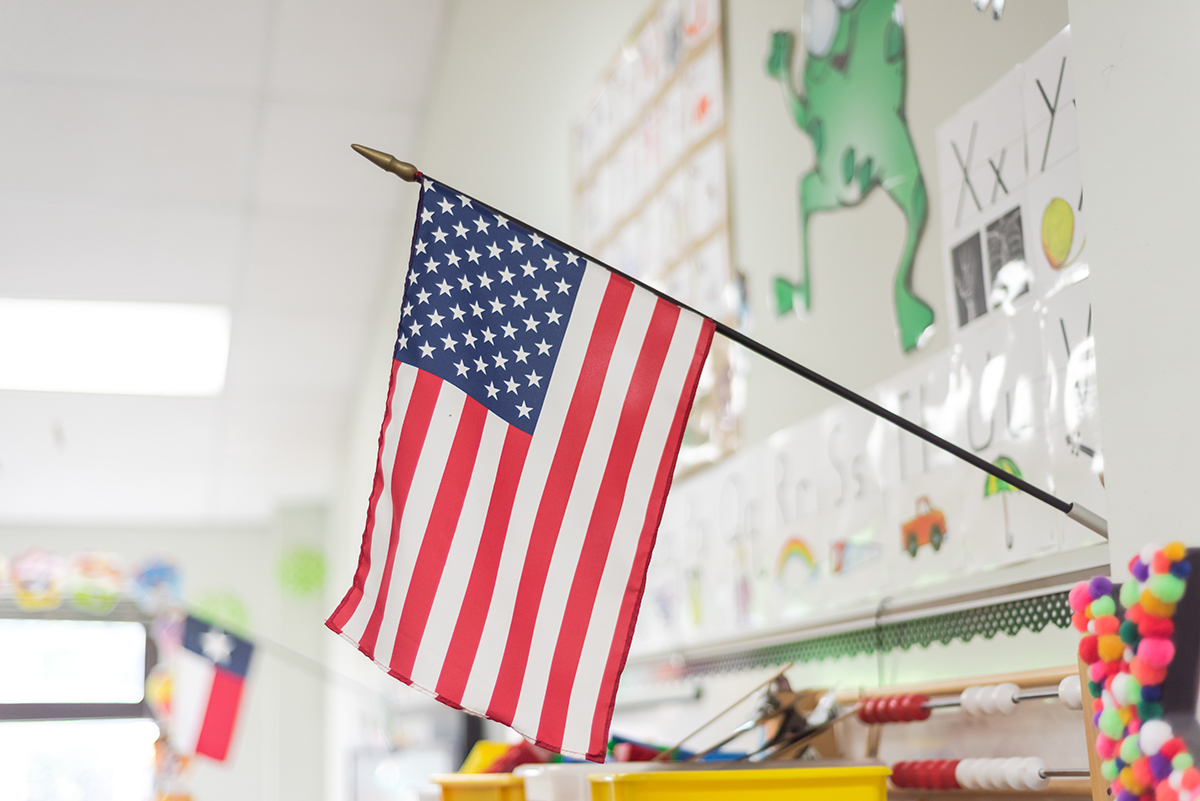
While Americans largely value freedoms such as speech and religion, opinions diverge on the integration of religious elements in public education. A recent survey reveals a nuanced landscape of beliefs about the presence of religion in schools.

The Associated Press, alongside the National Opinion Research Center at the University of Chicago, conducted a poll from June 5-9, querying 1,158 American adults on their attitudes towards religion’s place in education.
An overwhelming majority affirmed the importance of freedom of speech (85%), freedom of religion (81%), and freedom of the press (77%). However, only 64% saw the separation of church and state as equally critical.
Support for having religious chaplains in public schools was expressed by 58% of respondents. White Evangelical Christians showed the highest support at 82%, followed by non-white Protestants (76%), Catholics (61%), and white Mainline Protestants (56%). Conversely, a majority of those without religious affiliation (59%) opposed chaplains in schools.
Teacher-led prayer in classrooms is not favored by most Americans, with 55% opposing this practice. However, majorities within groups such as white Evangelical Christians (72%) and non-white Protestants (63%) support it, whereas white Mainline Protestants (56%) and the religiously unaffiliated (84%) largely disapprove.
A supermajority (60%) opposed a mandatory period for private prayer or religious reading during the school day. While support exists among white Evangelical Christians (64%) and non-white Protestants (57%), it is countered by opposition from Catholics (54%), white Mainline Protestants (72%), and the religiously unaffiliated (76%).
Taxpayer-funded vouchers for private or religious school tuition received mixed reactions, with 38% of Americans disapproving. Non-white Protestants (48%), white Evangelical Christians (45%), and Catholics (41%) generally support vouchers, while white Mainline Protestants (43%) and the religiously unaffiliated (52%) are opposed.
Opinions on religious exemptions to vaccine requirements in public schools show that 45% of Americans oppose them. White Evangelical Christians are an exception, with more supporting (39%) than opposing such exemptions, unlike other groups where opposition is more common.
Regarding religious schools becoming charter schools, 43% of respondents opposed the idea. A plurality of white Evangelical Christians (41%) backed it, while non-white Protestants and Mainline Protestants were more neutral or opposed. Catholics showed a division, with 35% neutral and 35% opposed, whereas a majority (61%) of the religiously unaffiliated opposed it.
On the topic of transparency, 51% of Americans believe schools should provide parents with lists of available books. This view is popular among white Evangelical Christians (69%), non-white Protestants (56%), Catholics (55%), and white Mainline Protestants (53%), while 41% of the religiously unaffiliated were neutral.
When considering religious influence on school curriculum, 38% of Americans feel religion has too little influence, especially among white Evangelical Christians (65%) and Catholics (54%). In contrast, 41% of white Mainline Protestants think the influence is adequate, while 49% of the religiously unaffiliated argue it is excessive.
Questions about religion’s influence on political figures show that 41% of Americans, including 45% of non-white Protestants and 59% of the religiously unaffiliated, believe it has too much sway over President Donald Trump. Conversely, 57% of white Mainline Protestants and 48% of white Evangelical Christians feel the influence is appropriate.
Regarding the U.S. Supreme Court, 37% of Americans perceive religion’s influence as excessive, aligning with the views of 52% of the religiously unaffiliated and 42% of non-white Protestants. Meanwhile, 50% of white Mainline Protestants and 40% of Catholics see it as balanced, while 45% of white Evangelical Christians believe there is too little religious influence on the Court.
This article was originally written by www.christianpost.com