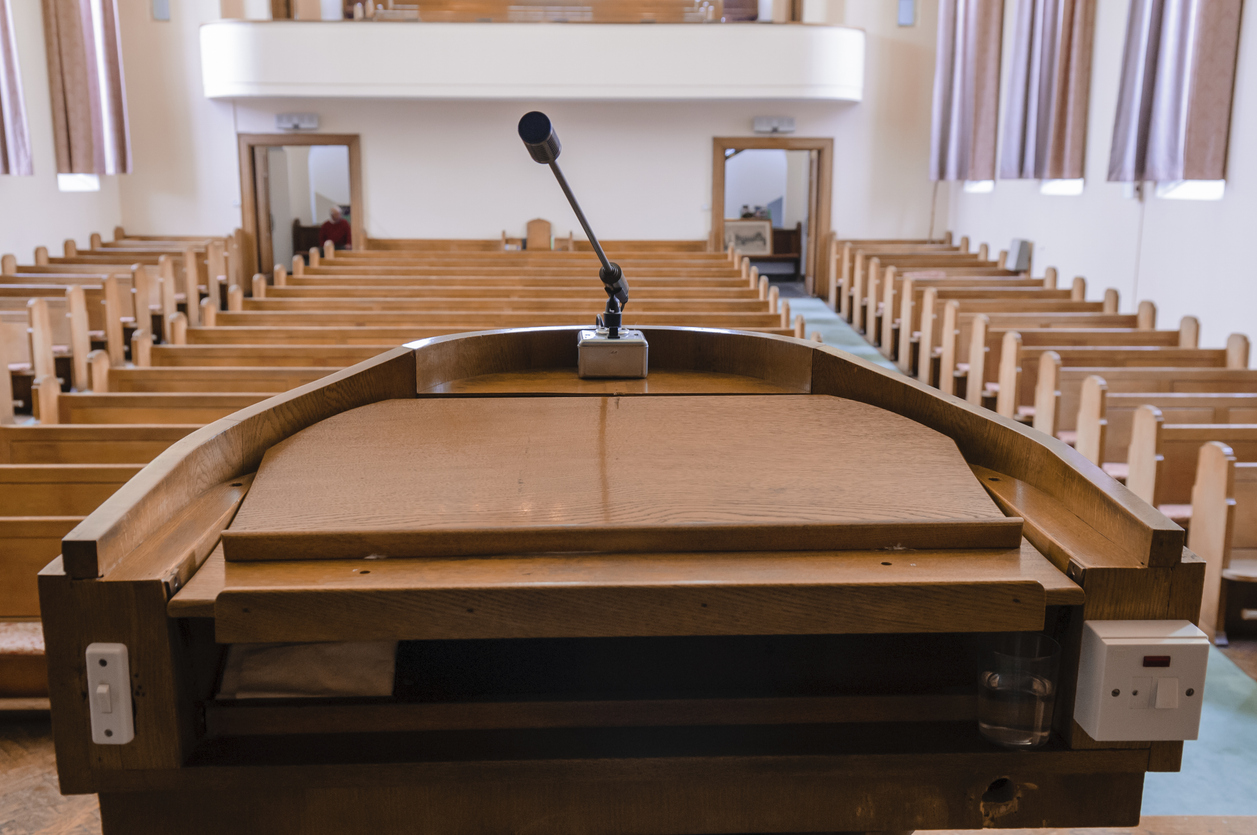
The Internal Revenue Service (IRS) has made a significant decision that could reshape the landscape for religious entities and their involvement in politics. On Monday, the agency announced that pastors and religious leaders can now endorse political candidates to their congregations without risking their tax-exempt status, a move that challenges the long-standing Johnson Amendment.
The Johnson Amendment, enacted in 1954, has historically threatened religious institutions with the loss of their 501(c)(3) status if they engage in political endorsements or activities. Supporters of the amendment argue it is essential for maintaining a separation between church and state, while critics see it as a restriction on free speech for religious leaders.
A recent joint motion submitted to the U.S. District Court Eastern District of Texas Tyler Division by the National Religious Broadcasters, Intercessors for America, and two Texas churches, along with IRS Commissioner Billy Long, seeks to exempt houses of worship from this legislation. The plaintiffs claim that the Johnson Amendment infringes on their First Amendment rights and other legal protections.
According to the motion, communications from religious institutions that relate to electoral politics, viewed through the lens of faith during religious services, do not equate to political campaign participation or interference. The proposed judgment aligns with how the IRS has historically interpreted the law, indicating that it generally does not enforce the Johnson Amendment against houses of worship for speech related to electoral politics within worship services.
If the court approves this proposal, it would fulfill a promise made by former President Donald Trump to his Evangelical supporters to repeal the Johnson Amendment. During his 2016 campaign, Trump voiced his intention to protect free speech for religious entities, a goal he pursued by directing the IRS to ease enforcement of the amendment.
Kelly Shackelford of First Liberty, a conservative legal organization, welcomed the proposed settlement, stating, “First Amendment rights don’t end when a pastor, church member or even a political candidate steps on the platform of a church.” Doug Pagitt, a Minnesota pastor, also praised the decision, suggesting it creates a more balanced environment for political discourse from the pulpit.
However, not all reactions were positive. Diane Yentel of the National Council of Nonprofits expressed concern that the action could undermine the nonpartisan nature of charitable organizations and potentially alter campaign finance laws to favor certain political operatives.
In the past, the IRS has faced calls to investigate churches accused of violating the Johnson Amendment, such as a Florida church that prayed for a school board candidate during a service and a California church whose pastor endorsed a political candidate. Progressive secular groups have often pushed for these investigations, emphasizing the importance of maintaining the amendment’s restrictions.
The debate continues as both progressive and conservative religious leaders navigate the implications of this new IRS stance on political endorsements from the pulpit.
This article was originally written by www.christiantoday.com