Violence at Syrian Church Sparks Concerns for Christian Safety
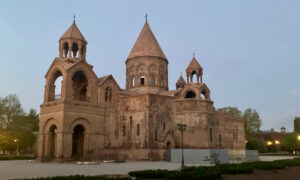
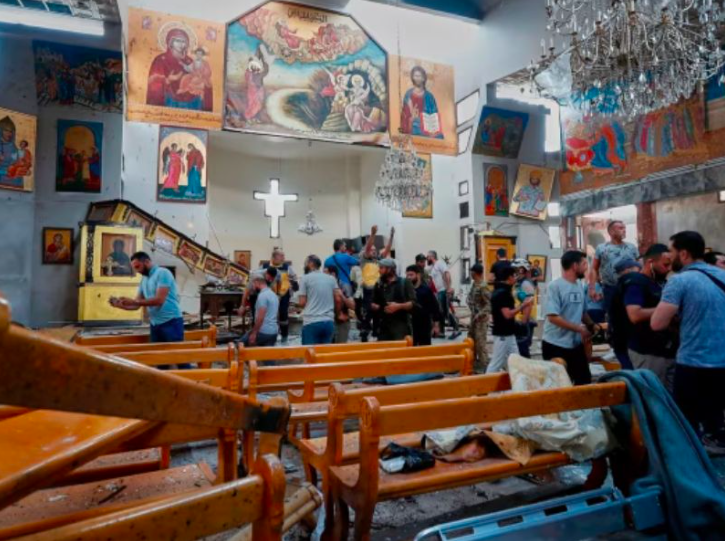
(Photo: International Christian Concern)
In a tragic event last month, the Mar Elias Greek Orthodox Church in Damascus became the target of a deadly attack, leaving over two dozen individuals dead. This incident has drawn attention to the precarious situation of Christians in Syria, where Islamist authorities under President Ahmad al‑Sharaa are said to be fostering an environment conducive to radicalism.
The June 22 bombing highlighted the persistent threat from radical jihadi factions intent on expelling Christians, as noted by Jeff King, head of the U.S.-based International Christian Concern. This attack marks the deadliest assault on Syria’s Christian community since the 1860 Damascus Massacre.
Jeff King criticized President al-Sharaa’s administration for its failure to safeguard Christians, accusing the regime, which rose to power following the ousting of Bashar al-Assad in December by Hayat Tahrir al-Sham and associated militias, of offering mere “hollow condolences” without effective action against extremist factions.
“This so-called administration, led by Hayat Tahrir al-Sham’s rebranded jihadists with roots in al-Qaeda and [Islamic State], offers hollow condolences while failing to curb extremist militias and rogue cells targeting minorities,” King said in a statement.
The attack transpired during a Sunday service when an armed assailant entered the church, opening fire before detonating an explosive vest. The Syrian government has attributed the bombing to the Islamic State, with the militant faction Saraya Ansar al-Sunnah, having claimed responsibility.
President al-Sharaa condemned the bombing, labeling it a crime against all Syrians. Meanwhile, the U.S. government has recently lifted financial sanctions on Syria and removed the terrorism label from HTS, previously known as Jabhat al-Nusra.
Critics, including Brian Orme of Global Christian Relief, have voiced their disapproval, pointing to the administration’s ineffectiveness in ensuring Christian safety. Orme remarked on the government’s assurances of religious freedom as feeling increasingly empty.
After the fall of Assad’s regime, HTS and its allies met with Christian leaders, pledging to uphold religious liberty. However, skepticism remains, given HTS’s history of violence against Christians.
In the wake of the attack, calls for international action and pressure on Syria’s transitional government are growing. Richard Ghazal of In Defense of Christians highlighted the dwindling Christian population, urging the U.S. to ensure security measures and constitutional safeguards for minorities in Syria.
“With every suicide bombing, every desecrated church, every community exodus, Syria edges closer to losing a two-millennia-old spiritual and cultural pillar,” Ghazal wrote in an op-ed for The Hill.
During the funeral of the victims, Greek Orthodox Patriarch of Antioch John (X) Yazigi demanded concrete action from President al-Sharaa, criticizing the government for its failure to prevent the attack. Yazigi’s comments underscore the urgent need for robust measures to protect Syria’s Christian heritage.
This article was originally written by www.christiantoday.com