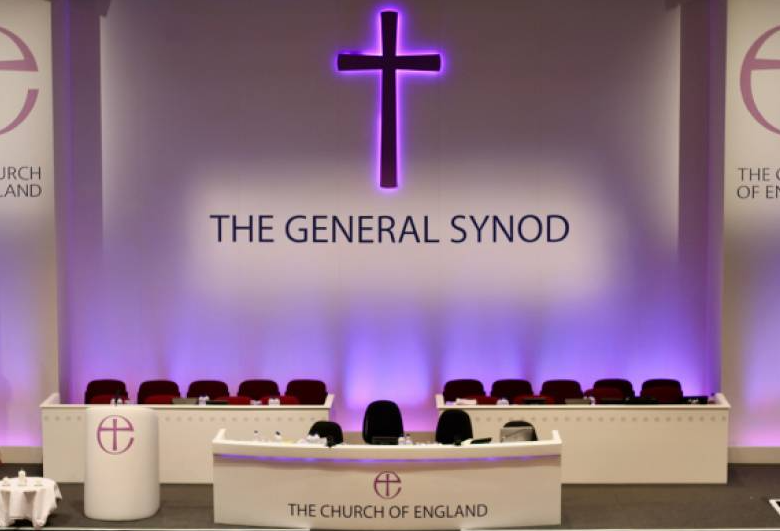
While tennis enthusiasts had their eyes on the intense men’s doubles match at Wimbledon, a significant discussion was taking place at the General Synod of the Church of England. The topic at hand was a new Measure aimed at standardizing the ministry of Church of England’s Chaplains to the Armed Forces.
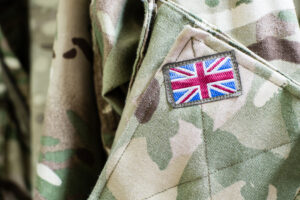
Archdeacon of Oxford, the Ven John Chaffey, who previously served as Chaplain-in-Chief of the Royal Air Force Chaplains Branch, described the initiative as both a minor adjustment in ecclesiastical law and a crucial enhancement to support chaplains’ work with His Majesty’s forces.
Currently, chaplains are expected to be licensed by the bishop of each diocese they serve, a requirement that Rev James Menzies finds challenging. He explained, “As a Reservist Chaplain, my area of ministry extends across many different counties ranging from Shropshire in the north, Gloucestershire down to the south and Wiltshire, Dorset, Devon and so on,” which spans at least ten dioceses.
The proposed solution is for chaplains to receive licensing from the Archbishop of Canterbury, allowing them to serve across the Church of England and during international deployments.
Ven Luke Miller, whose son serves in the Western Approaches, expressed his support for the proposal, noting the importance of seamless ministry: “When on duty, they need to be able to go safely and immediately where their ministry takes them. They need proper checks and accreditation, but they don’t need unnecessary bureaucracy.”
Rev Martin Davy, a fire service chaplain, echoed this sentiment, highlighting the unique nature of chaplaincy: “Our chaplains go where people go. They preach, they pray, they pastor in barracks and on bases and in conflict zones and on ships.”
In contrast to the competitive spirit at Wimbledon, the Synod’s motion faced no opposition. A variety of speakers, including current and former Armed Forces members and their families, emphasized the indispensable role of chaplains and local churches.
Michaela Suckling, a lay member of Synod, shared her personal experience with her father’s service in the Falkland Islands, expressing relief that chaplains were available to provide spiritual support. She urged Synod to remember the emotional needs of military families, asking, “What can you offer frightened children trying so hard to be good and not to upset Mum while dealing with their own emotions?”
She also highlighted the importance of church readiness to handle sensitive issues like domestic abuse. The collaboration between chaplains and local churches often extends to providing spiritual ceremonies and support for service members and their families.
John Wilson, a veteran, shared a poignant story of unexpected deployment, underscoring the need for flexibility in military and spiritual life. “There has to be flexibility,” he emphasized.
The debate was aptly summarized by Rev Paul Cartwright, who noted, “This isn’t about bypassing Episcopal oversight. It’s about enabling ministry in extraordinary settings.” The General Synod’s unanimous support for the Measure reflected a shared understanding of its importance.
This article was originally written by www.christiantoday.com