Historic Letters Shed Light on William Wilberforce’s Final Years
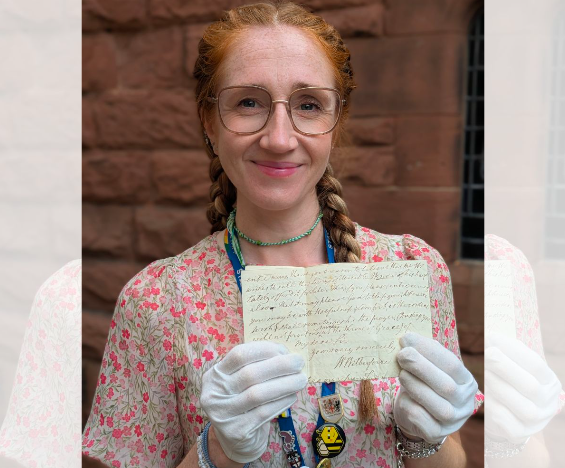
An extraordinary find in the archives of the University of Chester has unearthed four early 19th-century letters, two of which bear the signature of the renowned abolitionist William Wilberforce. These letters, discovered during an alumni archive project, offer a rare glimpse into the personal and political life of Wilberforce during his later years.
The letters were addressed to Reverend Henry Raikes, a significant religious leader who played a pivotal role in founding what is now known as the University of Chester. Wilberforce, famous for his tireless efforts to abolish the British transatlantic slave trade, corresponded with Raikes from his residence in Highwood Hill, Middlesex, in 1830. In these writings, he discussed ambitious plans to construct a chapel near his estate—an ambition that he could not realize before his death.
The collection also includes two other letters from 1808 and 1809, sent to Henry Raikes by his uncle and to Thomas Raikes, Henry’s father and a former Governor of the Bank of England. The discovery of these letters came as part of a project led by University of Chester’s Alumni Assistant Amy Hultum, in collaboration with Dr. Lisa Peters. The project aims to curate and preserve the university’s extensive archive of alumni documents.
Ms. Hultum remarked, “We did not expect to come across anything like these letters but we were very excited to find them in a box amongst our University collections.”
Dr. Hannah Ewence, Head of Humanities, Cultures and Environment, noted, “These two letters, between William Wilberforce and his friend and fellow Evangelist Henry Raikes, were written towards the end of Wilberforce’s life.” Dr. Ewence further explained the context: “By 1830, failing health had caused Wilberforce to retire from politics and from London life, moving from Grove House in Brompton to the relative tranquillity of Mill Hill, Middlesex (now in the north London borough of Barnet). It was from Highwood House that Wilberforce sat down to pen his replies to Raikes, then Chancellor of the Diocese of Chester.”
The letters reveal Wilberforce’s enduring care and respect for his younger friend, Raikes, whom he encouraged to become a curate in Mill Hill, knowing him to be “a promotor of peace and good will.” This correspondence illustrates Wilberforce’s unwavering commitment to his principles, even in his later years.
Wilberforce’s monumental efforts led to the passing of the Slave Trade Act of 1807, which prohibited the slave trade within the British Empire. Although complete abolition would not occur until his death in 1833, these letters provide valuable insights into his beliefs and the aspirations he held towards the end of his life. One such aspiration was the establishment of a chapel at Mill Hill, a project that went unrealized during his lifetime due to financial difficulties caused by his son’s unsuccessful business ventures. Wilberforce spent his final years with family and friends, and the chapel he envisioned was finally dedicated in the year of his passing.

This article was originally written by www.christiantoday.com