Revival of a Tradition: Presidential Fitness Test Set to Make a Comeback
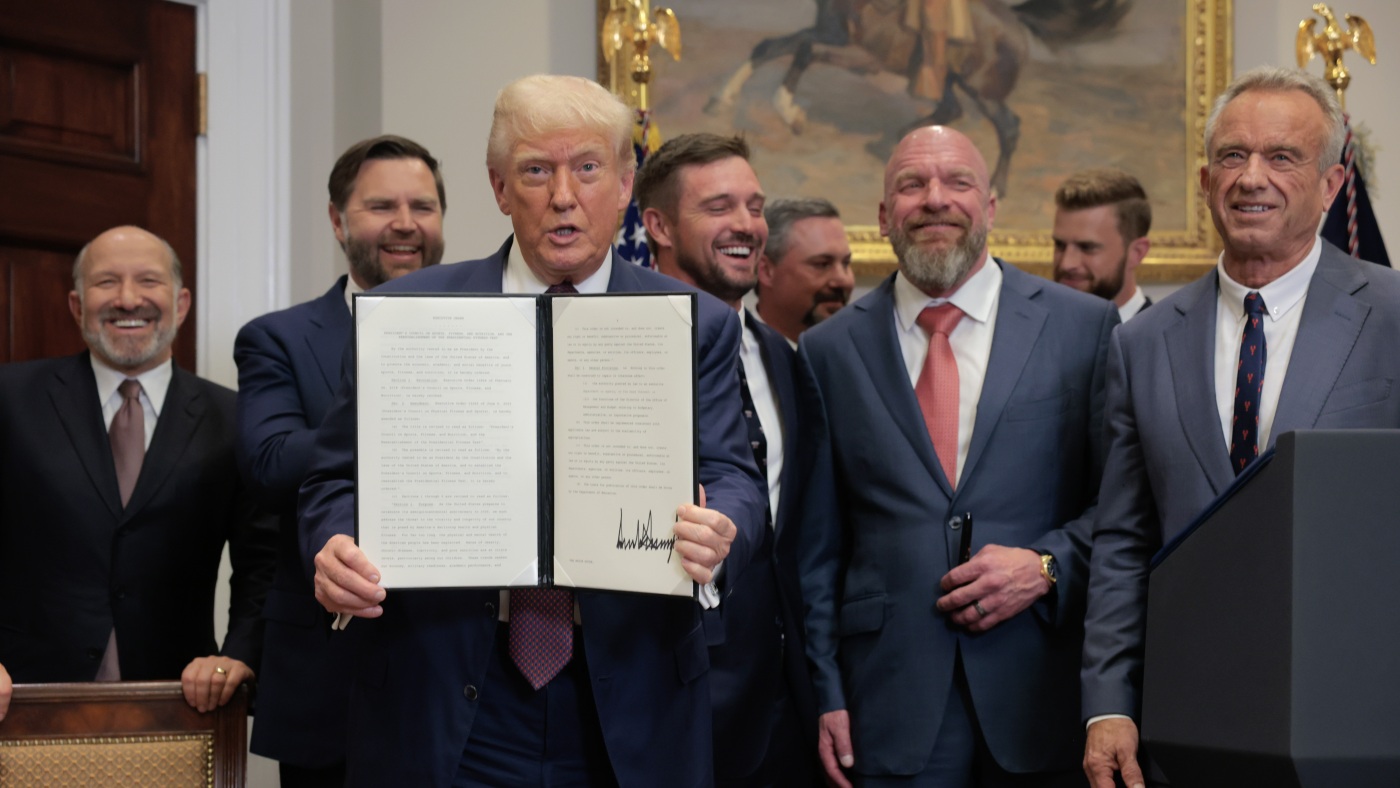
In a move that harks back to a bygone era of American physical education, the Presidential Fitness Test is set for a revival. President Trump has signed an executive order to reintroduce the exercise regimen, which was a hallmark of school gymnasiums until 2013. This initiative aims to renew focus on the physical fitness of American children as the nation approaches its 250th birthday.
The new order brings back the test that historically included activities such as push-ups, the PACER running test, and the one-mile run. However, it remains unclear which specific exercises will be part of the revamped test. Traditionally, students aged 10 to 17 participated in the test, and those excelling in it were awarded the Presidential Fitness Award, a tradition that will also be reinstated.
During the signing ceremony, President Trump expressed enthusiasm for the return of this “wonderful tradition,” noting its significance from the late 1950s until it was phased out by President Obama in favor of a more comprehensive approach to physical education. The President’s Council on Sports, Fitness, and Nutrition, reestablished by Trump, will be responsible for setting the new criteria for the test.
The role of overseeing the rollout of the test will fall to Health and Human Services Secretary Robert F. Kennedy, Jr., who has been vocal about the decline in physical activity and the rise of obesity among American children. His “Make America Healthy Again” report highlights these issues as part of a broader “childhood chronic disease crisis.”
The executive order emphasizes the urgency of addressing these trends, describing the decline in physical well-being as a threat to the country’s vitality. It makes a parallel to the Cold War era, when the test was first introduced, and patriotism was cited as a reason for its implementation. Experts and educators, however, are approaching the revival with caution, given past critiques of the test’s impact on mental health and its effectiveness in promoting long-term fitness goals.
Origins of the Presidential Fitness Test
Developed in the 1940s by orthopedic surgeon Hans Kraus and doctor Sonja Weber, the Kraus-Weber test laid the groundwork for the Presidential Fitness Test. It evaluated fitness through exercises aimed at core strength and flexibility. The results of tests conducted in the 1950s showed a stark contrast between American children and their European counterparts, with 58% of U.S. kids failing some portion of the test compared to just 8.7% of European children.
These findings led to the establishment of the President’s Council on Youth Fitness in 1956 under President Eisenhower, eventually evolving into the fitness test piloted nationally. President John F. Kennedy furthered the initiative with public campaigns and emphasized physical fitness as a national priority.
The Test’s Decline
Despite its longstanding history, the Presidential Fitness Test was not without its critics. Over time, concerns grew about its impact on students’ mental health and body image, as well as its one-size-fits-all approach. During the period the test was in effect, obesity rates surged, leading to its replacement in 2013 with the Presidential Youth Fitness Program under the Obama administration, focusing more on overall health than athletic prowess.
As Trump’s version of the test prepares for rollout, educators and experts stress the importance of prioritizing health-related fitness over specific skills and ensuring adequate resources for teachers. They advocate for a program that encourages lifelong physical activity, rather than merely preparing for a test.
According to Joanna Faerber, a physical education teacher, “A fitness assessment is just to let you know where you are. It’s not the end. It’s the beginning of changing.” The success of the program will depend on its ability to address broader factors like nutrition, sleep, and stress, in addition to fitness.