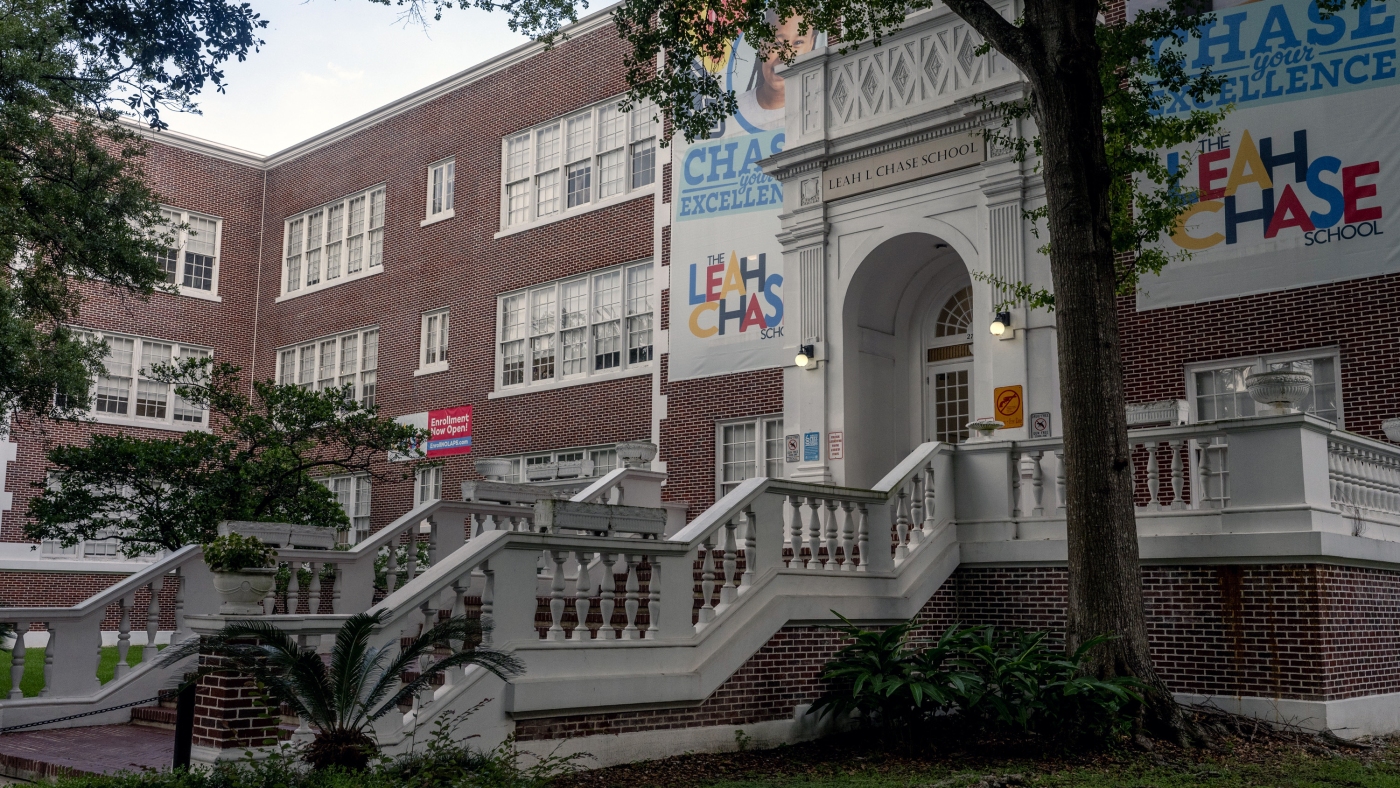
Transformative Journey of New Orleans Schools Post-Katrina
In the aftermath of Hurricane Katrina, New Orleans’ education system faced a massive overhaul. As charter schools began to replace traditional public schools, Mary McLeod Bethune Elementary stood firm as one of the few holdouts. Its principal, Mary Haynes-Smith, initially resisted the change, wary of how parents felt excluded by the private entities managing charter schools.
“I was so against charter schools. I thought it was the pits,” Haynes-Smith recalls, reflecting on the pressure to conform to the all-charter model.
Despite her reservations, by 2017, Haynes-Smith embraced the charter system, forming her own charter group and discovering newfound autonomy in decision-making. “It’s the best thing that could have happened,” she admits, appreciating the ability to directly address school needs without district interference.
Today, New Orleans’ public schools have transformed dramatically, with almost all schools operating as charters, serving citywide rather than specific neighborhoods. Student enrollment has decreased from over 65,000 in 2005 to under 44,000 recently, but infrastructure has improved, thanks to more than $2 billion in funding for renovations and rebuilding.
Charter Schools: A New Era
Charter schools’ introduction has sparked diverse opinions. While some criticize the shift, Doug Harris, a Tulane University researcher, notes significant improvements: “Test scores, high school graduation rates, college-going, everything improved, and everything improved a lot.”
Before Katrina, the district struggled with a 56% on-time graduation rate and severe resource shortages. Following the storm, state officials intervened, converting most schools to charters. This move aimed to inject competition into public education, allowing school leaders more autonomy and parents more choice.
The Impact of Hurricanes on Education
Hurricane Katrina devastated New Orleans, causing widespread flooding and displacing students and educators. In the aftermath, over 7,000 education professionals lost their jobs, and the once-powerful teachers’ union was significantly weakened.
The state’s swift action to convert schools into charters was initially met with skepticism. Some schools, especially those managed by out-of-town operators, made missteps, prioritizing test scores over holistic education, and changing school names, which alienated alumni.
Challenges and Adjustments in the Charter System
In the early years, issues such as reliance on uncertified teachers and exclusionary practices marred the charter system. However, officials have since implemented measures to address these problems, including a central enrollment system and a hearing office for expulsions.
Charters now operate under stricter regulations, and their performance is closely monitored. Schools that fail to meet standards face closure, driving continuous improvement. “If you close low-performing schools, students end up in better schools and they do better,” Harris explains.
The Path Ahead for New Orleans Schools
Given the mixed results and the realization that closures alone won’t sustain progress, New Orleans’ school board is exploring alternatives. Last fall, the district opened a new school, marking a departure from the all-charter system. Some board members advocate for direct district management of schools to reduce reliance on charters.
Yet, the idea of district-run schools is contentious. Henderson Lewis Jr., former head of the city’s schools, cautions against dividing focus between charter regulation and direct management. He believes the system should prioritize accountability while being prepared to temporarily run schools as needed.
As New Orleans navigates the future of its educational landscape, the willingness to adapt remains a guiding principle. “It is guided by the principle that we believe if it works, do it. If it don’t work, stop doing it. If it needs changing, change it,” notes board member Carlos Luis Zervigón.