A Journey Through Time: Exploring History at the Tenement Museum
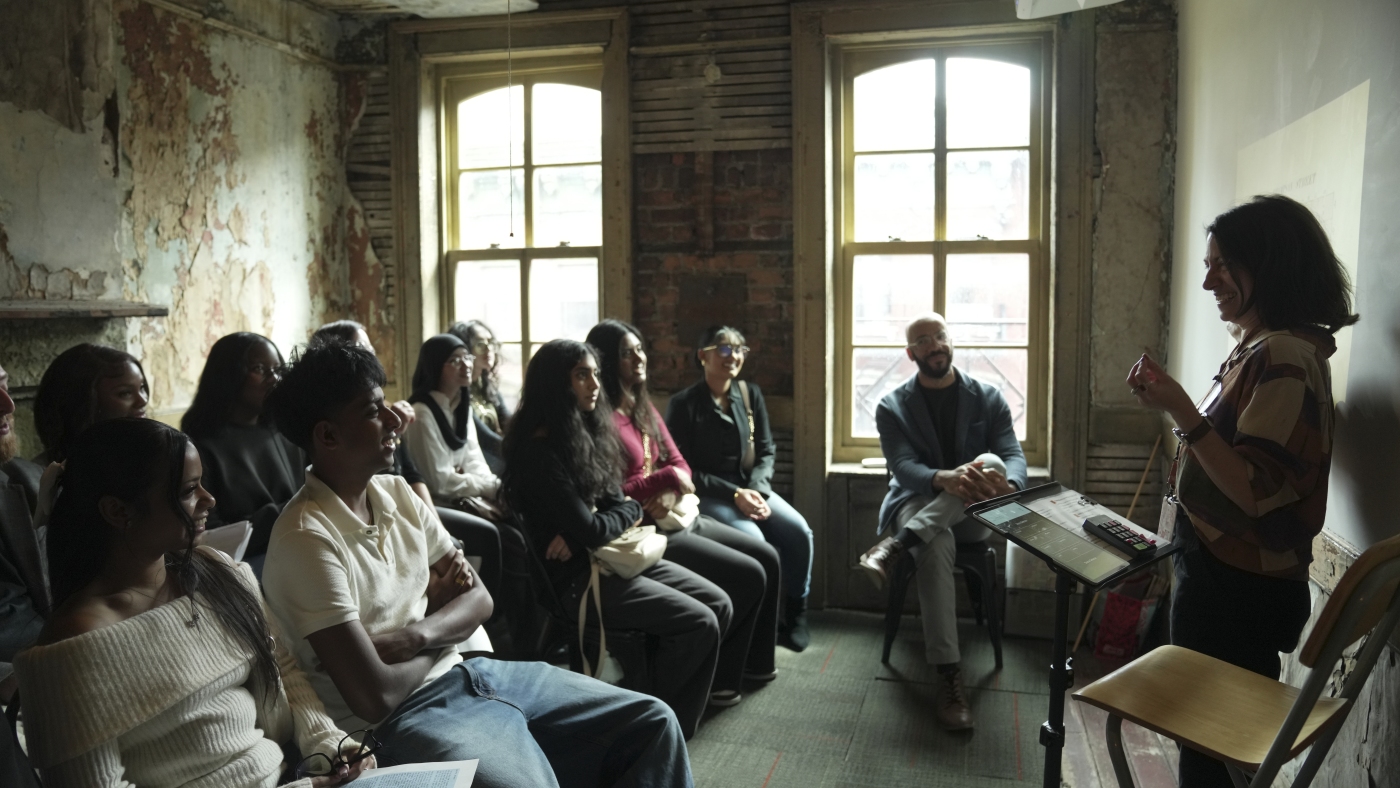
In a dimly lit staircase of a New York City tenement, Kat Lloyd stands surrounded by a group of high school students on an educational field trip. As they listen intently, Lloyd, who serves as the vice president of programs and interpretation at the Tenement Museum, invites these teenagers from Queens to imagine the bustling life of immigrants who once resided in the building’s 22 apartments back in 1863.
“I start to imagine, you know, babies crying and people yelling to each other across the hallway,” Lloyd remarks with a laugh, prompting some students to close their eyes and smile at the thought.
With America’s 250th anniversary drawing near, a debate arises among educators and policymakers about how best to teach American history. While traditional narratives emphasize the stories of the nation’s founders and key documents, the Tenement Museum offers an alternative by focusing on the lives of ordinary people.
Lloyd emphasizes that exploring history from the perspective of everyday citizens can provide a more comprehensive understanding of the American experience. The museum re-creates the living conditions of real immigrant, migrant, and African American families from the 1860s through the 1980s.
During the tour, Lloyd encourages the students to touch the historic banister, noting, “It’s been here since 1863, so everyone who ever lived in this building also used [it].”
History teacher Mike Agovino, accompanying his students, finds the museum’s approach to history “tangible,” as it offers a sensory experience—one where you can “smell it, touch it, see it.” His students climb upstairs to view artifacts, including a small book of Abraham Lincoln’s speeches, sparking curiosity about its commonality in homes of the time.
Lloyd explains the book belonged to a teenager named Parthenia Lawrence, adding, “Parthenia Lawrence was your age.” This revelation resonates with sophomore Aliyah Asrafally, who reflects on the museum’s power to humanize historical figures: “[Parthenia Lawrence] is normal. It just shows that it’s not like they’re just historical figures that we look at. They were real people.”
Clint Smith, author of How the Word is Passed, joins the tour, noting how his own education focused on prominent figures like politicians and generals. Smith explains that the museum conveys a powerful message: “Even if you’re just someone who washed clothes in a building in the middle of New York, or was the driver of a carriage, that you are still a part of the American story.”
Smith’s book, adapted for young readers, delves into the legacy of slavery. Today, he engages with students reading this new edition, emphasizing the importance of understanding history through the lives of everyday people.
In a re-created apartment, Lloyd introduces students to Rachel and Joseph Moore, historical residents of the tenement. Rachel, the first in her family born free, shares the space with her husband, a butcher by age 13, and others, highlighting the diverse and complex living arrangements of the time.
Catherine Brown, a student, recognizes familiar items like a whisk broom and kerosene lantern from her own heritage, noting, “Growing up in Jamaica, we have that broom, the lamp, and it’s really interesting to see how these things have transcribed over time.”
Agovino finds joy in his students’ engagement, saying, “Kids need to see themselves first… ‘Wow, this could be me.'”
As Lloyd discusses the historical context, she touches on significant events like the draft riots, illustrating the challenges faced by the Moores and others during this period.
Despite the hardships, the museum seeks to inspire hope, sharing stories of progress, such as the celebration of the 15th Amendment granting Black men the right to vote. Aliyah Asrafally sees the strides made, stating, “they also made a lot of progress that they got to see in their lifetime.”
Agovino, reflecting on his own immigrant heritage, shares his classroom approach: “We have this document, the Constitution, that promises so many beautiful things. We may not be there yet, but we’re marching.”
As the students prepare to depart, Lloyd hopes they leave with a deeper curiosity about their own histories and the nation’s past. “I always hope that people leave with more questions, and get curious about their communities, their own history, their own family history,” she says.