Academic Recovery: Reading Stagnates While Math Sees Modest Gains
Amid ongoing efforts to recover from pandemic-induced learning losses, students in the United States show mixed results in their recent academic performance. New testing data reveals that while math scores for third- through eighth-graders have shown slight improvement, reading scores remain largely unchanged.

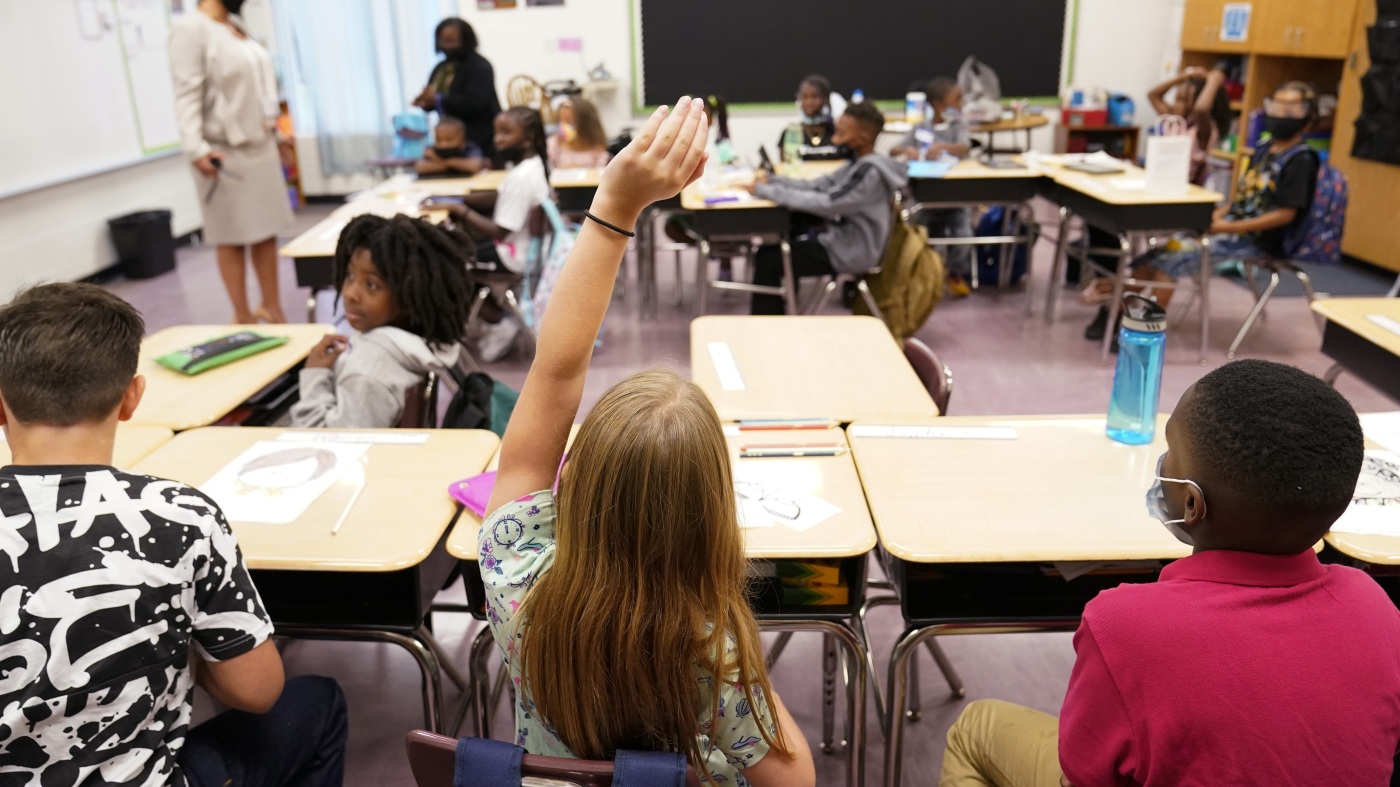
A student raises their hand in a classroom at Tussahaw Elementary School in 2021 in McDonough, Ga. Brynn Anderson/AP Photo
This information stems from NWEA’s Spring 2025 MAP Growth assessment, an extensive testing suite engaging millions of students nationwide. The results illustrate that while math scores have seen slight improvements since 2021, reading scores have not shown significant progress, aligning with similar patterns observed in previous years.
Reading Scores Remain Stagnant
The latest reading scores reveal a troubling trend as students in grades three through eight continue to perform below the levels seen in 2019. “Math is crawling back, however modestly, but reading isn’t budging,” says Karyn Lewis, Vice President of Research at NWEA. This stagnation spans across various demographics, showing little variance regardless of race or school poverty levels.
Math Scores Show Improvement
In contrast, math scores offer a glimmer of hope with slight advancements compared to 2024 data. This upward trend is consistent across different racial and socio-economic groups. Nevertheless, none of the grades have yet reached pre-pandemic performance levels in math.
To aid in understanding these trends, NWEA has introduced a new performance dashboard. This tool, which will receive updates thrice yearly, allows educators and policymakers to compare local student performance against a national benchmark. This initiative comes amid reductions in the Institute of Education Sciences’ capacity to collect and disseminate federal student achievement data.
Tom Kane from Harvard University notes the importance of frequent assessments, stating, “Two years is too long for American students to go between doctor visits, especially when recovering from a major injury, such as occurred during the pandemic.” Megan Kuhfeld of NWEA emphasizes the role of national data in guiding local educational strategies, highlighting the need for targeted support and resources in response to uneven recovery patterns.