Exploring the Impact of Cellphone Use in Schools Amid Declining Test Scores
As student test scores in the United States see a noticeable decline compared to a decade ago, educators and researchers are delving into potential causes. Although the trend was not immediately clear before the COVID-19 pandemic, experts like Martin West from the Harvard Graduate School of Education have observed that “if you look at the data over the long term, it’s very clear.”
West, who extensively analyzes student data, noticed the decline beginning post-2010. This prompted him and colleagues to search for explanations. Within the U.S., policy changes such as the shift away from the No Child Left Behind-era testing focus and the introduction of the 2015 Every Student Succeeds Act were significant. However, the trend persisted internationally, prompting researchers to consider other external factors.
One such factor under scrutiny is the rise of smartphone usage among students, coinciding with the drop in scores. David Figlio from the University of Rochester comments, “I’m 55 years old, and when my phone buzzes in my pocket, I have to resist the temptation to look at that text. Now imagine you’re a 14 year old.”
While definitive evidence linking smartphones to declining scores is lacking, the timing raises questions. Figlio suggests, “If we have these extremely addictive devices on our person 24 hours a day or near us 24 hours a day, this has to be one of the contributing factors.”
A surge of restrictions
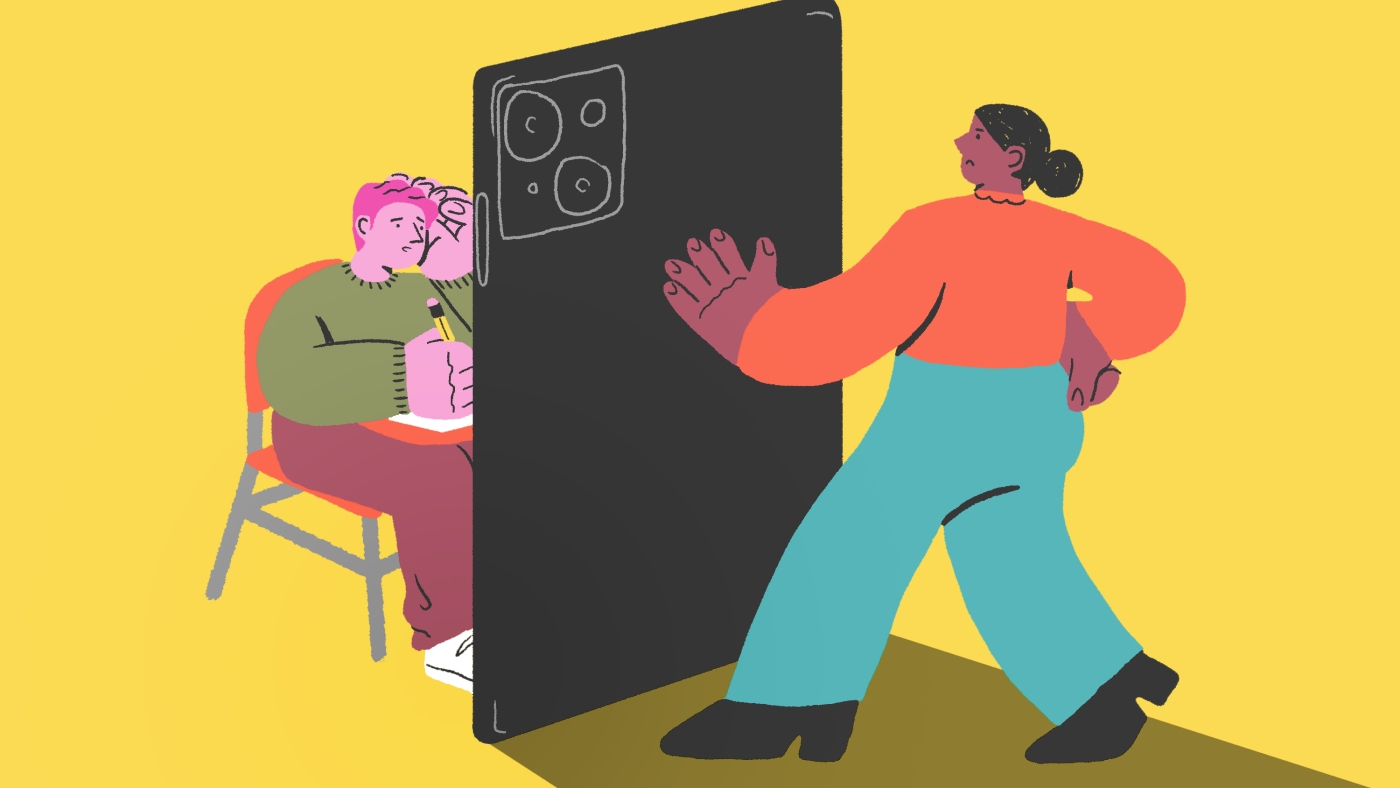
In response to these concerns, lawmakers across at least 32 U.S. states have implemented restrictions on student cellphone usage in schools. These measures often address teacher complaints about distractions, with most policies enacted in the last three years.
Researcher David Figlio has been examining the effects of such bans over the past two years within a Florida school district. He found that “the cellphone ban does more good than bad,” noting improvements in student engagement and test scores. However, he acknowledges that this is an early assessment of a significant shift in educational environments, with more data collection ongoing.
Kathy Do from UCLA has conducted one of the first national surveys on the topic, emphasizing the need for thorough research on the impact of cellphone bans on learning and well-being. “Oftentimes these policy decisions are ahead of the science,” she notes, advocating for cautious evaluation of digital habits.
Do points out that while cellphones can be distractions, they also offer potential as educational tools. In resource-limited settings, such as a rural school lacking tablets or laptops, students have used phones creatively for learning. For instance, “one student in each group [used] their phones to access a speedometer,” aiding in science experiments.
As research continues to evolve, Do suggests that schools should remain open to adjusting policies. She and fellow researchers agree that there is no universal solution to cellphone usage in schools, indicating a long journey ahead to address this complex issue.