US Protestant Church Landscape Sees Continued Evolution Amid Closures and New Beginnings
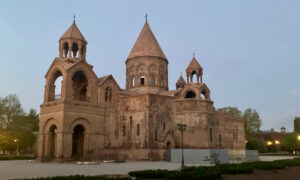
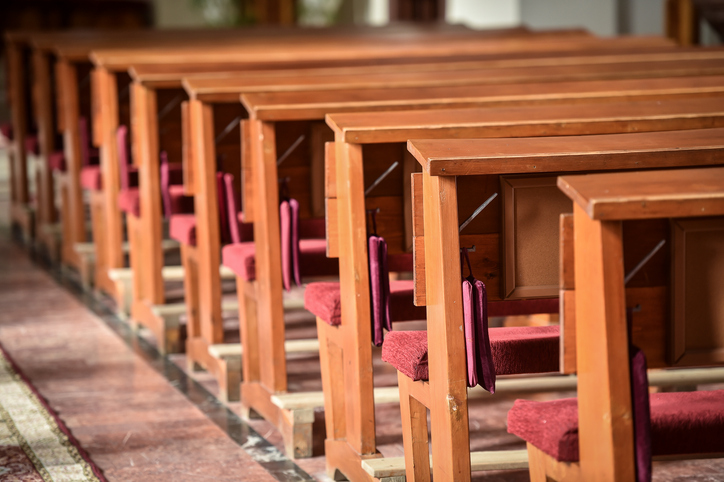
In 2024, the US Protestant church scene underwent further transformation as the closure of congregations exceeded new church launches, as revealed by a Lifeway Research analysis.
Approximately 3,800 Protestant churches were founded across the nation last year, yet around 4,000 establishments closed their doors, leading to a net reduction of about 200 churches.
This information was derived from a data set provided by 35 denominations and faith groups, accounting for about 58% of Protestant congregations in the country. The rest of the data was extrapolated from this sample.
The statistics indicate a persistent shift in the US religious landscape, characterized by a sustained decline in both Christian identification and church attendance.
Nevertheless, the gap between church closures and openings, which stands at 200, has significantly narrowed from past years.
Back in 2019, the net church loss was roughly 1,500, and a decade prior, more churches were opening than closing. Five years ago, about 4,500 Protestant churches closed, compared to only 3,000 new formations.
Scott McConnell, executive director of Lifeway Research, noted the data reveals both resilience and vulnerability within US Protestantism.
He pointed out that even though many congregations continue to operate despite dwindling attendance, the average church is now smaller and typically has fewer resources than previous generations.
According to the US Religion Census 2020, which estimates the total number of Protestant congregations at around 293,000, the closures in 2024 represent slightly over 1% of all Protestant churches nationwide.
Trends within the Southern Baptist Convention, the largest US Protestant denomination, were also analyzed.
From 2023 to 2024, 1.4% of Southern Baptist churches closed, with an additional 0.4% disaffiliating from the convention.
Despite these reductions, the inclusion of new congregations and church plants resulted in a net annual decline of just 183 churches for the denomination.
The Southern Baptist Convention has seen a yearly decrease in its total number of congregations since its peak in 2017, yet the number of closures in 2024 was the lowest in that span.
Ed Stetzer, an author and dean at Biola University’s Talbot School of Theology, emphasized the importance of church planting for sustaining Protestant Christianity in the US.
“Simply put, without church planting, every denomination that’s growing would be shrinking and every denomination that’s shrinking would be shrinking more,” he said. “Church planting is the most significant engine for evangelistic growth that we have in the world today.”
Despite the overarching trends, most pastors remain optimistic about their churches’ futures.
A separate Lifeway Research survey indicated that 94% of Protestant pastors are confident their churches will still be operating a decade from now, though smaller congregations’ leaders expressed less certainty.
Pastors from churches with fewer than 50 regular attendees were more likely to question their long-term sustainability.
The research also discovered that over one-third of Protestant churches have engaged in church planting efforts, primarily through training (42%), mentoring (38%), or assessments for potential planters (30%).
However, only 2% have provided the main financial backing for establishing a new congregation.
Newer churches continue to experience stronger growth compared to older ones.
Within the Southern Baptist Convention, churches founded since 2000 were the only group to show a 12% overall membership increase over the past five years, while older churches faced declines.
McConnell mentioned that these findings point to a gradual and continual transformation rather than an abrupt decline.
He stated, “While the American church landscape changes slowly, it is not standing still.
“The future of Protestant churches in America lies in reaching new people with the offer of salvation through Jesus Christ.
“Most growth in the US happens in new communities. Church planting is vital to share the gospel in these new communities as well as communities in which the population is changing or previous churches have closed.”
This article was originally written by www.christiantoday.com