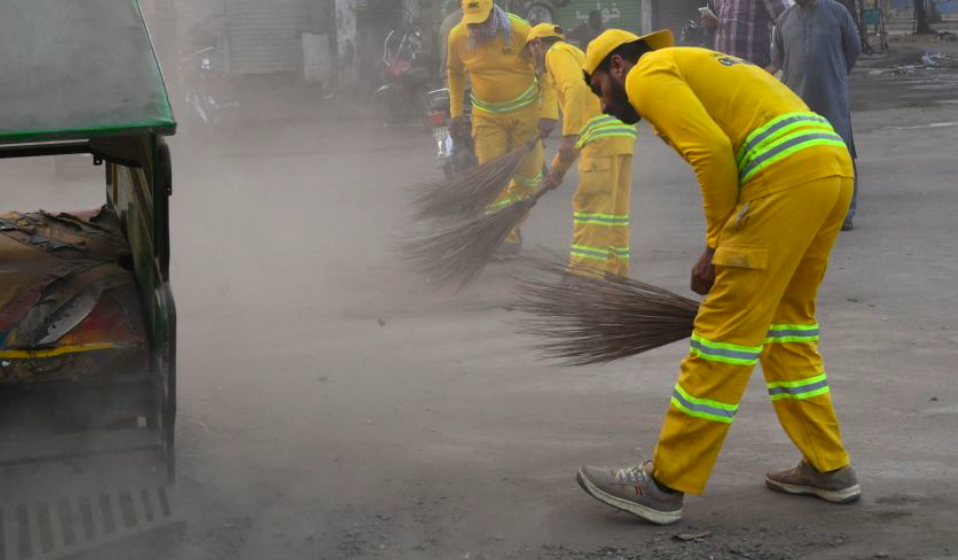
(Photo: Amnesty International)
In Pakistan, many Christian and Hindu individuals from lower castes find themselves disproportionately represented in sanitation jobs, often due to systemic discrimination. Amnesty International has shed light on the challenges these sanitation workers face, revealing a troubling pattern of mistreatment and inequality.
Data from various governmental bodies in Punjab indicate a significant imbalance, with Christians predominantly occupying lower-grade roles, particularly in sanitation. This demographic is often subjected to derogatory slurs and segregated in public settings, notably when it comes to dining and the use of utensils.
Many workers report that discriminatory hiring practices trap them in sanitation jobs. One worker recounted his experience of being rejected for an electrician position after revealing his Christian faith, only to be offered a sanitation job instead. “Once they know you are Christian, the only work they offer is sanitation,” he shared, ultimately accepting the position due to a lack of alternatives.
Discrimination persists even within the sanitation sector. A female Christian worker noted disparities in job assignments, stating, “Christian women clean toilets and wash clothes, whereas Muslim women work in the kitchen.”
Beyond social discrimination, these workers face precarious employment conditions. Over half of the workforce lacks permanent employment and written contracts, leaving them vulnerable to financial instability. The absence of workplace protections and benefits further exacerbates their plight.
Safety concerns are rampant, with 55% of sanitation workers not provided with adequate safety gear. Workers have reported injuries from handling hazardous materials, such as broken glass and sewage acids, with one worker suffering a finger amputation after an incident involving a contaminated syringe.
Isabelle Lassée, an international human rights lawyer, commented on the dual impact of labor law violations and discrimination, stating, “In Pakistan, labour law violations run parallel to and reinforce the discrimination and marginalization faced by sanitation workers.”
Amnesty International advocates for a comprehensive approach that addresses these issues through anti-discrimination measures and stringent enforcement of labor laws, aiming to rectify the historical, social, and economic injustices faced by sanitation workers in Pakistan.
This article was originally written by www.christiantoday.com