Innovative Insurance Scheme Provides Vital Aid to Nepali Farmers
An unprecedented insurance initiative has delivered critical assistance to numerous farming families in western Nepal, marking a significant advancement in pre-emptive disaster relief, according to Christian aid group Tearfund. This program aims to safeguard communities against hunger driven by climate change before it becomes a full-blown crisis.
In Nepal’s Bajura district, Tearfund reported the activation of a $100,000 insurance payout following severe drought conditions that endangered both crops and livelihoods. This scheme employs satellite technology to track soil moisture and water availability. When these levels drop critically, funds are released automatically, circumventing the need for prolonged damage assessments.
This payout, believed to be the first of its kind in Nepal, is part of a pilot program testing “anticipatory finance,” an emerging humanitarian strategy designed to disburse aid before situations deteriorate beyond control.
(Photo: Tearfund)
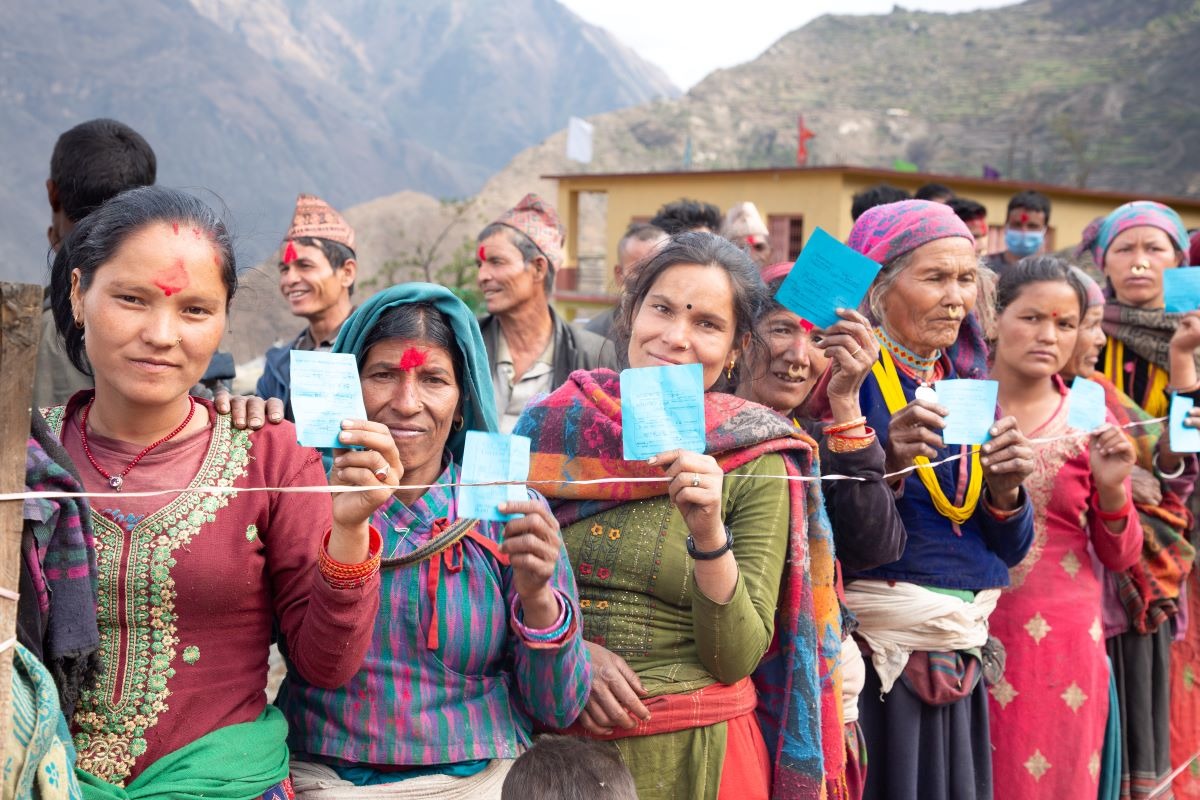
Through collaboration with the International Nepal Fellowship, Tearfund extended food assistance to 671 households, while 405 individuals, predominantly women, received drought-resistant seeds, farming tools, and agricultural training.
Additionally, water collection systems for small-scale irrigation were set up for 176 households. Families facing dire food shortages were supplied with essential items such as rice, lentils, oil, and salt.
Among the beneficiaries was Bune Sunar, a 59-year-old blacksmith and farmer whose crops suffered from last summer’s floods followed by winter droughts. “In my whole life, I have never seen this much food in my house at one time,” he expressed upon receiving aid.
Sunar, who supports his family of 11 by crafting farming tools and utensils, often receives grain as payment. Previously relying on modest harvests of wheat, millet, and rice, his family now faces food insecurity due to crop failures, leaving them with just enough provisions for a month this year.
Tearfund’s Country Director for Nepal, Pranaya Pandey Chhetri, emphasized that climate-related disasters are making agriculture increasingly unpredictable across Asia, heightening the vulnerability of at-risk communities. “The gap between the cost of global disasters and the finance available to respond to their impact is growing,” he noted.
Chhetri highlighted the importance of insurance and financial protection in helping families preserve assets, adapt livelihoods, and react swiftly to crop failures, thereby preventing deeper poverty. “This insurance innovation brings vital finance to support those on the front lines of the climate crisis,” he stated. “This payout is helping people keep hope alive through a desperate food shortage.”
The payout was facilitated through a parametric insurance product developed by Global Parametrics, part of the CelsiusPro Group, with support from Humanity Insured, a UK-registered charity backed by the insurance sector.
The broader risk financing initiative receives backing from the UK Foreign, Commonwealth and Development Office, as well as Germany’s development bank KfW.
Mark Rüegg, chief executive of CelsiusPro Group, remarked that “fast, pre-arranged financial aid” is crucial in helping climate-vulnerable communities build resilience against severe weather events. He noted that the Nepal payout illustrated the efficacy of satellite-based insurance systems in providing timely and practical support to families grappling with food insecurity and economic difficulties.
Tearfund cautioned that countries like Nepal are increasingly susceptible to alternating cycles of floods and droughts due to climate change, with rural farming communities often suffering the most.
This article was originally written by www.christiantoday.com