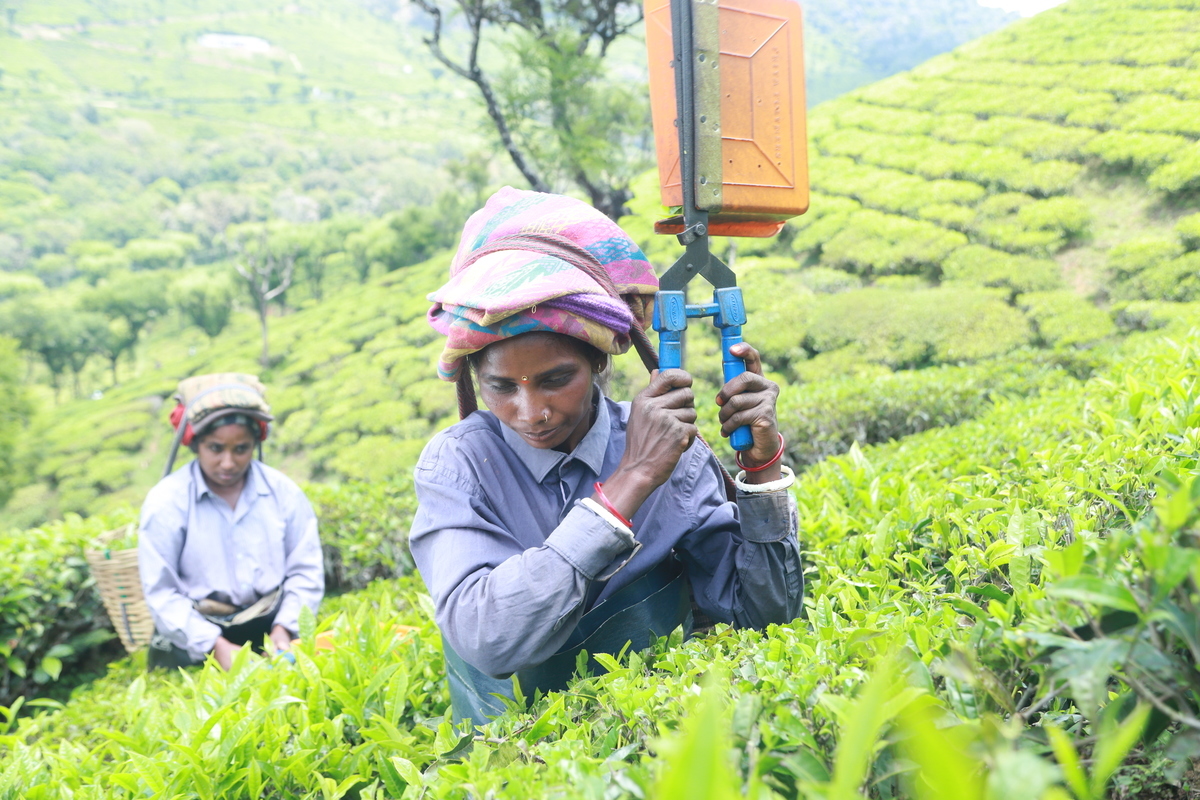
(Photo: Fairtrade Foundation)
As the world celebrates International Tea Day, a pressing call for change echoes from the Fairtrade Foundation. They are urging the UK government, businesses, and tea enthusiasts to take a stand for fair compensation and dignified treatment of tea producers globally.
This initiative, titled Brew it Fair, aligns with the release of an eye-opening report, ‘Brew it Fair: Creating a Fairer Future for the People Behind the Tea we Drink,’ which uncovers ongoing disparities within the tea industry.
Despite years of advocacy, only a small portion of tea sold in the UK is Fairtrade certified. The majority of the profits seldom reach the individuals responsible for growing, picking, and processing the tea.
The report highlights that UK consumers often pay minimal amounts for tea, yet the producers receive even less. Shockingly, only a tiny fraction of the supermarket price—2 to 3 pence per tea bag—actually benefits the producers.
Market dynamics contribute to this issue, with auctions dominated by a few powerful buyers who drive prices down, leaving farmers with little control and inadequate earnings.
Kenya, supplying nearly half of the tea consumed in the UK, is significantly impacted. A recent survey of over 250 Kenyan tea producers revealed that only one in five can afford essentials like food, education, and housing.
Climate change exacerbates these challenges, with predictions of a 25% reduction in optimal tea-growing areas in Kenya by 2050.
The Brew it Fair campaign calls for the UK government to legislate human rights and environmental due diligence in business supply chains. This would protect overseas workers without imposing compliance burdens on them.
The Fairtrade Foundation emphasizes the need for government collaboration with businesses to reform and stabilize the tea supply chain through shared responsibility.
Furthermore, they urge the government to honor climate finance commitments, benefiting producers in tea-producing nations like Kenya to adapt to climate impacts.
“The UK accounts for 61 per cent of all the Fairtrade tea sold in the world, and Fairtrade tea producers have earned more than £50 million in Fairtrade Premium through sales of Fairtrade tea in the UK over the last 30 years: critical investment for building more resilient farms and communities,” said Eleanor Harrison, CEO of Fairtrade Foundation. She underscored the necessity of scaling Fairtrade efforts and enacting robust laws to protect human rights and the environment.
Despite these challenges, Fairtrade initiatives offer hope. At Kenya’s Gacharage Tea Factory, which supports 5,000 farmers, Fairtrade premiums fund income diversification projects and scholarships for local students.
“The future looks bright for these young and brilliant Kenyans,” shared tea farmer and Gacharage Premium Committee member, Jacky Wangari. “We have about nine students enjoying full scholarships through Fairtrade funds… [with] two of them working; one is a teacher and the other one is doing a business in town. If Fairtrade was not there, these bright students in need would not have joined campus.”
Leading UK brands like Marks & Spencer, Ringtons, Clipper, Co-op, Sainsbury’s, Waitrose, and Greggs have already joined the cause.
Rwandan choreographer and Fairtrade Foundation partner Sherrie Silver champions the message: “Being based in Rwanda – a major tea-producing country – I have seen firsthand how tea can change lives through employment, women’s empowerment and improving the quality of life for people in farming communities.
“Fairtrade is such an important cause as it ensures people around the world receive better prices, decent working conditions and a fairer deal for all.”
Ms. Harrison emphasized the urgency of reform: “The people growing our tea deserve to be able to live with dignity. That means earning a decent income, working in safe conditions, and having the ability to support their families and send their children to school.
“We all have a role to play in making that happen: from the UK government introducing a new law to help prevent abuses in tea supply chains; to businesses taking a lead on responsibility; and to all of us as tea lovers in the choices we make when we buy our tea in the supermarket.”
This article was originally written by www.christiantoday.com