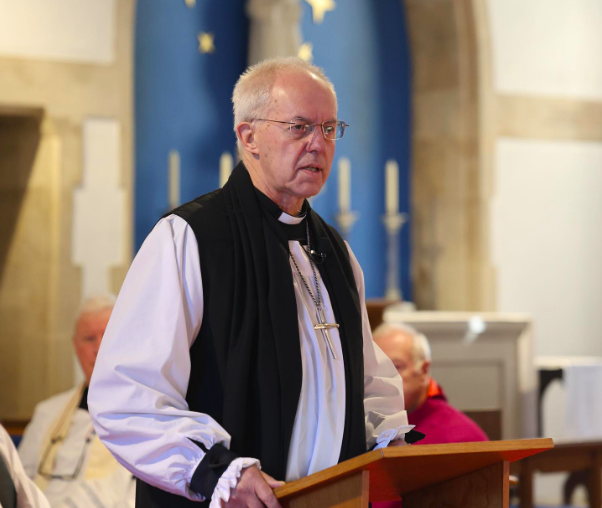
In a candid revelation, Justin Welby, the former Archbishop of Canterbury, has opened up about his journey of dealing with personal failures through therapy. This comes in the wake of his resignation following the controversial Makin report.
Welby stepped down from his role in November 2024 after the Makin report criticized the Church of England’s response to abuse allegations against the late John Smyth. Smyth, who passed away in 2018, was implicated in abuse cases spanning decades across Britain and Africa.
The report highlighted that Welby did not take sufficient action upon learning of the allegations. In response to the review, Welby admitted his shortcomings, acknowledging, “I personally failed to ensure … [that] the awful tragedy was energetically investigated.”
Nevertheless, Welby has challenged aspects of the Makin report. Speaking at the Cambridge Union, he argued that evidence showed the allegations were indeed reported to the authorities. He claimed that the police advised the Church not to conduct further investigations to avoid interfering with ongoing inquiries. More details can be found here.
In a conversation with broadcaster Gyles Brandreth on the Rosebud Podcast, Welby discussed the support he has received since what he describes as the “loneliest” moment of his resignation.
“I’ve been seeing a psychotherapist for a considerable period of time. And a psychiatrist. Very helpful. It’s not about saying, ‘oh, it didn’t matter’, or anything like that, quite the reverse – how does one live with such a failure?” Welby shared.
Reaffirming his stance on the Makin report, Welby conceded that it was “absolutely correct” in its claim that he had not sufficiently prioritized the victims. However, he also raised issues with other conclusions drawn in the report.
“The initial perception was that we’d not reported it to the police – in fact, it had been reported to the police,” he explained.
Meanwhile, Keith Makin, the author of the report, remains firm on his findings. As reported by the Telegraph, Makin stated, “My report makes it clear that the matter was communicated to the police but that Bishop Welby did not pursue it beyond being assured by the Ely diocese that the police were investigating.
“My report makes the point that Bishop Welby knew of John Smyth and it should have been the case that he should take more interest than a simple assurance. I concluded that Bishop Welby carried a personal and a moral responsibility to ensure that he pursued the matter.”
This article was originally written by www.christiantoday.com