
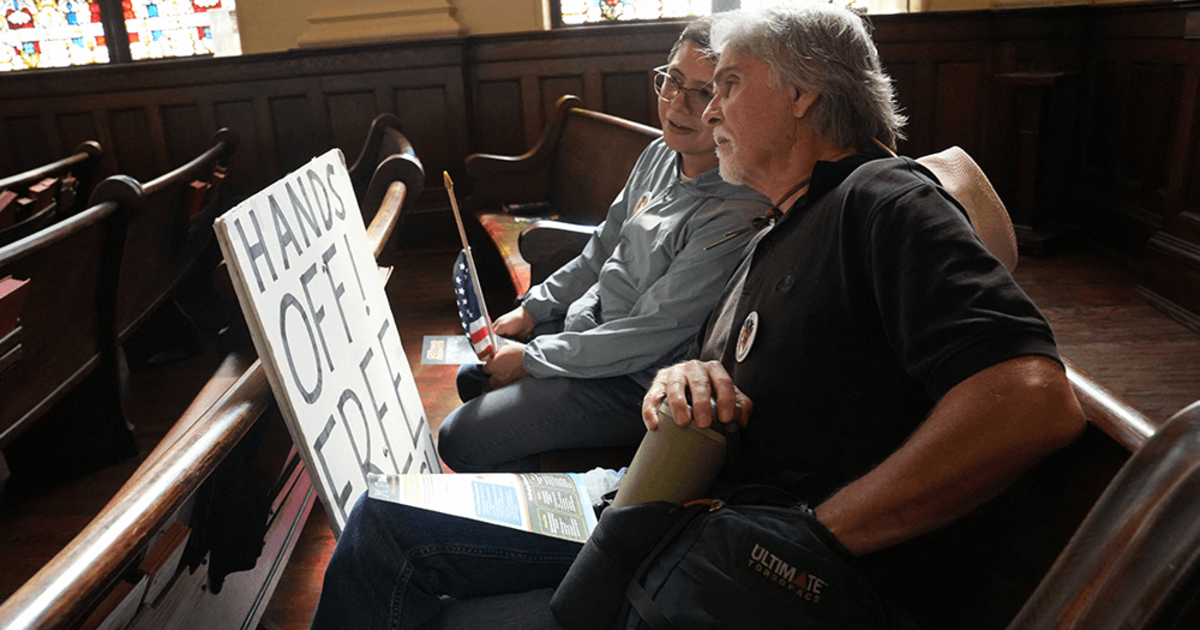
In an unprecedented show of civic engagement, thousands took to the streets over the weekend as part of the No Kings: Vote Early initiative, participating in nearly 3,000 events nationwide. This movement underscores the importance of early voting as a powerful tool to combat the misuse of power and fend off authoritarian tendencies.
Despite the emphasis on early voting, a significant challenge remains in motivating individuals to participate in elections. In the 2024 election, a staggering 87 million eligible voters refrained from casting their ballots. This raises questions about the role faith, particularly Christianity, can play in encouraging greater electoral participation.
Instead of shaming the non-voters, which can be counterproductive, a more constructive approach involves addressing the barriers to voting and engaging with people’s concerns and motivations. According to a Census Bureau survey, reasons for not voting include lack of interest (20%), being too busy (18%), dissatisfaction with candidates or issues (15%), illness or disability (12%), being out of town (7%), and simply forgetting (4%).
Strategist Ash-Lee Woodard Henderson provides insight into the mindset of the 87 million non-voters, categorizing them into groups: the “locked out,” the “politically homeless,” and the “ideologically out.” The “locked out” face structural barriers that disproportionately affect Black, brown, and low-income communities. Faiths United to Save Democracy is collaborating with over 30 faith-based organizations to enhance voting access, reflecting the belief that voting honors the imago dei, the image of God in every individual.
The Politically Homeless
The “politically homeless” often grapple with a detached or apolitical faith, viewing their relationship with Jesus as a personal matter rather than a public engagement. This perspective can hinder their participation in voting, which is seen as a communal responsibility that aligns with Christian values of justice and love.
The Ideologically Out
Those categorized as “ideologically out” might avoid voting due to a desire to maintain a pure faith, free from the perceived corruption of politics. However, refraining from voting can inadvertently support the status quo and diminish one’s ability to influence change.
A Faith-Based Call to Vote
For Christians, voting is not just a civic duty but a faith-driven act to advance the common good. Romans 13 and Matthew 25 emphasize the role of government in promoting neighborly love and caring for society’s most vulnerable, which voting can help achieve. Historical examples like the 2008 election’s impact on healthcare and the 2024 election’s effects on social welfare underscore the tangible outcomes of electoral participation.
Voting also serves as a countermeasure against oppression and the abuse of power. The biblical account in 1 Samuel 8 warns against the dangers of centralized, unchecked power, highlighting the need for discernment in leadership choices.
As Adam Russell Taylor poignantly states, “Voting is a way for us to make our earthly home more closely resemble the eternal reign of God to which we all look forward.” Voting, therefore, becomes an act of discipleship, a way to align earthly realities with divine aspirations.
While voting is a critical tool for change, it is not the sole method of civic engagement. Christians are encouraged to participate in various forms of activism, from attending town halls to volunteering. Yet, as the late Rep. John Lewis noted, voting remains “the most powerful nonviolent tool” in a democracy.
Engaging with non-voters should be approached with empathy and openness, focusing on the potential for positive change rather than blame. Rev. Sen. Raphael Warnock’s sentiment that “a vote is a kind of prayer for the world we desire for ourselves and for our children” encapsulates the hope and responsibility that voting embodies.
This article was originally written by sojo.net



Comments are closed.