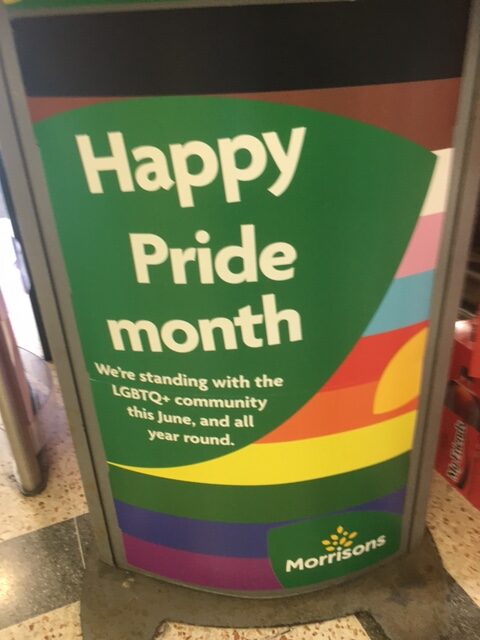
The sight of an LGBTQ+ Pride sign at the exit of the Morrisons supermarket in Morecambe marked a significant moment during my usual Saturday shopping routine. This display, proclaiming “Happy Pride Month – ‘We’re standing with the LGBTQ+ community this June, and all year round,'” was a first in my six years of frequenting the store.
While leaving, I couldn’t help but ponder on how Sir Ken Morrison, the former chairman of Morrisons who passed away in 2017, might have reacted to this corporate endorsement of Pride.
During my tenure as a reporter at Retail Week in 1993, I was tasked with profiling Sir Ken, who was preparing to list a substantial portion of his family’s shares on the Stock Market. Known for his aversion to media interviews, this was a rare opportunity to delve into the mind of a man who had transformed the family business. He had taken the reins of the company in 1952 and evolved it from its origins as a collection of market stalls in Bradford, established by his father William Morrison in 1899, into a major supermarket chain. Under his stewardship, Morrisons became a public company in 1967 (source).
I speculate that Sir Ken might have opposed the display of Pride signs, not out of homophobia, but due to potential business implications. He likely understood the divisive nature of such ideologies, particularly surrounding transgender issues, and might have resisted imposing any political stance on his customers.
Next door to the Morecambe Morrisons is an Aldi store, which has so far refrained from participating in Pride (source). However, can this family-owned German retailer resist the trend, or is it primarily public entities like Tesco, Sainsbury’s, and now Morrisons, that are more susceptible to aligning with Pride in hopes of being recognized among Stonewall’s top 100 most LGBT-friendly employers?
I suspect I am not the sole customer contemplating leaving Morrisons. The question arises: how soon before evangelical Christians and gender-critical feminists, in particular, feel completely disconnected from mainstream UK retail brands that appear to be embracing this neo-Marxist ideology (source)?
Julian Mann, a former Church of England vicar, is an evangelical journalist based in Lancashire.
This article was originally written by www.christiantoday.com