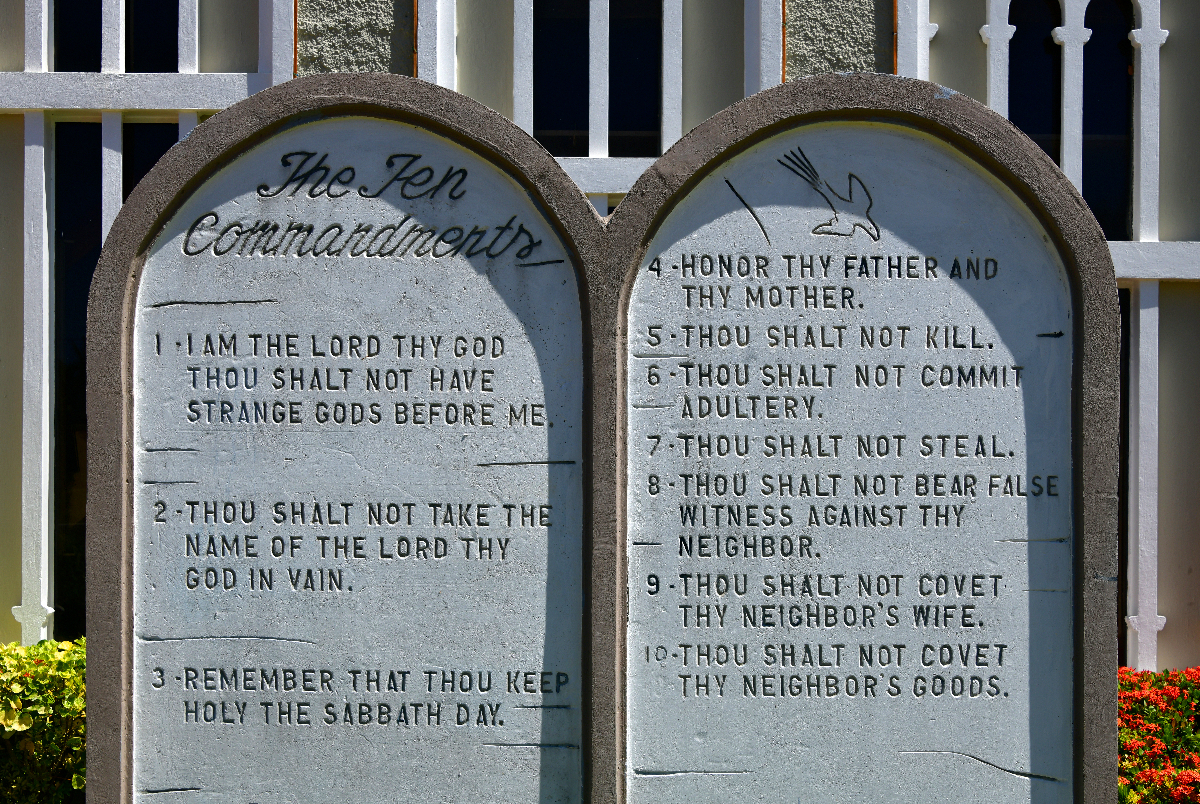
Legal Battle Erupts Over Arkansas Law Mandating Ten Commandments in Schools

A coalition of progressive groups has initiated a lawsuit over a new Arkansas law that mandates the display of the Ten Commandments in public schools. This legal action, spearheaded by Americans United for Separation of Church and State, the American Civil Liberties Union, and the Freedom From Religion Foundation, aims to challenge the law on behalf of a group of diverse parents.
Act 573, which was signed into law by Governor Sarah Huckabee Sanders in April and is set to be enforced in August, is at the center of the controversy. The lawsuit contends that this law violates the principle of neutrality concerning religion, arguing, “Act 573 is not neutral with respect to religion.”
According to the complaint, the act “expressly requires the display of religious scripture — the Ten Commandments — in every public-school classroom and library,” specifying a state-approved Protestant version, which could be perceived as an endorsement of a particular religious interpretation.
Concerns have been raised that students from non-Christian backgrounds might feel coerced into religious observance, stating, “students who do not subscribe to the state’s official version of the Ten Commandments…will be pressured into religious observance, veneration, and adoption of this religious scripture.”
Rachel Laser, president and CEO of Americans United, emphasized in a statement that the Constitution guarantees the separation of church and state, allowing families, not politicians, to determine if and how public-school children engage with religion. She described the law as part of a broader effort to promote a particular religious view.
Act 573, originating as Senate Bill 433, mandates the display of both the U.S. national motto “In God We Trust” and the Ten Commandments in all public school classrooms and taxpayer-funded buildings. It passed the Arkansas Senate with a 27-4 vote and the House with a 71-20 vote.
Republican State Sen. Jim Dotson, a key sponsor of the bill, defended the legislation by stating that the Ten Commandments serve as a historical reference point. He argued, “The U.S. Supreme court has held repeatedly throughout history that not everything is an establishment of religion,” as quoted by KATV.
However, the 1980 Supreme Court decision in Stone v. Graham ruled that a Kentucky law mandating Ten Commandments displays in schools violated the Establishment Clause of the First Amendment.
Similar legislative efforts have emerged elsewhere, with Louisiana enacting a comparable law last year, which is also facing legal challenges from the same organizations.
This article was originally written by www.christianpost.com