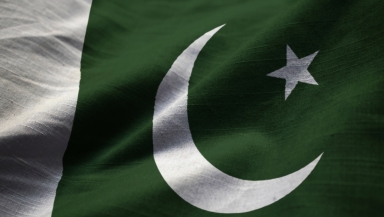
In Pakistan, prisoners belonging to minority religions face significant challenges and discrimination, as detailed in a recent report. The findings bring to light the stark contrast in the treatment of minority prisoners compared to their Muslim counterparts.
The report, titled “Hope Behind Bars,” was published by the National Commission for Justice and Peace (NCJP) on August 15. It includes firsthand accounts from Hindu and Christian prisoners who have experienced discriminatory practices, such as being barred from basic rights and subjected to demeaning labor, while Muslims in similar situations are afforded more privileges.
The NCJP, a human rights organization associated with the Pakistani Catholic Church, highlights that once the religious identity of a prisoner is known, minorities are often assigned tasks like toilet cleaning and denied sentence reductions. In contrast, Muslim prisoners can benefit from sentence cuts by memorizing the Quran or observing Ramadan fasts.
From 2022 to 2025, authorities in Khyber Pakhtunkhwa and Punjab reduced the sentences of 1,937 Muslim inmates, but similar concessions were not extended to Christians, Hindus, and Sikhs.
This comprehensive study spanned three years, from March 2023 to March 2025, and covered 128 prisons across Punjab, Sindh, Khyber Pakhtunkhwa, Balochistan, Gilgit-Baltistan, and Pakistan-administered Kashmir. These facilities collectively house over 102,000 prisoners, with around 1,748 being from minority faiths, predominantly in Punjab.
The report indicates that Christian prisoners endure particularly severe conditions, often being labeled as “untouchables” and facing harassment from both inmates and prison staff.
Blasphemy law accusations exacerbate the vulnerability of these prisoners. According to the National Commission for Human Rights (NCHR), 705 individuals, Muslims and non-Muslims alike, are currently incarcerated under blasphemy laws in Punjab and Khyber Pakhtunkhwa.
An example highlighted in the report is the case of Nadeem James, a Christian sentenced to death for allegedly sharing blasphemous content via WhatsApp. His brother, Faryad Masih, reported to UCA News that police tortured eight of their family members in 2016 to coerce James to surrender.
“This was not justice; it was coercion — driven by mob pressure and religious extremism,” stated Joseph Jansen, a Christian rights activist, in a conversation with UCA News. He emphasized the need for international intervention to urge Pakistan to stop these abuses and to align prison conditions with United Nations human rights standards.
The NCJP has called for a series of reforms in the prison system, advocating for equal access to religious activities, enhanced mental health support, secure complaint mechanisms, skill development initiatives, and improved legal assistance for minority prisoners.
This article was originally written by www.christiantoday.com