Supreme Court Decision on Birthright Citizenship Faces Criticism from Hispanic Christian Leaders
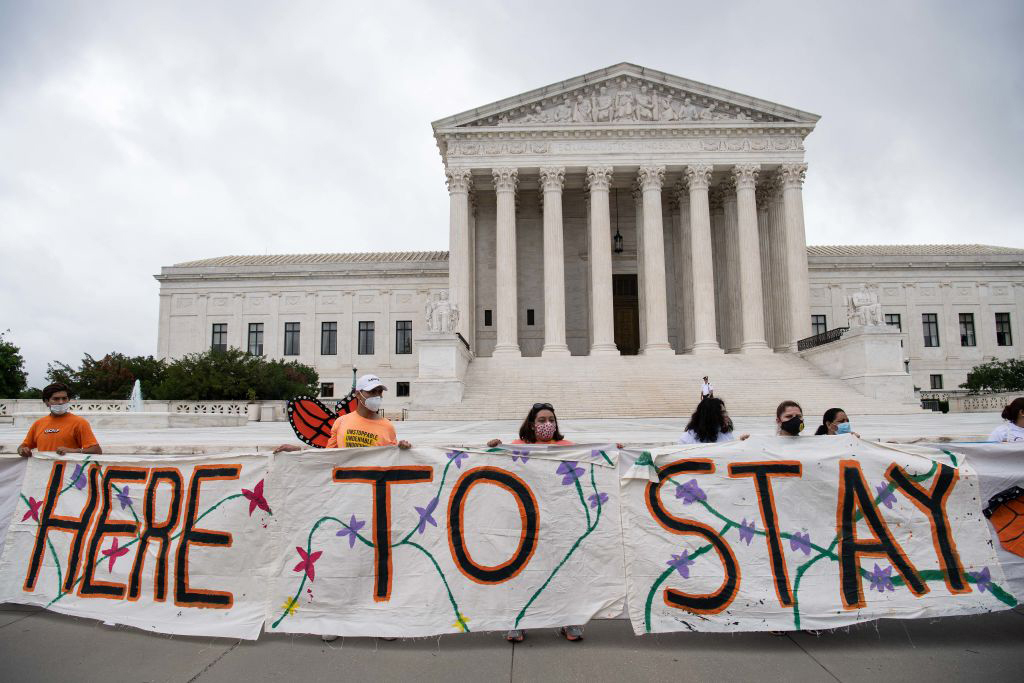
The recent ruling by the U.S. Supreme Court, which limits the scope of nationwide injunctions and affects policies on birthright citizenship, has led to significant backlash from Hispanic Christian communities. The decision, stemming from the case Trump v. Casa, Inc., allows the administration to restrict automatic citizenship for children born in the country to undocumented immigrants.
The ruling, decided by a 6-3 vote, has been described by Carlos Durán, president of the National Alliance of Hispanic Pastors (NAHPA), as a direct attack on human dignity. Durán, a prominent pro-life advocate, argues that the decision undermines core values of life and family.
Durán expressed his concerns, stating, “Denying citizenship to babies born on American soil is not hard, it’s cruel.” He emphasized the importance of maintaining the nation’s commitment to life and family, urging leaders to prioritize human dignity over political convenience.
NAHPA views the decision as both legally and morally troubling, suggesting it sets a concerning precedent for future generations. The group stresses that their mission is to represent the Hispanic Christian community’s values to the government, focusing on life, family, and religious freedom.
The case involves multiple parties who challenged President Trump’s order to end birthright citizenship. The U.S. Constitution’s 14th Amendment states, “All persons born or naturalized in the United States, and subject to the jurisdiction thereof, are citizens of the United States and of the State wherein they reside.” However, the order contends this was never meant to apply universally.
Justice Amy Coney Barrett, supported by other conservative justices, penned the majority opinion, arguing that the use of nationwide injunctions exceeds the authority granted to federal courts. She referenced a Harvard Law Review study which notes the increasing frequency of such injunctions in recent years.
Rev. Gabriel Salguero, president of the National Latino Evangelical Coalition, emphasized that the 14th Amendment clearly guarantees citizenship to those born on U.S. soil. “As Latino Evangelicals, we affirm that birthright citizenship is both a constitutional guarantee and a moral conviction rooted in our faith,” he stated.
RenaceUSA, a pro-life organization, also criticized the Supreme Court’s decision. Patricia Ruiz Cantù, Executive Director of RenaceUSA, argued that the ruling contradicts pro-life values and diminishes the dignity of families. “Stripping citizenship from children born in this country does not make us safer or stronger; it makes us forget who we are,” she remarked.
This ruling has provoked significant discussion among religious and legal communities, highlighting differing interpretations of constitutional rights and their implications for vulnerable populations.
This article was originally written by www.christianpost.com