As Wales celebrates St David’s Day on 1 March, the longstanding relationship between the Welsh people and the Bible continues to evolve into the digital era. This evolution showcases the adaptability of ancient texts in modern contexts.
Historical Context
During the sixth century, when Dewi Sant, or St David, lived, the Bible in western Europe was available exclusively in Latin, housed in beautifully illustrated manuscripts within monasteries. This meant that the majority of people, except for monks and priests, accessed Scripture through sermons, art, and communal rituals. Despite the absence of the Bible in their native language, Wales embraced Christianity and dispatched missionaries throughout the Celtic regions.
The Welsh Bible’s Beginnings
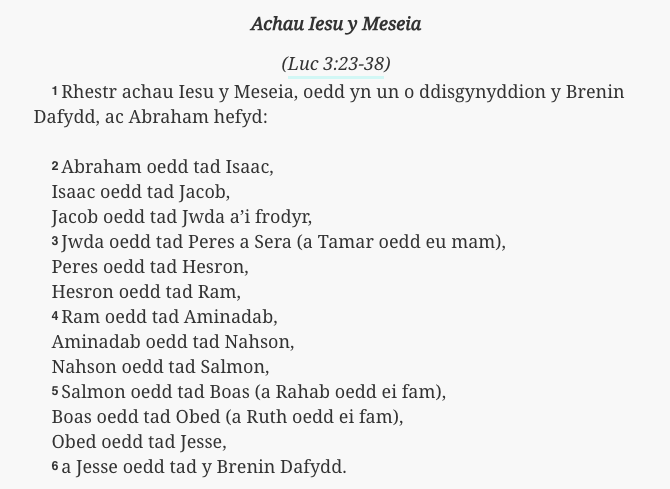
The year 1563 marked a legislative turning point under Queen Elizabeth I with an Act of Parliament mandating the translation of the Bible into Welsh. By 1567, the New Testament appeared in Welsh, followed by the entire Bible in 1588, securing copies in every parish church, literally chained to prevent removal.
Modern Translations and Accessibility
Fast forward to 1988, a modern translation, Y Beibl Cymraeg Newydd, was introduced, later revised in 2004 as Y Beibl Cymraeg Newydd Diwygiedig, now the prevalent Welsh-language Bible.
beibl.net Initiative
The linguistic gap between literary Welsh and spoken Welsh led to Gobaith i Gymru (Hope for Wales) embarking on translating the Bible into the everyday language of Welsh speakers. This translation, especially designed for younger audiences and non-traditional churchgoers, utilized advanced Bible software and was made available online at https://beibl.net/. The entire Bible, dubbed “beibl.net,” was completed by 2013 and was one of the first to be published online before print in 2015.
Introducing ap Beibl
In collaboration with Gobaith i Gymru, the Bible Society launched a mobile app, ap Beibl, in 2015. Notably, “ap” means “son of” in Welsh, adding a cultural pun to the app’s name. This app was among the first of its kind for the Welsh language and remains freely available for download.
Preserving Heritage Through Digitisation
To celebrate the 450th anniversary of the 1567 Welsh New Testament, a digitisation project began in 2017 to make historic Bible translations accessible. This initiative overcame challenges faced by Welsh-speaking Bible students who previously relied on English resources due to limited availability in Welsh. Volunteers, including those from MissionAssist, worked to catalog and digitise a wide array of Welsh Bible translations now available on ap Beibl and https://cymraeg.global.bible/.
Welsh Bible on YouVersion
Globally renowned, the YouVersion app included William Morgan’s Welsh Bible in 2011, followed by Beibl Cymraeg Newydd Diwygiedig and beibl.net. Users can engage with Welsh texts directly via the app, which now offers numerous Welsh resources, second only to English.
Embracing Audio Formats
The audio format of the Welsh Bible has gained popularity, with the New Testament of Y Beibl Cymraeg Newydd Diwygiedig recorded by Faith Comes by Hearing in 2010 and later made available online. Projects like these have expanded to include various Welsh dialects, enhancing accessibility.
Digital Lectionary and Modern Worship
The Church in Wales has maintained its bilingual approach, facilitating services in both English and Welsh. Its initiative to digitise the lectionary brought about the Llithiadur Digidol (Digital Lectionary) in 2024, providing a modern, interactive platform for scriptural engagement, accessible at https://lectionary.churchinwales.org.uk/.
The ongoing digital transformation of the Welsh Bible ensures that it remains a vital part of the cultural and spiritual life of Welsh speakers everywhere, adapting to the preferences of a tech-savvy generation.
This article was originally written by www.christiantoday.com