The story of Zacchaeus, the tax collector from Jericho, is a familiar one, yet it holds a surprising twist. Traditionally believed to have climbed a sycamore tree to see Jesus, Zacchaeus’s story may not involve a sycamore tree at all.
Revisiting the Story of Zacchaeus
Zacchaeus, whose name is a Greek form of the Jewish ‘Zaccai’, is famously known from the Gospel of Luke 19:1–10. As a tax collector in Jericho, Zacchaeus was notorious among his peers for his association with the Romans. Eager to catch a glimpse of Jesus, he climbed a tree due to his short stature. Jesus noticed him, leading to an invitation to Zacchaeus’s home, much to the dismay of the locals. This encounter prompted Zacchaeus to repent and pledge restitution for his past misdeeds.
Eyewitness Accounts in Luke
The Gospel of Luke is noted for its detailed narratives, suggesting firsthand accounts. Luke 1:2 implies that stories like Zacchaeus’s may have been gathered from direct witnesses, possibly even from Zacchaeus himself.
The Ancient City of Jericho
Jericho, a historic town in Judea on the west bank of the Jordan River, is celebrated as one of the oldest inhabited settlements. Known for its lush orchards, Jericho was an oasis with a rich agricultural history, earning its biblical moniker as the ‘city of palms’ as stated in Deuteronomy 34:3.
The Tradition of Tree Gatherings
Trees have historically served as gathering spots in warm climates, offering shade and a place for meetings. The Tolpuddle sycamore in England, famous for the Tolpuddle Martyrs’ meetings in 1833, is an example of this tradition. Similarly, people in Jericho would gather under large trees for various communal activities.
Understanding Sycamore Trees
The term ‘sycamore’ is applied to various trees worldwide, often confusing due to differing regional species. In the British Isles, the ‘Acer pseudoplatanus’ is mistaken for the biblical sycamore. However, this type of sycamore isn’t native to the Middle East.
In North America, ‘sycamore’ refers to ‘Platanus occidentalis’, while in Australia, several other trees bear the name. None of these grew in the Middle East during Jesus’s time.
Biblical Fig Trees
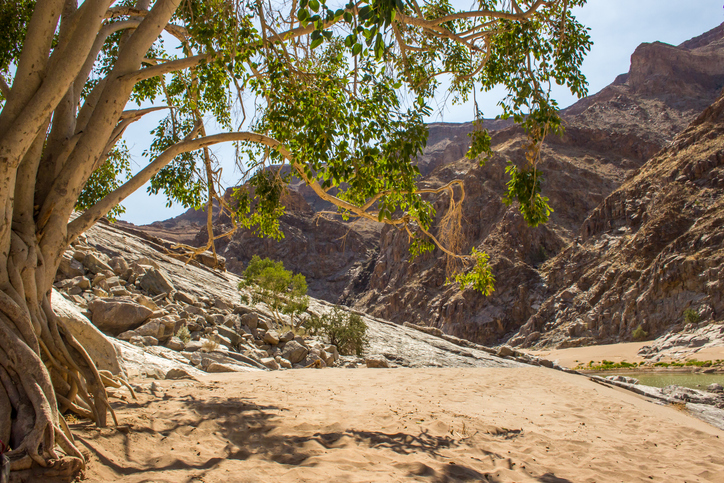
The tree Zacchaeus climbed was likely a fig, not a sycamore. The Bible mentions two types of fig trees, with the ‘Ficus sycomorus’ being the wild variety present in the Middle East. Known for its strength and climbable branches, this tree fits the description in Luke 19:4.
Modern Jericho and Its Traditions
Today, Jericho features sites traditionally associated with Zacchaeus, including trees believed to be the ones he climbed. These trees, ‘Ficus sycomorus’, have become pilgrimage sites, reflecting long-standing local beliefs about their biblical significance.
Translation Challenges in the Bible
The portrayal of the tree in Luke 19:4 varies across Bible translations. Many versions incorrectly suggest a sycamore tree, a legacy of the King James Version’s transliteration from Greek rather than accurate translation. Alternatives like the New International Version offer ‘sycamore-fig’, while some translations opt for ‘fig tree’.
Historically, translations have influenced perceptions, with early translators like William Tyndale recognizing the need for accurate renderings, opting for ‘wild fig’ in his revised New Testament.
Clarifying Common Misunderstandings
The misidentification of Zacchaeus’s tree reflects broader challenges in biblical interpretation and tradition. While the tree type may seem minor, it highlights how traditions can shape and sometimes distort biblical narratives.
This article was originally written by www.christiantoday.com