Historic Lawsuit Highlights Funding Disparities for Black Colleges
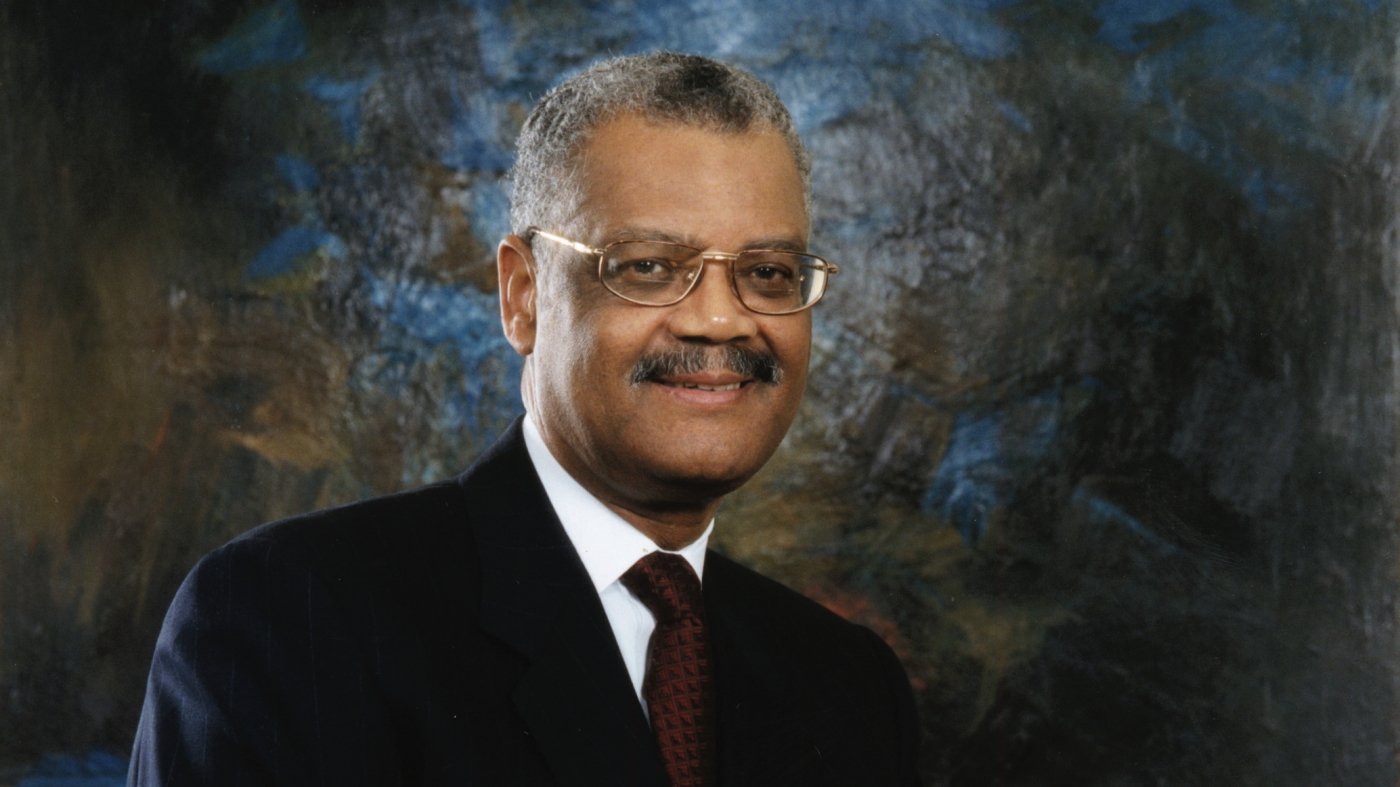
In the realm of higher education, Earl Richardson’s legacy extends far beyond his tenure as a college president. Through his leadership, a groundbreaking lawsuit emerged, shedding light on the financial inequalities faced by historically Black colleges and universities (HBCUs) across the United States.
Richardson, who passed away at 81, was at the helm of Morgan State University in Baltimore when he orchestrated a legal battle that spanned 15 years. This effort culminated in a landmark settlement, which saw the state of Maryland agreeing in 2021 to provide $577 million in additional funding over a decade to four HBCUs. This legal victory has since amplified discussions about funding inequities affecting Black academic institutions nationwide.
During Richardson’s presidency from 1984 to 2010, he was often frustrated by the limited financial support from the state. The lawsuit accused Maryland of systematically underfunding its Black colleges and creating unfair competition by enhancing similar programs at predominantly white institutions. David Burton, a plaintiff in the case, equated it to the historic Brown v. Board of Education, highlighting its significance in addressing educational disparities, albeit at the collegiate level.
In 1990, as Richardson began his presidency, students protested the deteriorating conditions of Morgan State’s campus, including leaking roofs and outdated science labs. Edwin Johnson, a participant in the protests, initially targeted the university administration but soon realized the state’s role in the institution’s financial struggles. “We originally were protesting against Morgan’s administration,” Johnson said. “But then after we dig and do a little research, we find out it’s not our administration, but it’s the governor down in Annapolis that isn’t equipping the administration with what they need to appropriately run the school.”
Richardson, who had participated in civil rights movements during his student years, played a subtle role in redirecting the students’ focus towards the state government, as Johnson recounted. This activism paved the way for the subsequent lawsuit.
Due to Richardson’s position as a state employee, he couldn’t directly sue Maryland. Instead, a coalition of current and former students, known as the Coalition for Equity and Excellence in Maryland Higher Education Inc., became the plaintiff. Despite this, Richardson was the driving force behind the case, armed with extensive historical knowledge that fortified the arguments presented in court.
Even during trial proceedings, Richardson’s influence was evident. State attorneys unsuccessfully attempted to bar his presence in the courtroom, where he served as an expert witness. Jon Greenbaum, who helped argue the case, noted Richardson’s critical role in providing historical context, which was essential for the plaintiffs’ case.
The settlement marked the beginning of what is now referred to as “Morgan’s Renaissance” or “Richardson’s Renaissance” on campus. Under Richardson’s leadership, Morgan State saw its enrollment double, its campus expand, and the addition of new schools, including those of architecture and social work.
Richardson’s efforts also drew attention to the broader funding challenges faced by HBCUs. These institutions often depend heavily on government funding, which has faced cuts in recent years. A study reveals that HBCUs receive a greater proportion of their revenue from tuition, as opposed to private donations and grants, compared to other colleges (source).
In 2008, Richardson testified before the U.S. House of Representatives, underscoring the mission of HBCUs to educate both talented Black students and those who might not otherwise pursue higher education. “We can make them the scientists and the engineers and the teachers and the professors — all of those things,” he stated. However, this is contingent upon achieving institutional parity and competitiveness with other colleges.