Legacy of Indian Boarding Schools Remembered by Survivors

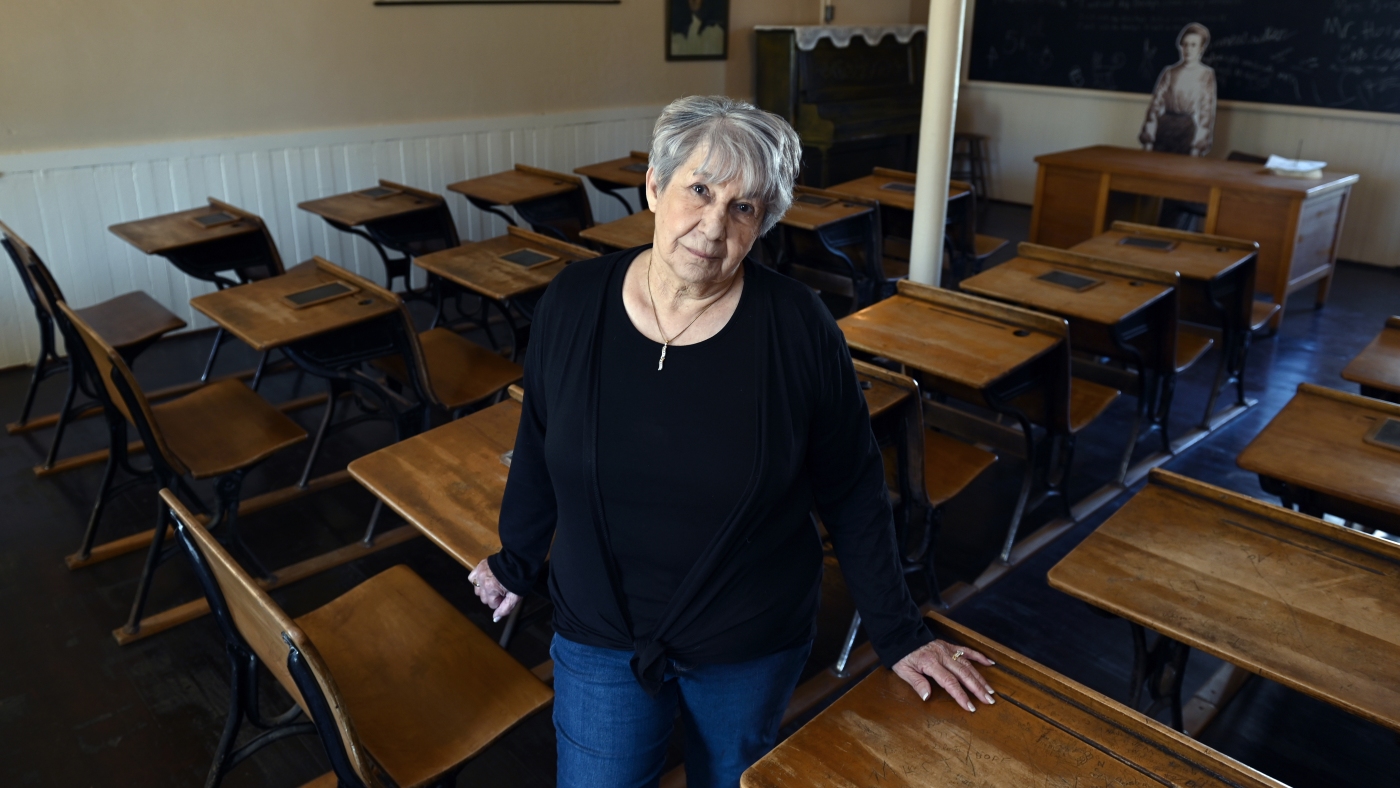
Ramona Klein poses for a photo in a classroom at the former Fort Totten Indian Industrial School in North Dakota. Klein attended the boarding school from 1954 to 1958. Dan Koeck for The Washington Post/via Getty Images
“When I went to boarding school, I was 7,” shared Ramona Klein during an event in Washington, D.C., earlier this month. “My parents didn’t see me — other than a little while during the summer — for four years. Some parents didn’t see their children for 12 years.”
Klein’s experience at the Fort Totten Indian Industrial School in North Dakota, from 1954 to 1958, was marked by separation from her family, abuse, and neglect, typical challenges faced by students at federal Indian boarding schools.
To raise awareness, Klein and others are participating in Orange Shirt Day events, a day dedicated to remembering the hardships endured by Native children sent to these institutions. The day is observed on Sept. 30 in Canada as the National Day for Truth and Reconciliation and is gaining recognition in the United States.
At a vigil held at the Indian Gaming Association conference center, Klein spoke alongside other organizers from the National Native American Boarding School Healing Coalition. Attendees wore orange T-shirts reading “Every Child Matters” to honor the children forced into these schools.
From 1819 to 1969, over 400 such schools were established, funded by the federal government, where Native children experienced forced removal from their homes, often suffering abuse and neglect. An Interior Department investigation revealed that at least 973 American Indian, Alaska Native, and Native Hawaiian children died while attending these schools (source).
“There was physical abuse, sexual abuse, emotional abuse, academic abuse, intellectual abuse and neglect,” Klein said. “If I didn’t start healing, it would impact my children and my grandchildren.”
Orange shirts symbolize the story of Phyllis Webstad from the Stswecem’c Xget’tem First Nation, who had her new orange shirt taken from her on her first day at a Canadian boarding school. Today, she shares her experiences through lectures and writings.
At the University of Minnesota Morris, where a building once served as a federal Indian boarding school, student leader Nani Mahkuk-Guaman emphasizes the importance of creating positive memories in a place historically associated with sorrow. “This was a genocide. We survived, we are resilient,” she stated.
Mahkuk-Guaman, a descendant of the Menominee Tribe of Wisconsin and the Winnebago Tribe of Nebraska, believes that honoring boarding school survivors aids in healing and understanding. “And to help us understand what our parents, grandparents — all of our relatives — went through,” she explained.
While the atrocities of these schools remained largely unacknowledged for decades, the U.S. federal government began to take responsibility in 2022. Survivors like Klein underscore the importance of sharing their stories. “If we don’t remember what happened, it’s going to get lost,” said Klein, 78. “I’m closer to the end of life than the beginning of life, so I have to get busy. I have to stay busy so that it’s not forgotten. … We remember all of the survivors, all of the kids who didn’t go home.”