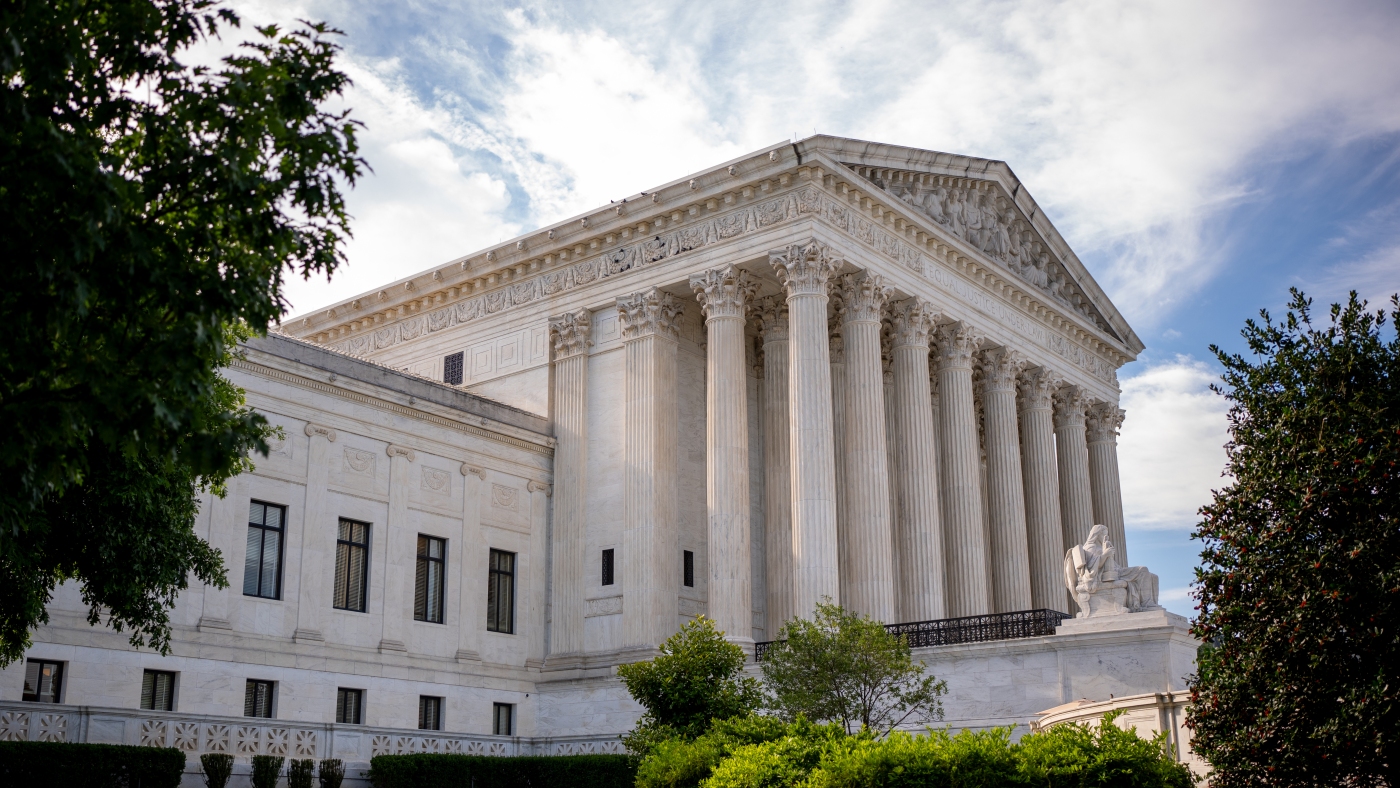
Supreme Court Weighs the Inclusion of Religious Schools in Charter Programs
The U.S. Supreme Court is on the brink of potentially altering the educational landscape by considering whether religious schools can be included in publicly funded charter school programs. This development could redefine the separation between church and state in education, affecting laws across the country.
Charter schools, known for their flexibility and innovation, operate in 45 states, including Oklahoma, under both federal and state laws. These schools, although publicly funded and state-supervised, are required to be non-sectarian. However, this requirement is being challenged by two Catholic dioceses in Oklahoma aiming to establish a Catholic school, St. Isidore of Seville, as a charter school. The state’s Supreme Court previously ruled against this, citing constitutional bans on state-funded religious indoctrination.
During the Supreme Court session, some justices appeared to support the inclusion of religious schools. Justice Brett Kavanaugh remarked, “All the religious school is saying is, ‘Don’t exclude us on account of our religion.’ … And when you have a program that’s open to all comers except religion, that seems like rank discrimination against religion.” Justices Samuel Alito, Neil Gorsuch, and Clarence Thomas echoed this sentiment, suggesting that excluding religious schools from charter programs might infringe on religious freedoms.
Conversely, Chief Justice John Roberts expressed mixed feelings, questioning whether the inclusion of religious schools would represent a greater involvement than previous school choice rulings. The court’s liberal justices remained skeptical, with Justice Elena Kagan pointing out that the charter system was designed to enhance curricular diversity, not to fund religious education. She warned that including religious schools could lead to a proliferation of various religious institutions seeking public funding.
In the debate, Justice Kentanji Brown Jackson highlighted the 1994 federal law mandating charter schools to be non-sectarian, questioning whether this law is unconstitutional. Michael McGinley, representing St. Isidore, acknowledged that the school negotiated certain terms in its charter contract to align with church principles, which raised concerns about the potential for religious modifications in public education contracts.
From a governmental perspective, Solicitor General John Sauer, representing the Trump administration, argued that the choice lies with parents, and that allowing religious charter schools does not breach constitutional boundaries. However, Oklahoma’s representative, Gregory Garre, cautioned against changing the established constitutional norm of non-funding for religious schools, citing possible confusion and disruption in state education systems.
Justice Amy Coney Barrett recused herself from the case due to previous involvement with St. Isidore. This leaves the possibility of a tie, though the likelihood appeared slim. A decision, expected by early summer, could set a precedent for religious schools in charter programs, depending on Chief Justice Roberts’ final stance.