New Loan Limits Set to Reshape Graduate Education Financing
For the past 20 years, graduate students in the United States have had the flexibility to borrow unlimited federal student loans to fund their education. This flexibility allowed students to borrow amounts that matched their tuition needs, even if it meant taking out $60,000 annually. However, this landscape is about to change.
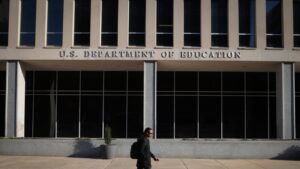
The Trump administration is implementing a plan to cap these loans, limiting borrowing to $20,500 annually, with a total cap of $100,000, effective July 1. Although a federal court has temporarily blocked a minor component of this plan, the U.S. Education Department confirmed the limits will proceed as scheduled. This development is one of the most significant and contentious changes in higher education policy this year, amidst a slew of other adjustments.
According to U.S. Secretary of Education Linda McMahon, the intention behind this move is to pressure colleges into reducing tuition fees. “College costs are just exorbitant. Students are burdened with debt,” McMahon stated during a House education committee meeting in May. The strategy involves the rollback of the Grad PLUS program through the One Big Beautiful Bill Act by Republicans, aiming to encourage students to select more affordable programs, compelling expensive institutions to lower their fees.
A Concept with Historical Roots
The notion that federal student loans influence college pricing is not new. It can be traced back to an opinion piece published on February 18, 1987, by then-Education Secretary William Bennett. Bennett criticized colleges for tuition hikes surpassing inflation rates and argued that federal student aid allowed institutions to increase tuition, banking on federal loan subsidies to soften the rise. This concept became known as “The Bennett Hypothesis.”
Phillip Levine, an economics professor at Wellesley College, explains, “The Bennett Hypothesis essentially says that, if you provide greater federal aid to schools, they will respond by increasing the price.” Nearly four decades later, this hypothesis is being revisited by Republicans to rationalize the new student borrowing limits.
The Role of Graduate Education in Escalating Student Debt
While limits on undergraduate loans have remained unchanged for years, the cost of graduate education has seen significant increases. Robert Kelchen, a higher education professor at the University of Tennessee, highlights that graduate students, despite being a smaller demographic, account for nearly half of the current borrowing.
The Grad PLUS program, which allowed students to borrow without limits, is identified as a contributing factor to rising graduate costs. Preston Cooper from the American Enterprise Institute suggests that the availability of unlimited loans enabled schools to consistently raise tuition, knowing federal loans would cover the additional costs.
Research Insights
Research by Jeff Denning and his team tested the Bennett Hypothesis, focusing on the impact of the Grad PLUS program’s unlimited loans in Texas. They found that for every additional dollar received in loans, graduate schools increased their prices by $0.64, supporting the hypothesis in certain contexts. However, Kelchen’s research did not find a direct correlation between federal aid and pricing in business, medical, and law schools.
Experts agree that the Bennett Hypothesis may hold in specific situations but is not universally applicable. Kelchen notes that the profitability of graduate programs varies, with medical schools being notably costly for institutions, indicating that federal loan limits might not reduce prices significantly.
The consensus among economists is that the Grad PLUS program was flawed in allowing unlimited borrowing. Sandy Baum from the Urban Institute acknowledges, “I think there was broad consensus that the idea of letting graduate students borrow basically infinite amounts of money was not a good idea.”
Potential Impact of Ending Grad PLUS
While some anticipate that reducing student loans will pressure colleges to lower prices, immediate tuition cuts are unlikely. Cooper from AEI suggests that the policy could gradually influence price sensitivity and competition among institutions.
Concerns remain about the sudden implementation of these limits, which could restrict access to graduate education for low-income students who may struggle to secure private loans. Analyses indicate that the new limits will affect approximately 30% of graduate borrowers.
In preparation for the change, some graduate programs have already adjusted their tuition prices, offering discounts through new scholarships. Borrowers are hopeful that more institutions will follow suit.