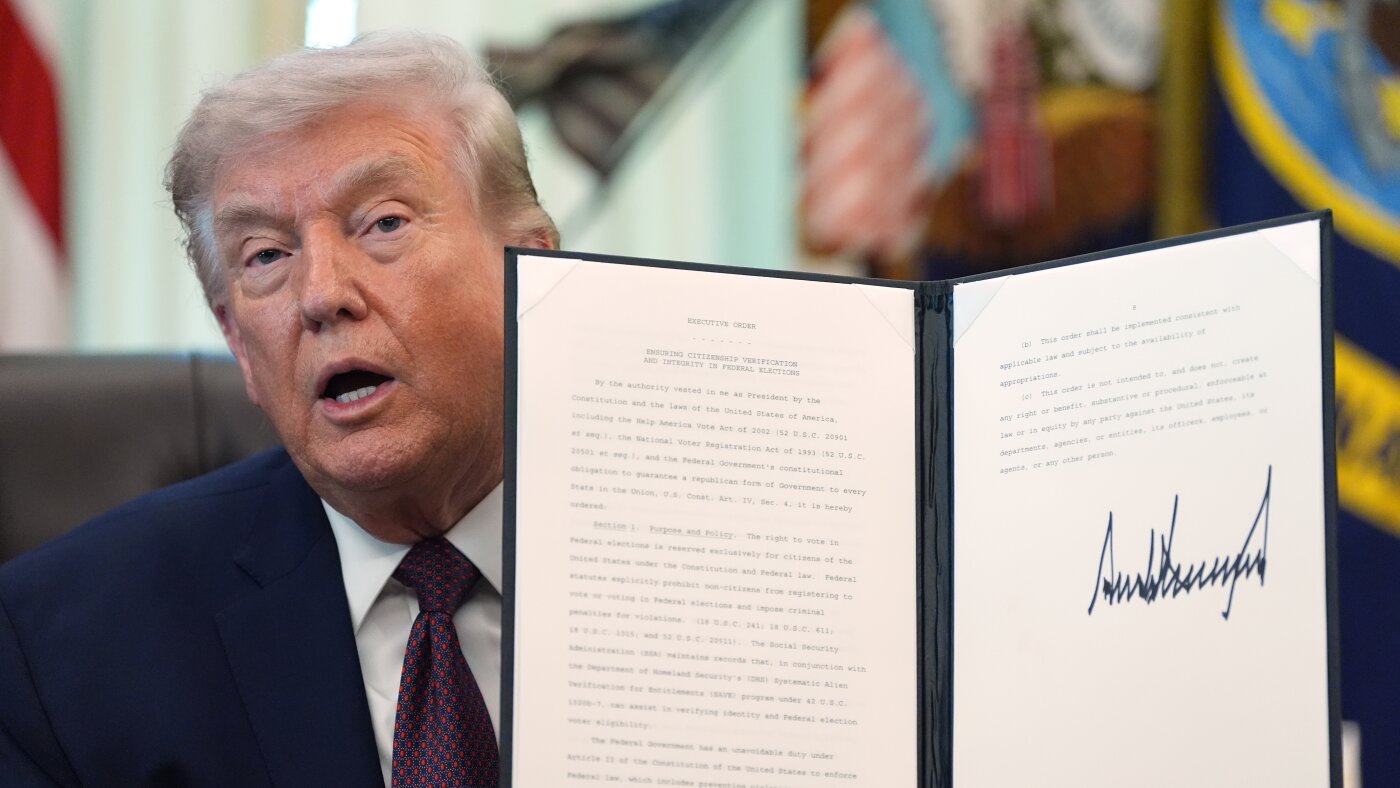
Key Ruling Leaves Trump’s Controversial Voting Order Intact for Now
In a significant development, a federal judge has opted not to issue a temporary block on President Trump’s executive order aimed at restricting mail-in voting. This decision, delivered by U.S. District Judge Carl Nichols, a Trump appointee, maintains the order’s status, which continues to push the boundaries of presidential authority under the U.S. Constitution.
The decision issued on Thursday keeps the order active, at least for the moment, despite a separate 2025 order being halted by the courts (link).
Efforts to Control Mail-In Voting
Issued on March 31, the latest executive order directs the Department of Homeland Security and the Social Security Administration to compile lists of adult U.S. citizens for each state, which would then be shared with state election officials. Additionally, the order mandates that the U.S. Postal Service only deliver mail-in ballots to individuals listed as eligible voters.
Judge Nichols noted, “The Court recognizes that the Postal Service may ultimately issue a final rule that directly affects Plaintiffs or their members, or that the Government may develop State Citizenship Lists that omit specific individuals due to particularized flaws.” He added that plaintiffs could seek further legal action if future developments justify such moves.
Legal Challenges and Political Reactions
Multiple lawsuits are contesting the order, arguing that Article I of the Constitution delegates election rule-making to state legislatures and Congress. Opponents claim that the order improperly directs the USPS to establish election mail regulations.
The ruling coincides with other legal proceedings in Boston, where a similar set of lawsuits is awaiting judicial review. The Trump administration has yet to clarify the order’s implementation, with federal agencies still discussing its execution.
Concerns Over Voter Fraud
Despite President Trump’s assertion that the order aims to prevent illegal voting by noncitizens, studies have shown such occurrences are exceedingly rare. The order has stirred debate, as more registered Democrats than Republicans reported using mail-in voting in the 2024 national election (MIT Election Lab report).
As legal battles continue, the impact of the executive order on mail-in voting for this year’s midterm elections remains uncertain. The outcome of the lawsuits in both D.C. and Massachusetts will likely shape the future of mail-in voting regulations.
Edited by Benjamin Swasey