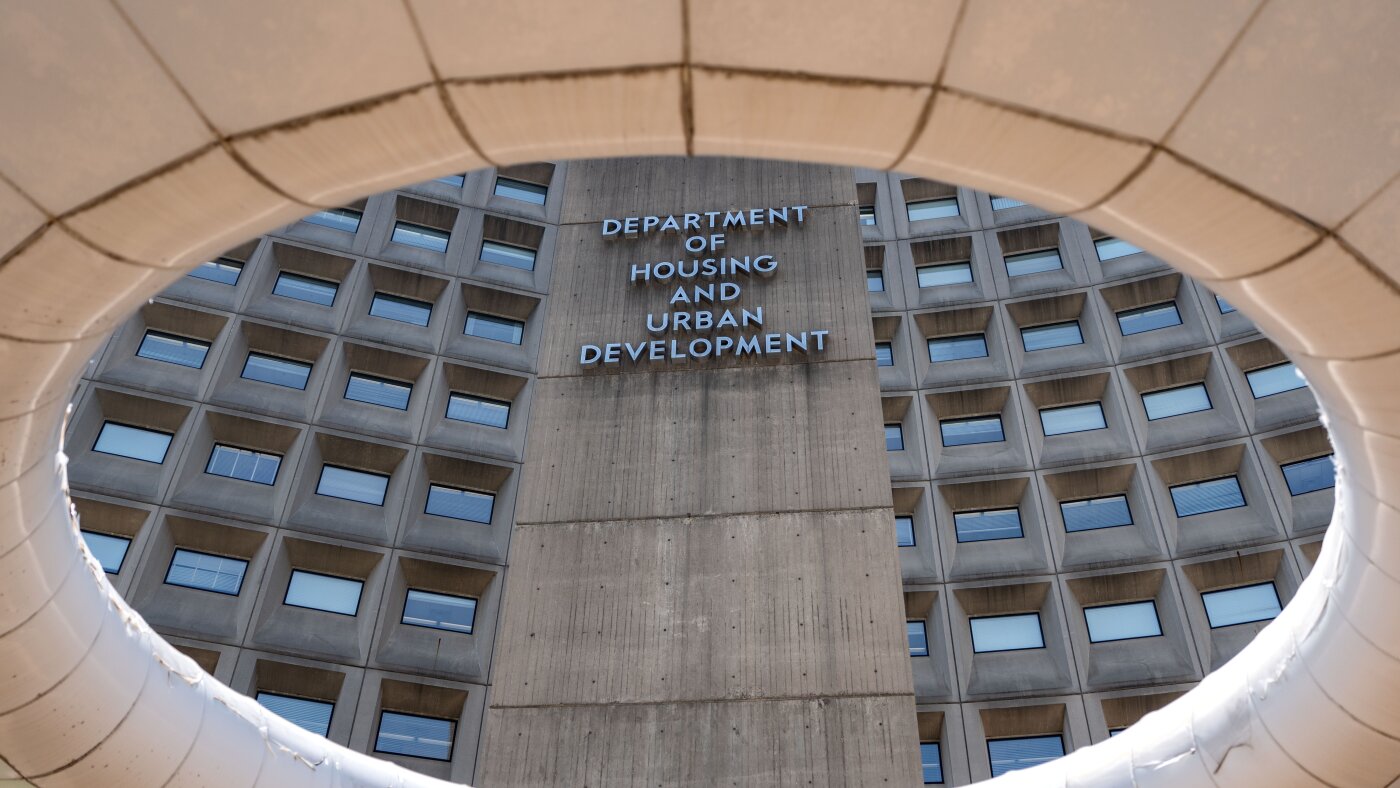

The U.S. Department of Housing and Urban Development headquarters in Washington, D.C. The agency wants to ban families with any undocumented member from federally subsidized housing.
Kent Nishimura/Getty Images
hide caption
toggle caption
Kent Nishimura/Getty Images
In an ongoing effort to reshape federal housing policy, the U.S. Department of Housing and Urban Development (HUD) is moving to exclude families with undocumented members from accessing federally subsidized housing. The proposed regulation would also mandate that local housing authorities report tenants not qualified for rental aid to U.S. Citizenship and Immigration Services.
This proposal aligns with the Trump administration’s broader immigration policy, as underscored by HUD Secretary Scott Turner in his Washington Post column. He emphasized the need to “end the era of illegal aliens and other ineligible noncitizens exploiting public housing resources.”
While undocumented individuals do not receive federal rental aid, they can reside with family members who qualify, including U.S.-born children. Turner noted approximately 24,000 such residents currently live in HUD-subsidized housing. He, along with other conservatives, views this as inequitable given the constrained funding and extended waitlists for housing assistance.
Permanent legal residents are eligible for housing aid. However, if this rule is implemented, cities with large immigrant populations, such as New York and Los Angeles, would be most affected.
Shamus Roller, executive director of the National Housing Law Project, criticized the proposal, stating, “Trump’s proposal runs contrary to federal law and is designed to instill fear and hardship on immigrant families.” He argued that the administration is misplacing blame for the housing crisis on immigrants to further dismantle HUD’s essential programs.
A similar rule was proposed during Trump’s first term but was not finalized due to the pandemic, with the Biden administration later rescinding it. If enacted now, nearly 80,000 individuals, including almost 37,000 U.S. citizen children, could face eviction, according to a recent analysis by the Center on Budget and Policy Priorities.
Tens of thousands of U.S. citizen children could face eviction or family separation
Families who have lived in the U.S. for decades may confront difficult decisions if the proposal passes.
“We were really planning on staying here,” expressed a resident of Los Angeles public housing, who wished to remain anonymous due to fear of deportation. “Our family is our kids, and this is where they grew up.”
The woman and her husband, who immigrated from Mexico nearly 30 years ago, have been working towards legalizing their status. Their son, who came with them, benefits from the Deferred Action for Childhood Arrivals (DACA) program, which has shielded him from deportation. However, recent policy shifts have urged “Dreamers” to self-deport.
The family has discussed the potential outcomes of being separated or relocating to Mexico, a country their children only know from photos and stories. “They might not have a place to call home and to come back to,” she said.
Conservatives say federal aid is so limited that housing people here illegally is wrong
The Heritage Foundation’s Project 2025 endorses the proposed rule, emphasizing HUD’s duty to aid American citizens in need. It suggests that local entities or nonprofits might support noncitizens instead.
With federal rental assistance already insufficient for the demand—only 1 in 4 eligible Americans receive it, and waitlists stretch for years—some conservatives argue against accommodating those who entered the country illegally. Howard Husock from the American Enterprise Institute suggested revising policy for new tenants to ensure fairness and reduce incentives for illegal immigration, though he acknowledged current tenants with legal leases should not be forcibly evicted.
The change would be costly since mixed-status families pay more
Advocates highlight that mixed-status families, who do not receive subsidies, actually pay higher rents, indirectly supporting others in need.
Marie Claire Tran-Leung from the National Housing Law Project warns that evicting these families could exacerbate poverty and homelessness, especially as local governments struggle with burgeoning numbers of unsheltered individuals.
Another anonymous Los Angeles resident fears the potential impact on her family. With a Mexican and Guatemalan heritage and U.S.-born children, she worries about having no alternative housing options.
The family, seeking aid after unsafe living conditions in their previous apartment, faces challenges due to health issues and precarious employment amid heightened Immigration and Customs Enforcement activities.
The HUD proposal is now open for public comments for 60 days. The agency is required to consider these comments before finalizing the rule. During the previous proposal, 30,000 comments were largely opposed, which could influence potential legal challenges.