Welcome to your morning news briefing. Stay updated by subscribing to the Up First newsletter and listen to the Up First podcast to kickstart your day informed.
Key Developments
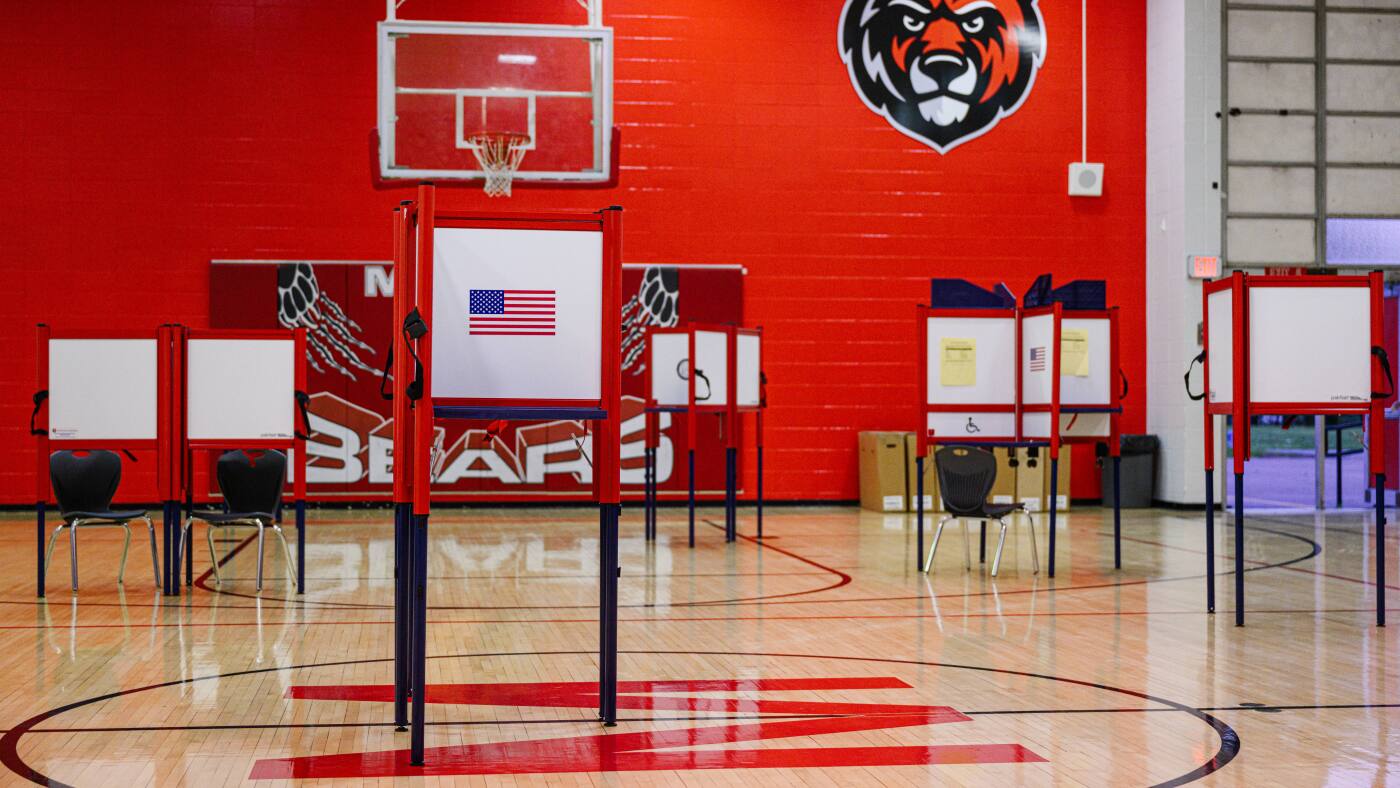
Kentucky’s Republican primary saw Rep. Thomas Massie defeated, losing by nearly 10 points to Trump-endorsed Ed Gallrein. Massie is among several Republicans who have lost their seats after clashing with the former president. The race became the costliest House primary ever, with $33 million spent mainly targeting Massie, as tracked by NPR’s partner AdImpact. In contrast, states like Georgia are seeing a surge in Democratic voter turnout, indicating potential advantages in upcoming midterms. Explore four insights from these primaries.

An attendee wears party colors at a primary election night party for Georgia gubernatorial candidate Rick Jackson on Tuesday in Atlanta.
Brynn Anderson/AP
hide caption
toggle caption
Brynn Anderson/AP
- 🎧 Some Alabama House primary results remain undecided due to redistricting, NPR’s Stephen Fowler reports. Special elections will be needed as the state reverts to older district lines, which may benefit Republicans. Elsewhere, many U.S. elections saw little competition, effectively deciding the general election outcomes yesterday, according to Fowler.
- ➡️ Keisha Lance Bottoms, former Atlanta Mayor, wins Democratic primary for Georgia governor. She is set to compete against the Republican runoff victor. In the GOP primary, Lt. Gov. Burt Jones is set to contend with healthcare executive Rick Jackson next month. Explore more about the Georgia primaries.
President Trump halted planned military strikes on Iran, stating he was “an hour away” from launching them. He cited ongoing “serious negotiations” and granted Iran a few days to a week to reach an agreement. Vice President Vance offered a different interpretation, emphasizing Iran’s choice between negotiations or facing renewed military actions.
- 🎧 Analysts highlight the unpredictability of potential U.S.-Iran conflicts. NPR’s Franco Ordoñez and Mona Yacoubian from the Center for Strategic and International Studies caution that the situation might become a “frozen conflict,” capable of reigniting anytime. Vance noted Iran’s internal disagreements, complicating the negotiation process. Ordoñez further elaborated on the challenges of achieving consensus when parties disagree on negotiating points.
San Diego authorities have provided more details about the California mosque attack that resulted in five fatalities, including the two suspected shooters. Police Chief Scott Wahl stated three victims died trying to thwart the attackers. The victims were identified as Mansour Kaziha, 78, Nader Awad, 57, and Amin Abdullah, 51, with Abdullah reportedly saving 140 children during the incident. The two teenage suspects, who met online, were described by an FBI agent as indiscriminate in their hatred.
- 🎧 The suspects reportedly livestreamed the shooting, NPR’s extremism correspondent Odette Yousef reveals. A 75-page document linked to them suggests involvement in a global white supremacist movement. Yousef notes parallels with the 2019 Christchurch mosque attacks, such as livestreaming and attire. While the suspects’ writings differ by excluding certain pseudoscience and conspiracy theories, they include fears of Sharia law and alleged fraud, indicative of mainstream right-leaning discussions.
Minnesota Governor Tim Walz has enacted a law banning prediction market sites in the state, prompting a lawsuit from the Trump administration. The law targets platforms like Kalshi and Polymarket that enable betting on future outcomes, including elections and sports. Platforms face potential felony charges if they continue operations in Minnesota after August.
Climate Solutions Week

Denver’s climate office is planning to heat and cool a cluster of downtown buildings with water, the heat of Earth and even heat from….sewage.
AAron Ontiveroz/Denver Post via Getty Images
hide caption
toggle caption
AAron Ontiveroz/Denver Post via Getty Images
This week, NPR focuses on stories and discussions about climate solutions. With federal initiatives on hold, local entities are taking steps to reduce climate pollution and adapt to extreme weather.
Denver is tackling climate pollution from its skyscrapers by transitioning from its longstanding steam system to a thermal energy network. The city aims to heat and cool buildings using water, geothermal heat, and even sewage. Plans include an “ambient loop” system connecting 11 city-owned buildings through underground pipes. If successful, Denver could serve as a model for nationwide decarbonization of urban centers.
Deep Dive

CEO of Cambria Marty Davis speaks on the job site of the countertop company’s new $80 million quartz processing plant and rail center in Randolph, Minn., on August 13, 2025. (Photo by The Minnesota Star Tribune via Getty Images)
Richard Tsong-Taatarii/Star Tribune via Getty Images/The Minnesota Star Tribune via Getty Images
hide caption
toggle caption
Richard Tsong-Taatarii/Star Tribune via Getty Images/The Minnesota Star Tribune via Getty Images
A prominent figure in the quartz industry and Trump supporter, Cambria’s CEO Marty Davis, has been leveraging tariffs to disadvantage his competitors. Davis’ company has successfully lobbied for tariffs on imported quartz, driving up costs for rivals while benefiting from increased prices. These actions, perceived as politically motivated, have sparked criticism for harming small businesses and consumers by escalating costs. Delve into Cambria’s tariff lobbying history:
- ➡️ In 2018, Cambria secured tariffs on Chinese quartz imports during Trump’s tenure. The company later targeted imports from India and Turkey.
- ➡️ By September 2025, Cambria and other manufacturers sought a “global safeguard” to address surging imports and alleged trade law violations.
- ➡️ In April, the trade commission supported Cambria’s request for up to 40% tariffs on quartz imports for four years. Trump holds the final decision on their implementation.
3 Things to Know Before You Go

Rubberball/Mike Kemp/Getty Images/Brand X
- A new study reveals that the growing educational and economic disparity between genders is altering U.S. marriage and family dynamics, presenting challenges for women in finding financially stable partners.
- Autumn Barnes’ mother, Barb Barnes, struggled with opioid medication post-heart surgery in 2005. A nurse’s personal story of recovery from addiction profoundly influenced Barb’s approach to managing pain. Discover how this encounter changed her perspective.
- A coalition of 24 states and the District of Columbia filed a lawsuit against a Trump administration rule that restricts federal student loans for graduate degree seekers in healthcare fields. Learn more about the legal challenge.
Edited by Suzanne Nuyen.