Political Repercussions of Trump’s Immigration Policies Intensify
As the midterm elections approach, President Trump’s immigration strategies are facing increasing scrutiny. Recent polls indicate a significant portion of the American public believes immigration enforcement has exceeded acceptable boundaries.

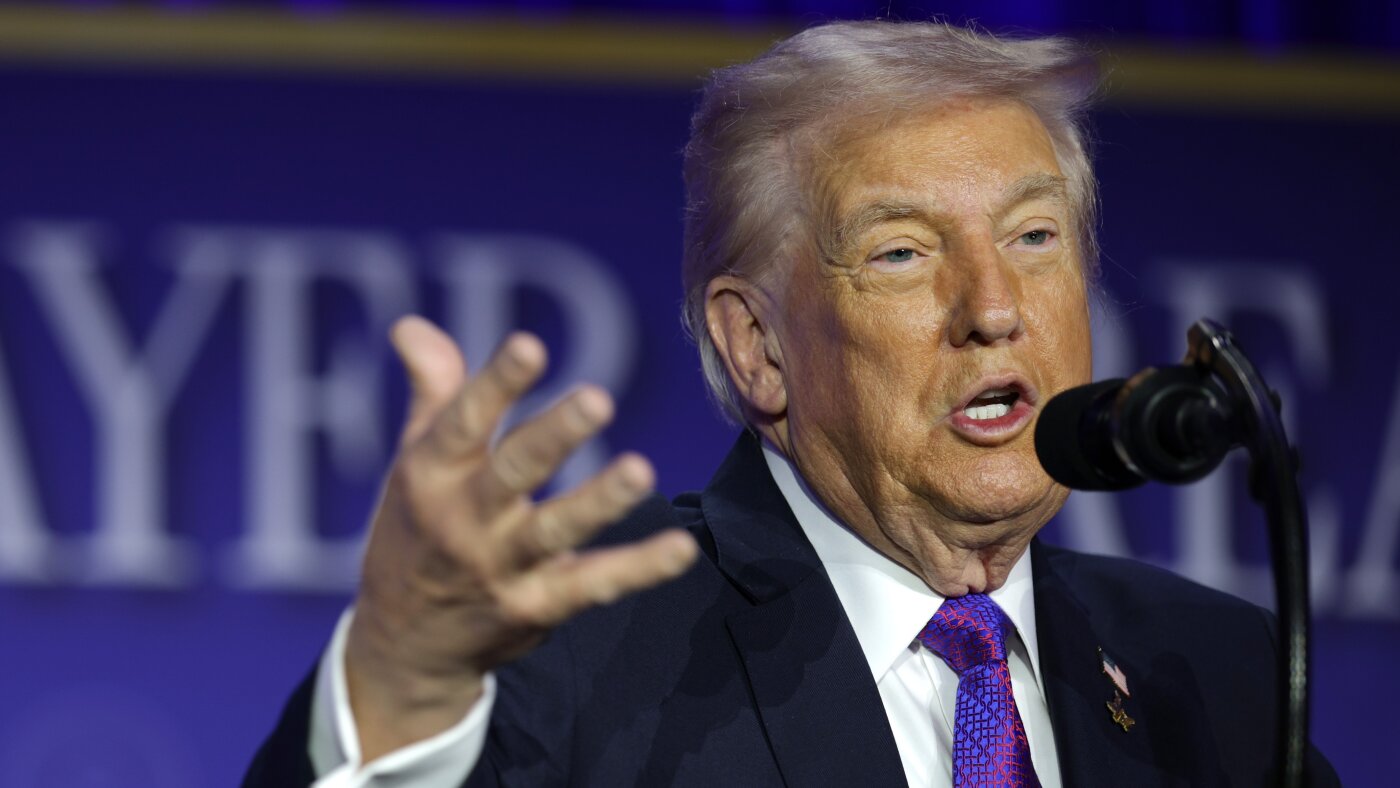
U.S. President Donald Trump speaks during the 74th annual National Prayer Breakfast at the Washington Hilton on February 5, 2026 in Washington, D.C.
Alex Wong/Getty Images North America
According to a recent poll, two-thirds of Americans believe the federal immigration authorities’ enforcement tactics have been excessive. This sentiment is not limited to Democrats but extends to independent voters, whose influence could be pivotal in the upcoming elections.
Republican strategist Alex Conant remarked, “The base loves it, but it’s an issue for the independent voters who decide elections in this country.” Conant noted that while independents favor strong border security and the deportation of criminals, they are uncomfortable with the portrayal of aggressive federal actions.
President Trump’s approach to immigration, a cornerstone of his presidency, now appears to be adversely affecting his political standing as the midterms loom. The criticism intensified following the second death of a U.S. citizen at the hands of immigration officers in Minnesota.
A NPR/Marist poll reveals disapproval from 60% of Americans regarding the work of federal immigration officers. This sentiment has prompted calls even from staunch Republicans for the Trump administration to rethink its strategies and restore public trust.
Texas Governor Greg Abbott emphasized the need for recalibration, stating, “They, being the White House, need to recalibrate on what needs to be done to make sure that that respect is going to be re-instilled.”
In response, President Trump adjusted the Minneapolis operation’s leadership and ordered the withdrawal of 700 federal officers. During an NBC interview, Trump acknowledged, “I learned that, maybe we can use a little bit of a softer touch. But you still have to be tough. We’re dealing with really hard criminals.”
Despite the adjustments, the definition of a “softer touch” remains vague. Press Secretary Karoline Leavitt defended the administration by referencing a Harvard/Harris survey, which she claimed showed majority support for deporting illegal aliens, including those involved in crimes.
Leavitt stated, “Nearly eight in ten Americans say criminal illegal aliens should be deported. A solid majority also support deporting all illegal aliens, regardless of additional crimes.” She added that the focus is now on deporting criminals residing in the country illegally.
Theresa Cardinal Brown, with experience in immigration policy under Presidents George W. Bush and Barack Obama, suggested the administration might be undergoing an “operational pause” to refine its approach. Brown highlighted the introduction of body cameras for federal officers in Minneapolis as a step toward transparency, noting cameras can both expose misconduct and validate proper conduct.
Brown commented, “I do think that probably the administration is thinking, ‘well, if we had body cam footage of our own, we could put our own perspective on it.'” The political stakes are high for Trump, who must address the immigration issue effectively to maintain political leverage, a sentiment echoed by Conant.
Conant warned, “If he loses the immigration issue as a political winner, it’s a real political problem, not just for Trump, but Republicans more broadly.”