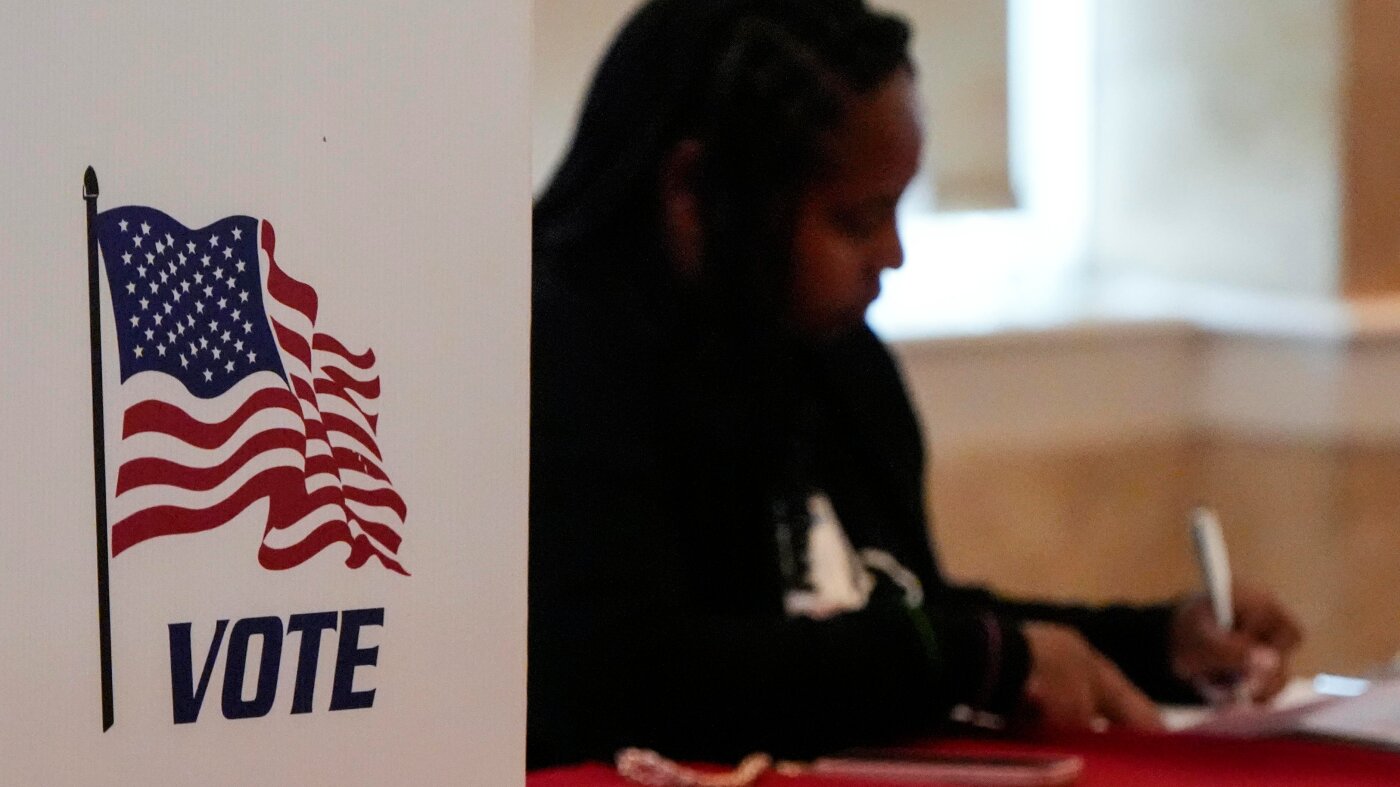
Upcoming Midterm Elections Face Turmoil Amid New Laws and Court Decisions
As the United States approaches its midterm elections, the landscape of voting is being dramatically altered by recent judicial decisions and legislative actions. The Supreme Court’s spring session has brought significant changes to the Voting Rights Act, sparking widespread debate and concern about the future of voting in America.
In a pivotal move, the Supreme Court has narrowed the scope of the 1965 Voting Rights Act, a key piece of civil rights legislation. According to Ari Berman, a journalist and voting-rights expert from Mother Jones, “The Voting Rights Act of 1965, the most important civil rights law of the 1960s, has no teeth left. And that’s just the beginning of what they’ve done in terms of weakening democracy.”
Berman highlights recent court rulings that have preserved mail-in voting by a slim margin and removed long-standing constraints on political party spending for candidates. Concurrently, President Trump has been advocating for the SAVE America Act, a bill that would introduce stringent requirements for voter registration and identification, such as needing a passport or birth certificate to vote.
Berman points out that “Half of all Americans don’t have passports. So already there, you’re talking about half the country can’t comply,” emphasizing the potential barriers these requirements pose for many voters. He further elaborates on the president’s intense focus on voting processes, stating, “Every time he feels like his party is losing, he tries to mess with the mechanics of the voting in one way or another.”
Concerns Over Election Integrity and Potential Challenges
The introduction of the SAVE America Act could be a precursor for contesting election outcomes, particularly if the Republican party faces losses in the midterms. Berman warns, “If Republicans lose, he’s going to say, ‘Well, we didn’t have the SAVE Act, therefore the election was rigged.'” This narrative could lay the groundwork for significant interventions in the electoral process, raising alarms among voting rights experts.
Berman, a seasoned author on voting rights, expresses his fears about the potential for interference in the voting process, a situation unprecedented in American history. He notes the historical bipartisan support for the Voting Rights Act, which was strongly backed by Congress and signed by multiple Republican presidents, but now faces challenges from a Supreme Court that has shifted away from this consensus.
The recent Louisiana v. Calais ruling has further weakened the Voting Rights Act by striking down provisions for majority-minority districts, potentially reducing minority representation. This decision has prompted several southern states to redraw their electoral maps, leading to concerns about a return to “a politics of Jim Crow” and white supremacy, as Berman describes.
Supreme Court Decisions and Campaign Finance
Another critical Supreme Court ruling has removed limits on political party spending, allowing unlimited financial contributions to candidates. This decision is part of a broader trend by the Roberts Court to deregulate campaign finance, enhancing the influence of wealthy individuals in politics.
In addition, the court’s stance on mail voting has been contentious. Despite evidence showing that mail voting is secure, dissenting justices have raised broader objections to the practice, potentially encouraging efforts to restrict mail voting further. This is a concern for many, given that states like Oregon and Washington have successfully conducted mail elections without increased fraud.
The Ongoing Battle Over Gerrymandering and Voting Rights
Looking ahead, both Republican and Democratic states are expected to redraw their electoral maps following the midterms, which could exacerbate political polarization and partisanship. Berman calls for national solutions to prevent partisan gerrymandering, which he believes could worsen if left unchecked.
Amid these challenges, there is growing support for Supreme Court reform among Democrats, with proposals ranging from term limits to court expansion. Berman notes that while Congress could enact new voting rights legislation, the Supreme Court remains a potential obstacle, highlighting the importance of addressing judicial oversight in the democratic process.