Historic Carousel Reopens, Celebrating Civil Rights Legacy
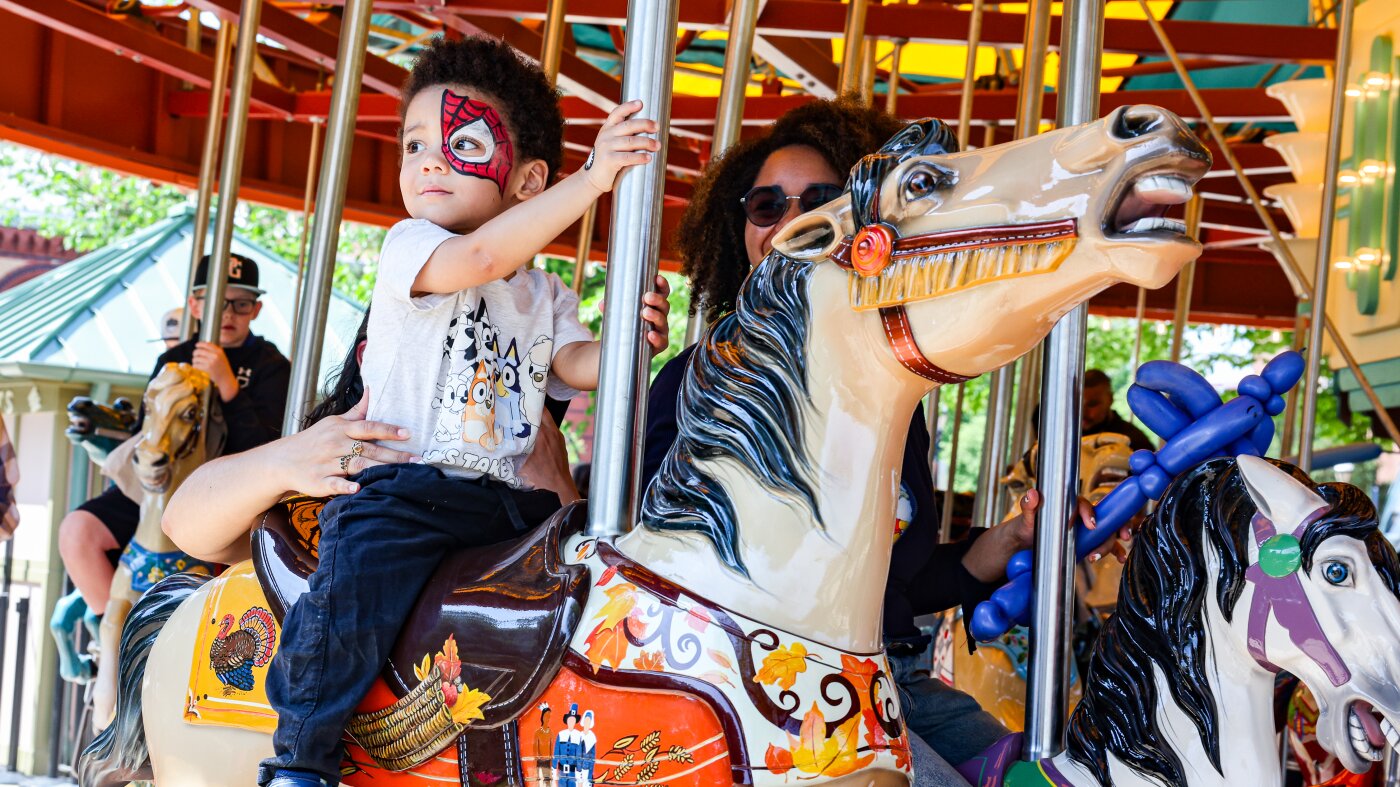
After nearly three years of closure for restoration, the Smithsonian Institution’s carousel on the National Mall is once again delighting visitors. This iconic ride, known for its brightly painted ponies, has a rich history intertwined with the Civil Rights Movement.
The reopening ceremony included a ribbon-cutting that highlighted the carousel’s historical significance. A group of African American adults from Baltimore, many of whom were among the first to desegregate the carousel in the 1960s, had the honor of being the first to ride it again.
Janice Chance, who first rode the carousel in 1966 at the age of 13, shared, “My family, we used to go there all the time once they let us in.” Chance’s son, a Marine, died in Afghanistan in 2008. She expressed that the carousel’s return to the National Mall holds deep meaning for those who fought for “the freedoms of this country.”
The Gwynn Oak Amusement Park, where the carousel was originally located, was desegregated on August 28, 1963, coinciding with Dr. Martin Luther King Jr.’s “I Have A Dream” speech. Sharon Langley, who was the first Black child to ride it, was part of the reopening event. Langley rode a horse named Freedom Rider, a tribute to the desegregation riders, and remarked on its significance as “a monument for children to come and enjoy, ride and experience the pursuit of happiness.”
Following Hurricane Agnes in 1973, Gwynn Oak’s amusement rides were devastated, leading to its closure. The carousel was then put into storage. Smithsonian Secretary S. Dillon Ripley recognized the need for a grand replacement for the aging carousel on the National Mall, and Gwynn Oak’s carousel, a symbol of the Civil Rights struggle, was chosen. Smithsonian Secretary Lonnie Bunch III noted its historical value in Smithsonian Magazine, saying it was “an emblem of the struggle for civil rights.”
Now, the carousel, featuring 54 horses, a sea monster, a pig, and two ADA-compliant chariots, stands proudly in front of the Smithsonian’s Arts and Industries Building. While its Civil Rights history may not be immediately apparent to the children enjoying it today, it remains an enduring symbol of progress and unity.
Seven-year-old Lucas Platt from Virginia praised the ride, saying, “It’s actually one of the fastest carousels I’ve really been on… It’s great. I really like it. Nothing bad about it.”

Image credit: Valerie Plesch for NPR
This article was originally written by www.npr.org