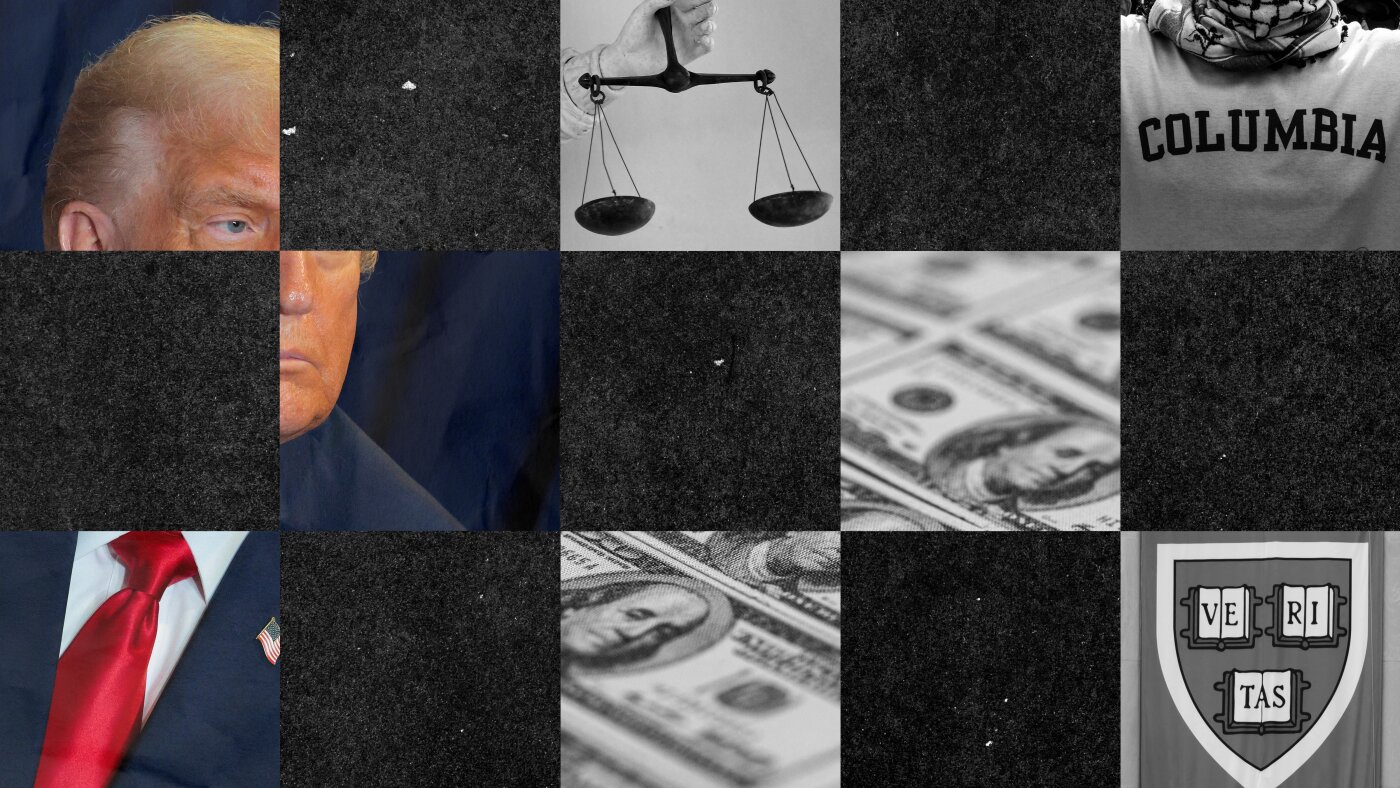

The Trump administration has focused its efforts on using funding to affect policies at elite schools. Getty Images/Photo illustration by Emily Bogle/NPR
In a move that has brought significant attention to the intersection of federal funding and university policies, the Trump administration has leveraged its financial influence over elite institutions. This approach began with an executive order issued in January 2025, which aimed at addressing antisemitism on campuses but quickly evolved into a broader campaign affecting numerous universities.
Initially targeting five schools, the administration’s investigations expanded to 60, using the withholding of billions in contracts and grants as leverage to enforce policy changes beyond antisemitism. Schools like the University of Pennsylvania and Columbia University opted for settlements, while Harvard University stood its ground, challenging the government’s actions in court. A federal judge sided with Harvard, ruling the freezing of funds illegal, although this decision is under appeal.
Several universities have had to make significant concessions, including financial settlements and policy changes, such as adopting specific definitions of gender or curbing diversity initiatives. Despite these settlements, universities maintain that they are not admitting any wrongdoing.
The Administration’s Objectives and Legal Concerns
The Trump administration asserts that its actions are intended to restore merit and enforce civil rights in higher education. White House spokesperson Liz Huston stated that the administration aims to “promote academic excellence and maintain America’s advantage for generations to come.” However, these measures have sparked debate over their legality.
Constitutional scholars question whether using federal funds to enforce policy changes violates the law. Thomas Berry from the Cato Institute criticizes the government’s approach, suggesting it’s a misuse of power. “To me, it’s a blatant violation of the unconstitutional conditions doctrine of the First Amendment,” Berry commented, highlighting concerns over the government’s influence on university autonomy.
Similarly, Todd Wolfson from the American Association of University Professors has voiced opposition, describing the settlements as “extortion” and a threat to academic freedom. The association has pursued legal action against the administration’s withholding of funds, citing the potential undermining of vital research projects.
University Settlements and Policy Changes
In 2025, several prestigious universities reached settlements involving substantial payments and policy changes:
Northwestern University:
- Agreed to pay $75 million over three years to access federal funds and end investigations, altering policies related to campus protests.
- Faced accusations of permitting antisemitism connected to protests against Israel.
Cornell University:
- Secured a deal to avoid losing $250 million in federal funds, agreeing to a $60 million payment split between the government and research initiatives.
- Adopted Justice Department guidance as a resource for faculty and staff, focusing on nondiscrimination in admissions.
University of Virginia:
- Entered an agreement with the Justice Department to avoid fines, following multiple investigations related to diversity initiatives.
- Committed to compliance with civil rights laws, incorporating specific guidelines on discrimination.
Brown University:
- Agreed to a $50 million commitment over ten years to local organizations, in response to federal funding threats tied to antisemitism and diversity work.
- Adopted definitions of gender as specified in a Trump executive order, altering its admissions criteria.
Columbia University:
- Settled for $221 million to resolve several investigations, agreeing to policy changes related to race considerations in admissions and hiring.
- Faced allegations of discriminatory practices and workplace harassment issues.
These developments illustrate the complex dynamics between federal oversight and university independence, raising ongoing questions about the balance of power and the implications for higher education nationwide.