Breaking Barriers: An Indian Teacher’s Journey to Empowerment Through Education

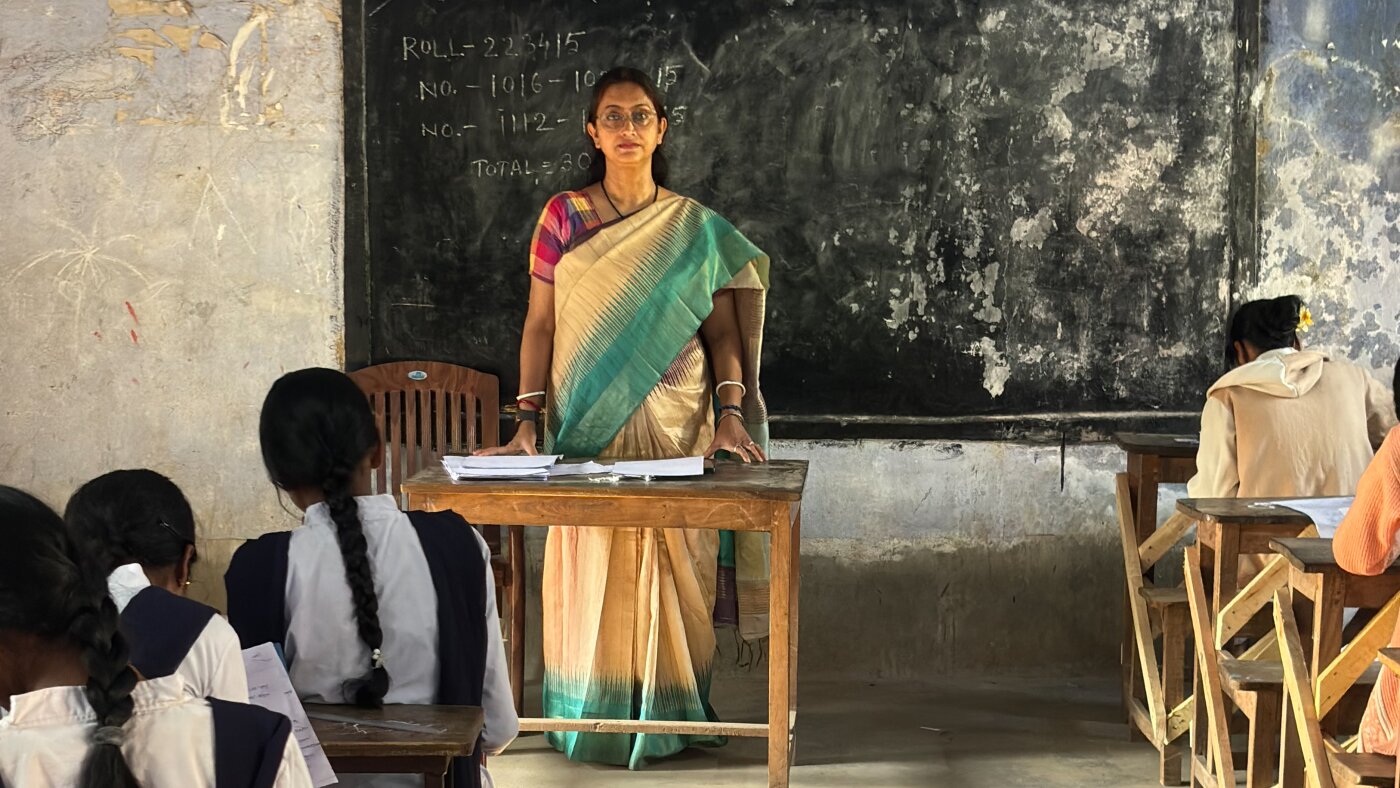
Joyeeta Banerjee in her classroom in India. Image credit: tk
A letter from the Fulbright Distinguished Awards in Teaching Program opened new doors for Joyeeta Banerjee, an English teacher from West Bengal, India. Her upcoming journey to the United States was meant to explore equitable language learning. However, the excitement was overshadowed by the personal questions she faced: “Who will look after your children?” and “What about your husband’s conjugal life?”
Banerjee’s success, like that of many women, seemed entangled with expectations of familial duties and sacrifices. Despite her professional achievements, societal norms persistently questioned the balance between her work and family life.
Hailing from the rural district of Bankura, Banerjee has dedicated 24 years to teaching first-generation learners, many of whom speak Bengali or Santali. In her modest classroom, she ignites a passion for education among students whose parents are often illiterate.
During her fellowship in Pennsylvania, Banerjee observes modern educational environments that starkly contrast with the facilities back home. Yet, she notes that female educators, regardless of location, often juggle multiple responsibilities, highlighting an enduring global patriarchy.
Banerjee’s focus on language as a tool for empowerment is integral to her teaching philosophy. In India, English represents opportunity and privilege. She encourages her female students to view English not as a relic of colonialism but as a means to claim their space in society.
However, the reality for many Indian girls remains challenging. Statistics reveal that nearly one in four young women in India marry before 18, and for those without education, the numbers are higher. In such contexts, concepts like “freedom” and “choice” become elusive.
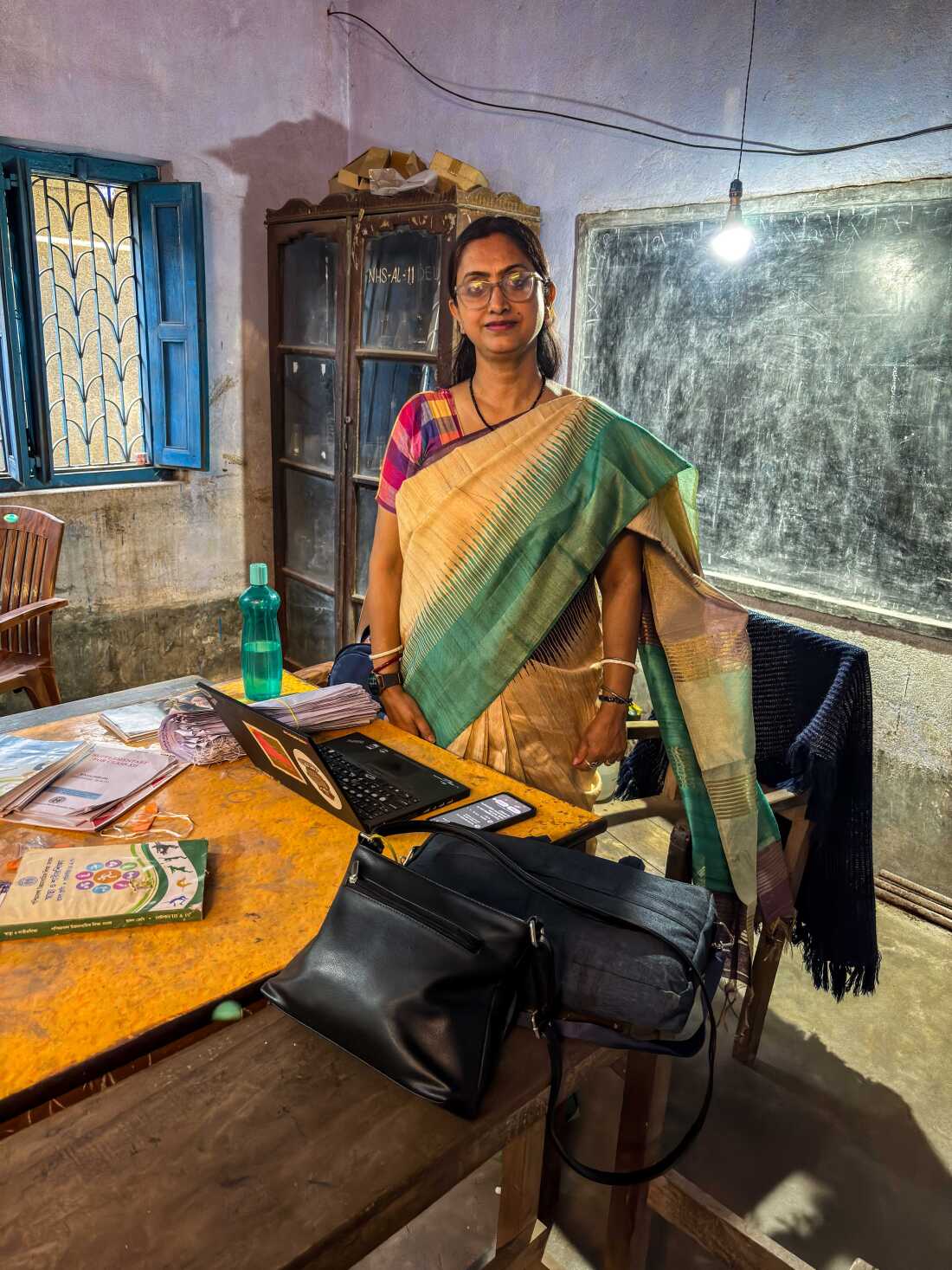
The Fulbright program serves as a bridge for Banerjee, uniting her roles as a teacher and a woman grappling with societal expectations. Her research project stems from this dual identity. Inspired by a student, Soma, who could write English but not understand it, Banerjee developed the “Dual Toolkit.” This educational tool emphasizes understanding over memorization, leveraging existing textbooks and students’ native languages to unlock English comprehension.
Banerjee’s journey mirrors the challenges faced by first-generation learners. Both are pioneers, navigating paths uncharted by those before them. She hopes her experiences abroad will inspire her students back home, showing them that even “advanced” societies grapple with gender norms.
Upon returning to India, Banerjee anticipates the familiar questions about her family. Her responses will highlight the independence her children gained and the solitude her husband experienced, underscoring a broader narrative of women’s empowerment.
Banerjee’s story is one of defiance and determination. Her suitcase is packed with lesson plans and stories of her students, embodying her belief that a woman’s worth is not tied to maintaining others’ comfort. Education is her tool for change, challenging inherited questions and fostering open minds.
She dreams of a future where women from small towns in India receive recognition for their achievements, with questions centered not on personal sacrifices but on their discoveries: “What will you discover?”
The author of this publication is a participant in Fulbright Teacher Exchanges, programs of the United States Department of State, administered by IREX, a nonprofit global and educational organization. The views and information presented are the grantee’s own and do not represent the views of the U.S. Department of State, the Fulbright Program, or IREX.