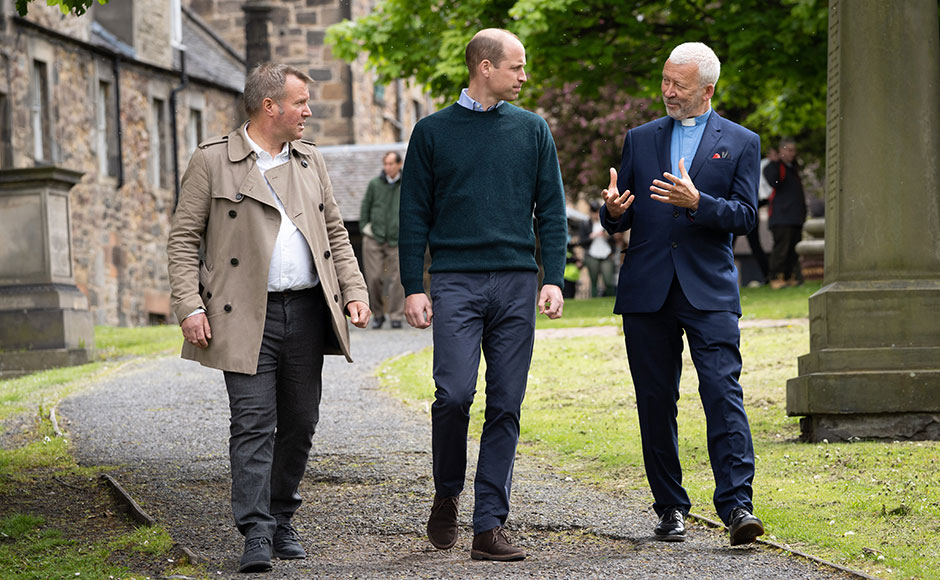
As Prince William awaits his future role as Defender of the Faith and Supreme Governor of the Church of England, questions arise regarding his personal stance on Christianity. Unlike his predecessors, the Prince has yet to express a public Christian faith, sparking curiosity about his commitment to these roles.
Queen Elizabeth II was renowned for her publicly affirmed Christian beliefs, and King Charles III, despite some controversy over his interfaith remarks, maintains a personal adherence to Christianity. However, Prince William’s spiritual inclinations remain largely private.
An aide recently shared with The Sunday Times that Prince William holds a “quiet” faith and aims to foster a “strong and meaningful bond with the Church and its leadership.” This statement, while reassuring, leaves some pondering the depth of his connection to the Church he is destined to represent.
The aide commented, “The Prince of Wales’s commitment to the Church of England is sometimes quieter than people expect, and for that reason it is not always fully understood. Those who know him well recognise that his connection to the Church, and to the sense of duty that comes with it, runs deep and is grounded in something personal and sincere.”
These insights precede the historic installation of Dame Sarah Mullally as the first female Archbishop of Canterbury, an event Prince William is set to attend.
Despite the secrecy surrounding royal beliefs, reports suggest Prince William maintains a reserved attitude toward faith. Robert Hardman, in his book The Making of a King: King Charles III and the Modern Monarchy, noted, “His [William’s] father is a very spiritual person and happy to talk about faith, but the Prince is not. He doesn’t go to church every Sunday, but then nor do a large majority of the country. He might go at Easter and Christmas, but that’s it.”
Former chaplain to Queen Elizabeth, Gavin Ashenden, reflected on this perception, stating, “William doesn’t show any signs of being alive to the vibrancy of Christian faith. And in that sense, he is very representative of his generation.” He continued, “I think he either has to accept the fact that this is a role he plays, whether he likes it or not, which is part actually of the burden of monarchy, or if he feels that strongly and he can’t do it, then step aside and abdicate and see if there’s somebody else in the Royal succession who can.”
This article was originally written by www.christiantoday.com