Unearthing Ancient Monastic Life: A 1,500-Year-Old Discovery in Egypt’s Nile Delta
In a remarkable find, archaeologists in Egypt have discovered a monastic complex dating back 1,500 years in the Nile Delta. This significant archaeological discovery was announced by Egypt’s Ministry of Tourism and Antiquities, highlighting its importance in understanding the beginnings of organized monastic life.
(Photo: Egypt Ministry of Tourism and Archives)
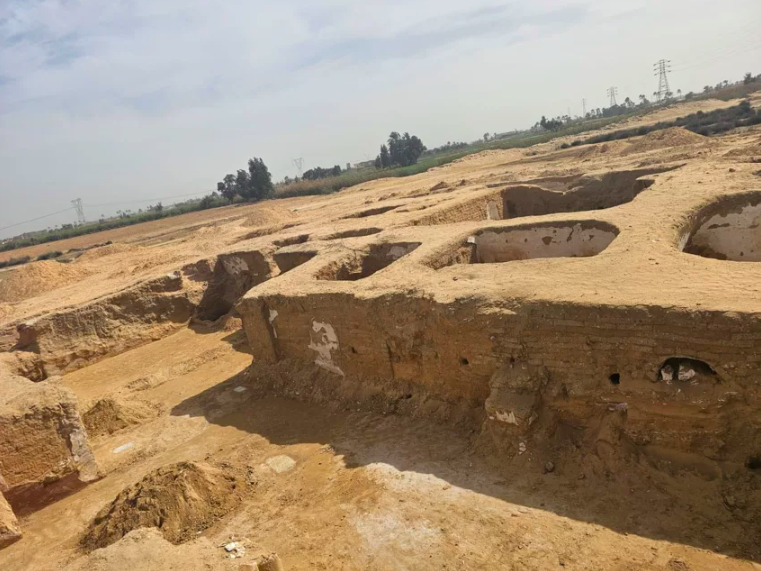
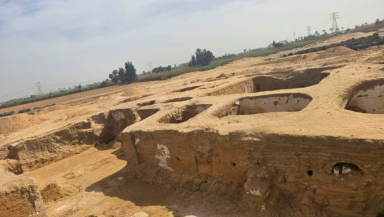
The site, located at Al-Qalāyā in Beheira Governorate, has been under excavation by a mission from the Supreme Council of Antiquities since 2023. The complex includes a fifth-century building believed to have served as a reception area for pilgrims, alongside 13 rooms that served various purposes such as monastic cells, hospitality spaces, a kitchen, and storerooms.
The architectural evolution of the site is evident, with later modifications indicating adaptation over time. A notable feature of the complex is a large hall in the northern section, adorned with botanical motifs on stone benches, likely used for receiving visitors and hosting monastic figures. The prayer room is oriented eastward, marked by a limestone-carved cross in the wall.
Hisham El-Leithy of the Supreme Council of Antiquities described Al-Qalāyā as the second-largest known monastic gathering site, emphasizing its architectural style as indicative of “the earliest nucleus of monastery establishment.” Decorative elements and illustrations at the site provide significant insights into early Coptic art and monastic life.
The site reveals the shift from solitary to communal monastic living, with wall paintings depicting monks and intricate geometric and plant decorations. A mural featuring two gazelles within a vegetal motif is believed to hold symbolic meaning, as reported by the Basilica News Agency.
Artifacts recovered include a complete marble column, pottery fragments with Coptic letters, and bone remains of birds and animals, indicating daily life activities. A rectangular limestone piece with a Coptic inscription was found, likely a funerary stele for “Apa Kyr, son of Shenouda,” confirming human presence during a thriving period of monasticism.
Since the start of excavations in 2023, clusters of monastic cells known as manshubiyyat and service buildings have been uncovered, suggesting a large, well-organized monastic center. Research continues to uncover more about this fascinating historical site.
This article was originally written by www.christiantoday.com