U.S. and Iran Announce Preliminary Peace Agreement Amid Global Economic Concerns
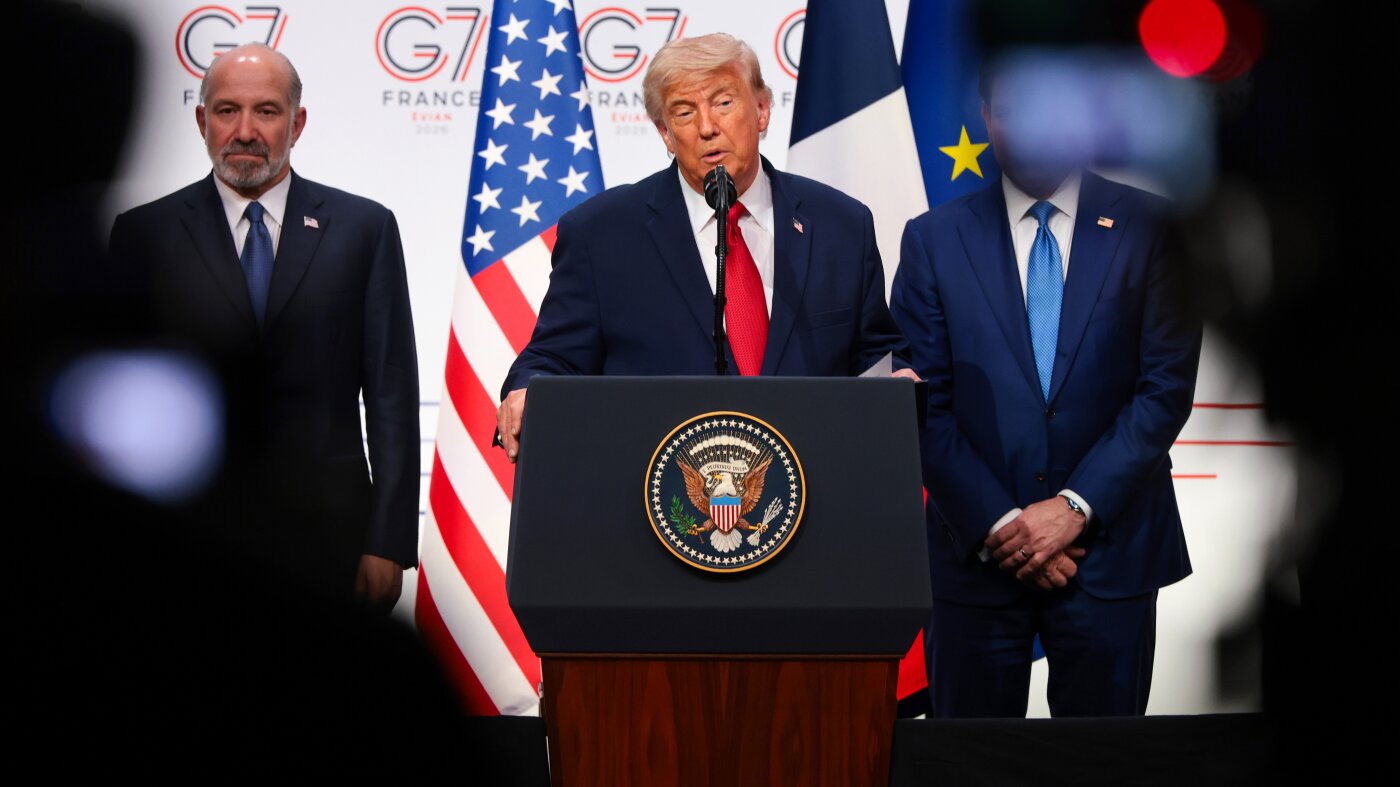
The Trump administration has unveiled a preliminary peace agreement with Iran, aiming to end the ongoing conflict. This announcement was made by President Trump at a press conference in Evian, France, following the G7 summit. The agreement is seen as a crucial step towards stabilizing the region and alleviating economic tensions worldwide.
Senior officials from the administration, who provided details on the condition of anonymity, shared the contents of the agreement, although Iran has yet to disclose any specifics. President Trump had previously announced the deal on Sunday, leaving many speculating about its details until now.
The document, while concise, leaves much to be resolved in future discussions. It calls for the “immediate and permanent termination of military operations on all fronts,” including Lebanon, and commits both nations to refrain from initiating any further conflict.
The agreement establishes a 60-day negotiation period, extendable by mutual consent, to finalize the deal. Upon signing, the U.S. will begin lifting its naval blockade, with a complete cessation contingent on the final agreement within 30 days. Iran, in return, will ensure safe passage for commercial vessels between the Persian Gulf and the Sea of Oman, waiving any charges for 60 days.
A significant component of the agreement involves the creation of a $300 billion fund for Iran’s reconstruction and economic development, though the U.S. will not directly contribute to this fund. Trump suggested that other countries might participate in investing in Iran.
Sanctions against Iran will be lifted upon reaching a final agreement, and Iran has committed not to “procure or develop nuclear weapons.” Both countries will work on resolving the issue of Iran’s enriched uranium stockpile.
While sanctions remain in force until a final deal is achieved, the U.S. will issue waivers for Iranian oil exports and related banking transactions. Additionally, the U.S. will release frozen or restricted Iranian funds once a final deal is in place.
Remaining issues include monitoring and compliance mechanisms. Trump highlighted the importance of the agreement for economic stability, stating, “If we didn’t do this deal, we could have dropped more bombs… but you would never have success. Your market… would go down at levels that nobody ever saw before.”
The conflict, initiated by Trump with Israel in February, had severe impacts on the global economy, driving up oil prices and other goods’ costs. American public opinion has shown disapproval of the U.S. actions against Iran, affecting Trump’s economic approval ratings among his supporters.