
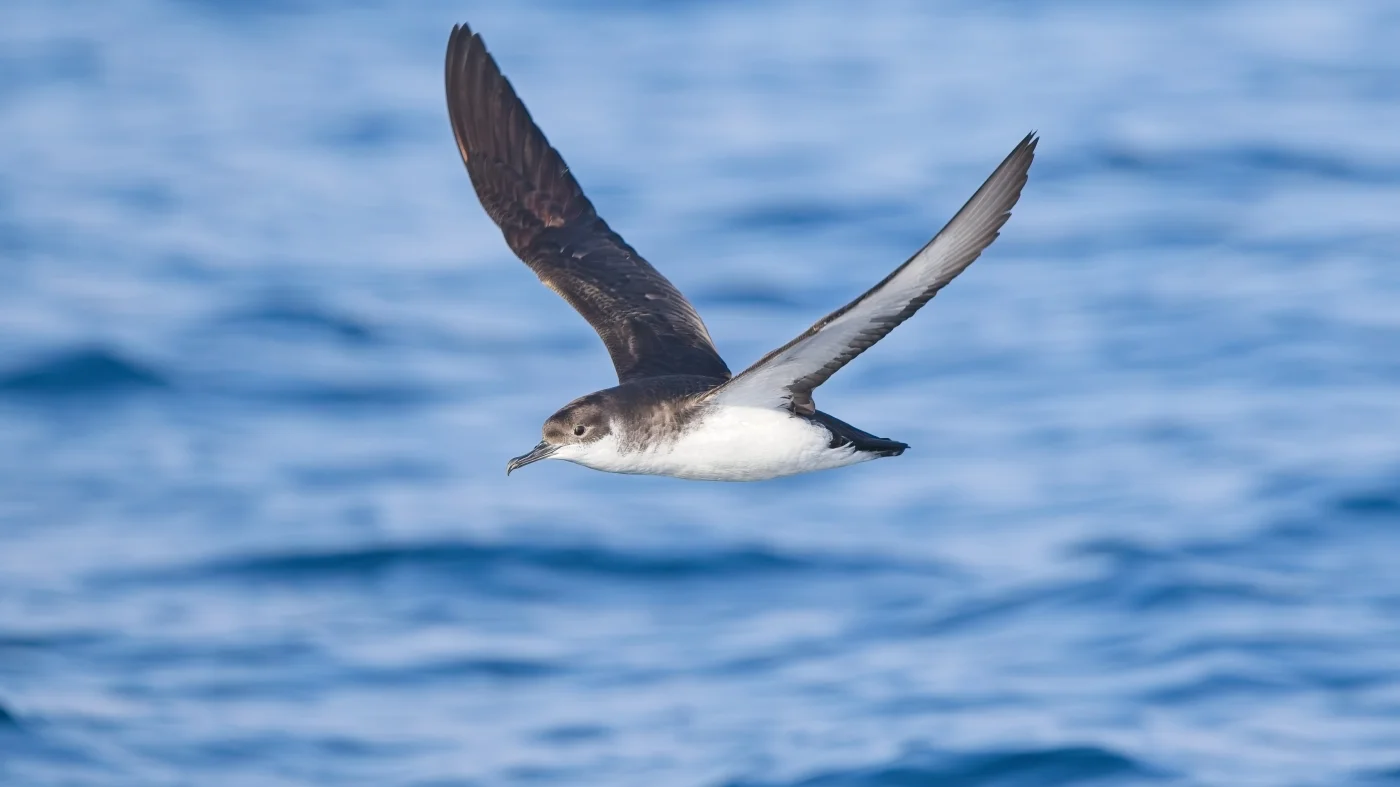
Shearwaters’ Long Journeys: A Closer Look at Avian Jet Lag
While humans often grapple with the effects of jet lag, it seems that some birds might experience similar disorientation during their long flights. Recent research indicates that Manx shearwaters, a type of seabird, encounter a kind of jet lag as they navigate across the Atlantic Ocean.
A study published in Science suggests these birds become slightly confused due to their internal clocks falling out of sync with the sun’s position. “They’re actually very closely related to an albatross,” noted Patrick Lewin, a behavioral ecologist from the University of Oxford, speaking about the birds that resemble seagulls.
Manx shearwaters are prevalent in the British Isles. These birds are notable for their lifelong mating habits, producing one egg per breeding season. The nesting partners take turns incubating this egg, with one staying behind while the other ventures into the North Atlantic for food.
During these excursions, which can last up to two weeks, the birds travel vast distances in search of fish and squid. Once satiated, they race back to their nests. “They absolutely bomb it back to their colony,” Lewin remarked, describing their rapid return.
This phenomenon led researchers to question whether these birds experience a form of jet lag, or “flap lag,” due to their high-speed returns across time zones. For two decades, researchers have been tracking these birds using GPS devices, gathering valuable data on their transatlantic flights.
Lewin’s analysis of the data revealed a subtle disorientation in the birds’ navigation. Manx shearwaters are believed to use the sun as a compass. “To use the sun as a compass you have to know what time of day it is,” Lewin explained. However, a misalignment in their internal clock can lead to navigational errors.
When returning to their nests, the birds sometimes veer slightly off course. The maximum deviation observed was a mere seven degrees, resulting in a three-mile detour on a 600-mile journey. “It’s a really small addition,” Lewin commented on the minor course adjustments.
Alice Boyle, a biologist at the Centre for Animals on the Move at Western University in Ontario, Canada, praised the study’s findings. “This paper is so cool,” she said, emphasizing the rarity and importance of observing navigation decisions in action. The GPS data offers insights into how these birds travel to remote regions, contributing significantly to our understanding of avian navigation.
This article was originally written by www.npr.org





Comments are closed.