New Tactile Tours Enhance Accessibility at National Constitution Center
In a city rich with historical significance, the National Constitution Center in Philadelphia is pioneering a new way to engage visitors. By offering tactile tours, the museum provides an immersive experience for blind and low vision guests, allowing them to engage with history through touch.
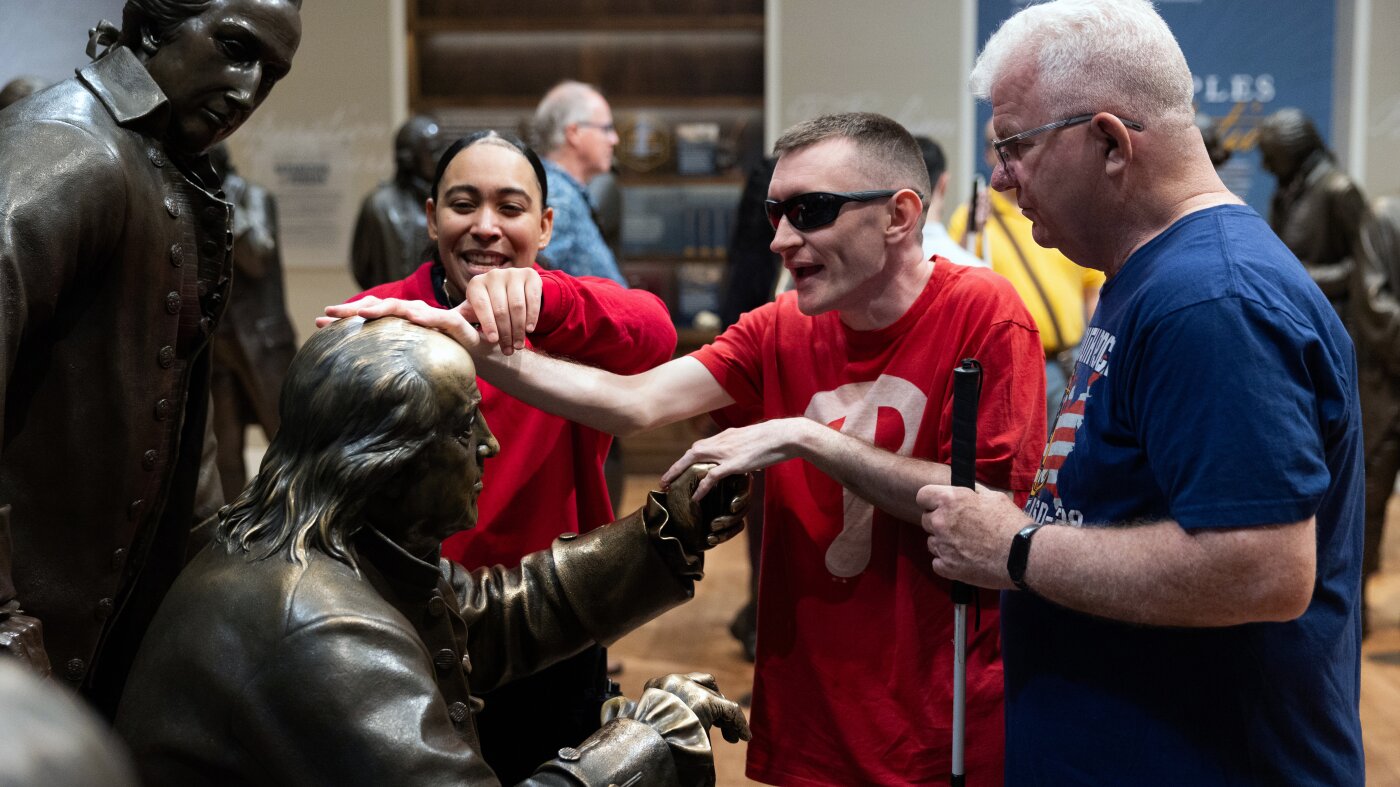
As America approaches its 250th anniversary, the National Constitution Center (NCC) has taken significant steps to ensure inclusivity in its exhibits. One such step is the introduction of guided tactile tours in “Signers’ Hall,” a gallery featuring statues of the 42 men present at the signing of the U.S. Constitution. “They feel like real people,” Grace Engle, a museum educator, explains, highlighting the unique opportunity for visitors to physically connect with historical figures.
The Americans with Disabilities Act of 1990 mandates that public spaces are physically accessible, but the NCC joins a select group of museums offering enhanced exhibit access. While sensory-friendly days have become more common, tactile tours remain rare. “Everything feels so distinct on him,” visitor Tim Kelly Jr. remarks about the Benjamin Franklin statue, illustrating the detailed experience these tours provide.
Touch tours at the NCC were officially launched in April, following training from Philly Touch Tours, an organization dedicated to improving museum accessibility nationwide. Kristina Marinello, the senior director of museum experience, notes that the center has always encouraged interaction with statues, but these tours formalize the offering. “Ben Franklin’s hands are super shiny because people have kind of always touched him no matter what,” she says.
The tours are not only a way to make history tangible but also serve as an educational tool, blending detailed descriptions with historical context. During a tour, Engle points out Eldbridge Gerry, explaining his role in the origin of “gerrymandering.” This blend of touch and storytelling caters to diverse learning styles and makes historical narratives accessible.
Trish Maunder, a founder of Philly Touch Tours, emphasizes the importance of touch in understanding. “Our mantra is ‘seeing may be believing, but when you touch, you know,'” she says, advocating for the sense of touch as a vital component of learning and memory. The NCC’s initiative reflects a broader trend in museums incorporating accessibility into their programming, as highlighted by Heather Pressman of Johns Hopkins University. Pressman notes that meeting ADA requirements is just the beginning, and creating truly accessible exhibits requires more tailored solutions.
As museums nationwide strive to enhance accessibility, the NCC’s efforts stand out. The center offers additional features like sensory-friendly days, which create calming environments for neurodivergent visitors. These initiatives align with the NCC’s mission to embody the spirit of “we the people” by ensuring everyone feels included, as Marinello states.
The impact of these tours is profound, as evidenced by Akosua “Kosi” Asabere, a repeat visitor. “For once, I don’t feel like an afterthought in a museum-going experience,” she says, reflecting on the tactile engagement with history. While acknowledging the systemic exclusions in the nation’s founding document, Asabere appreciates the strides being made to include historically marginalized communities.
By embracing tactile tours, the NCC not only enriches its educational offerings but also sets a precedent for museums aiming to make history accessible to all.
“`