The Lincoln Memorial Reflecting Pool Faces Algae Bloom After Renovations
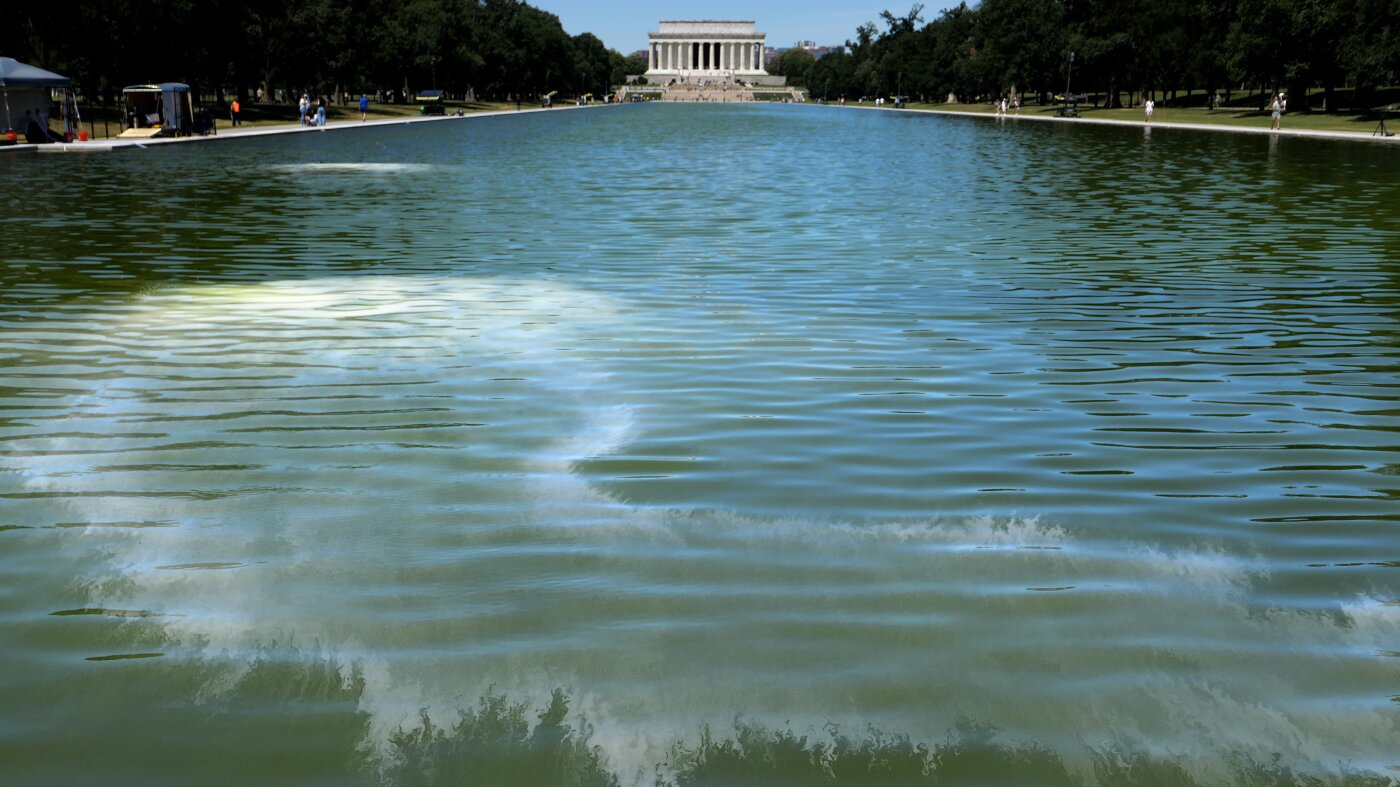
Recent efforts to enhance the Lincoln Memorial Reflecting Pool have led to an unexpected result: a vibrant green hue that has captured public attention. This transformation is due to algae growth following a substantial renovation project.
The pool, a significant Washington, D.C. landmark, underwent a multi-million dollar refurbishment. This included repainting its bottom with an “American flag blue” color, as highlighted by President Trump and Interior Secretary Doug Burgum. Despite these efforts, the project, which you can read more about here, has faced unexpected challenges.
Understanding the Algae Phenomenon
In recent days, the pool has turned green due to algae blooms. Experts like Steve Goodale, known as “Swimming Pool Steve,” describe this as “New Pond Syndrome.” This condition often occurs when a natural water body is reintroduced to an open environment, leading to immediate algae growth.
The pool’s size—2,030 feet long with a surface area of 338,000 square feet—affected the speed of the algae spread. According to Rosalina Stancheva Christova from George Mason University, the algae, identified as Desmodesmus, thrives in the pool’s conditions: shallow, sunlit, and stagnant water.
Algae’s Persistent Presence
Historically, the reflecting pool has struggled with algae growth, as noted in past incidents in 2012 and 2019. The Trump administration acknowledged the algae issue, attributing it to residual material in supply lines and extreme heat conditions.
Innovative Solutions to Combat Algae
Efforts to address the algae include using hydrogen peroxide and “high-tech nanobubble ozone technology.” The National Park Service employs these methods to neutralize algae without harming marine life. This approach, validated by several institutions, aims to provide a long-term solution to the algae problem.
Challenges and Future Considerations
Addressing algae in the reflecting pool is a complex task, akin to managing a “manmade shallow lake,” as Goodale describes. The ongoing efforts are critical, especially with upcoming semiquincentennial events at the National Mall, including a state fair starting soon.
As work continues, observers like civil engineer Loay Hidmi remain hopeful yet cautious, noting the importance of sustained progress and comprehensive water management strategies.