Embarking on a journey along the newly launched King Charles III England Coast Path offers a unique opportunity to explore England’s diverse coastline. This ambitious walking route not only connects various coastal landscapes but also serves as a long-term commitment to preserving public access to these scenic areas.
Beyond the stunning vistas, the path is a passage through time, offering glimpses of England’s rich Christian heritage. Each step along the coastline uncovers stories of ancient chapels, abbeys, and priory ruins, creating a tapestry of faith and history that has endured through the centuries.
St Michael’s Mount, Cornwall: A Chapel Above Mounts Bay
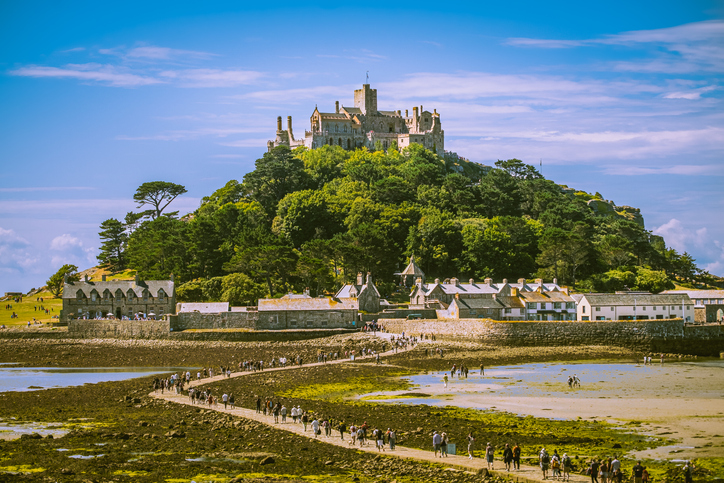
St Michael’s Mount, a tidal island rising from Mounts Bay near Penzance, is one of the highlights on the South Cornwall section of the trail. This beloved part of the route features sandy beaches, quaint fishing villages, and breathtaking headlands. The island’s chapel, originally a 12th-century priory church, reflects Cornwall’s historical ties with the Christian world.
The chapel was rebuilt in the 14th century after an earthquake, later transitioning to a parish church and now a chapel restored by the St Aubyn family. This transformation highlights the enduring spiritual and community significance of the site.
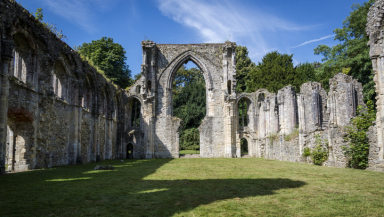
Netley Abbey: Monastic Ruins by Southampton Water
Netley Abbey, located near Southampton Water, stands as one of the finest Cistercian abbey ruins in southern England. Founded in 1238, the abbey was a center of monastic life until the Dissolution under Henry VIII. It later became a Tudor mansion before evolving into a romantic ruin, attracting artists and visitors drawn to its picturesque decay.
The abbey’s history is intertwined with the southern coastal sections of the path, which are rich with maritime history and natural beauty.
St Peter-on-the-Wall, Essex: Faith on the Marshes
Set amidst the marshes of the Essex coast, the Chapel of St Peter-on-the-Wall at Bradwell-on-Sea exudes an ancient and austere beauty. Built in the 7th century by St Cedd using stones from an abandoned Roman fort, the chapel is a testament to early Christian missionary efforts.
Over the centuries, the chapel endured periods of neglect and adaptation, including serving as a semaphore station during the Napoleonic wars. Today, it stands restored and reconsecrated, continuing its role as a place of pilgrimage.
Whitby Abbey: A Headland Shaped by Prayer and Decision
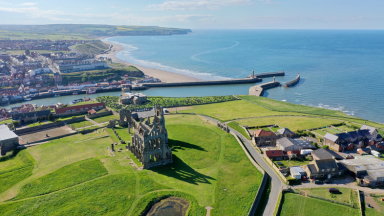
Perched dramatically above the North Sea, Whitby Abbey is a striking landmark on the North Yorkshire coast. Founded in 657 AD, it became a significant religious center in Anglo-Saxon England, marked by the historic Synod of Whitby in 664.
The current ruins date from a later Benedictine phase, following the Norman Conquest. Despite its dissolution in the 16th century, the abbey remains a cultural and historical touchstone, inspiring artists and writers through the ages.
Holy Island of Lindisfarne: Pilgrimage at the Edge of the Sea
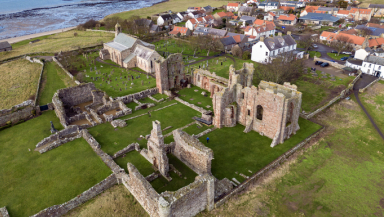
Holy Island of Lindisfarne, accessible via a tidal causeway, is a place where Christian history feels particularly vivid. As a center of early Christianity in Anglo-Saxon England, it was home to St Oswald and St Cuthbert, playing a crucial role in the spread of faith during the period.
The island’s history includes Viking attacks and later monastic developments. Today, Lindisfarne is a spiritual destination, drawing pilgrims with its serene landscapes and enduring legacy.
As you walk along the King Charles III England Coast Path, you journey through a living map of memory and devotion. From St Michael’s Mount to Lindisfarne, the path is a testament to the enduring presence of faith along England’s shores, inviting all who tread it to explore both its natural and spiritual landscapes.
This article was originally written by www.christiantoday.com