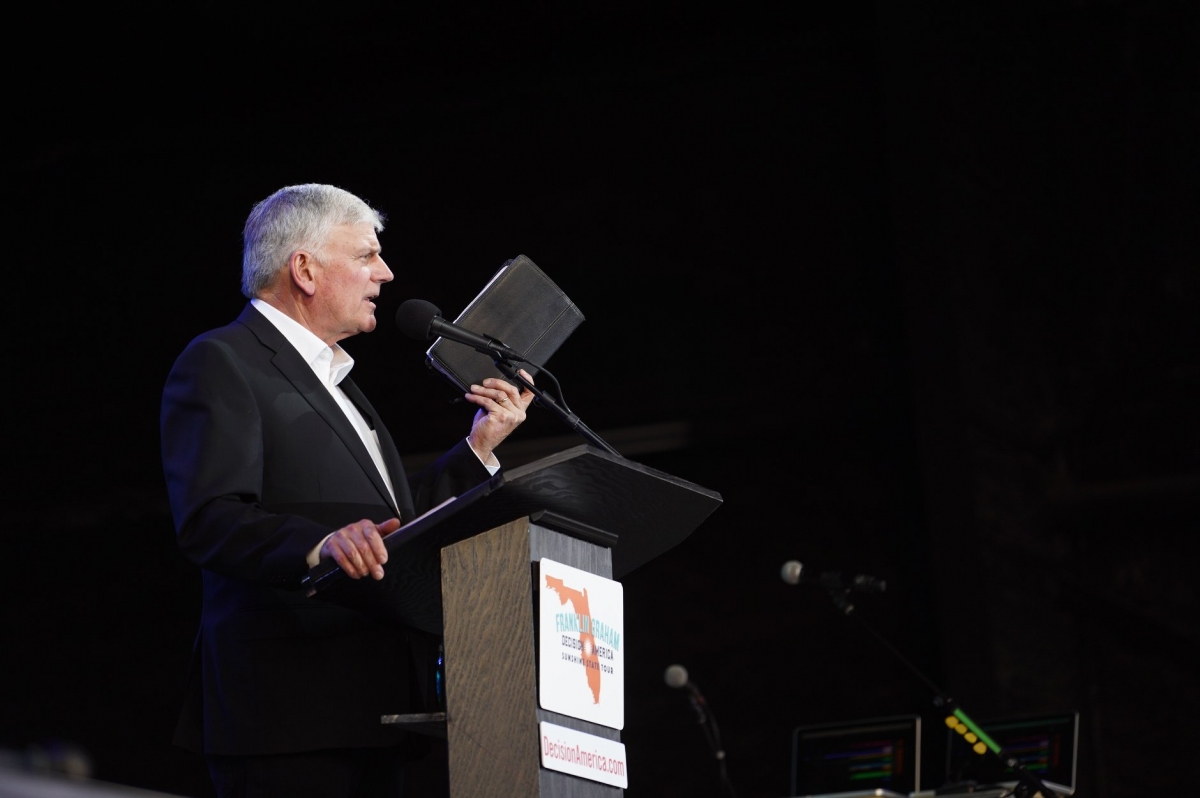
(Photo: BGEA)
In a recent discourse, evangelist Franklin Graham engaged in a theological debate over the implications of war and divine acceptance of prayers, drawing parallels with biblical history. This discussion emerged in response to Pope Leo XIV’s statement that God dismisses the prayers of those who engage in warfare.
During an episode of “Piers Morgan Uncensored,” Graham was questioned about the Pope’s Palm Sunday homily, which criticized those who justify war in Jesus Christ’s name. The Pope referenced Isaiah 1:15, emphasizing that God turns away from prayers when hands are stained with blood.
Graham countered, referencing King David’s biblical narrative where God allegedly supported David in battles, suggesting historical precedents of divine favor in warfare. He noted, “God gave great favor to David, great wisdom to David, every time he went into battle.”
Graham’s argument extended to modern conflicts, highlighting World War II as a justified war and pointing to the Iranian regime as a current global threat. He attributed the deaths of approximately 70,000 Palestinians in Gaza to Iran’s influence, alongside conflicts in Lebanon and Yemen.
While expressing a desire for peace, Graham stated, “I don’t support war, but I do believe, at times, there is justification when you’re fighting evil.” He labeled the Iranian government as “evil,” advocating for regime change.
When pressed by Morgan, Graham acknowledged his different theological stance from the Pope, implying disagreement with the notion that God disregards the prayers of those at war. He observed, “Well, he didn’t reject David’s prayers, that’s for sure.”
The conversation also touched upon Christian Zionism. Graham clarified that prophecies about the Jewish return to their homeland are not prerequisites for Christ’s return, though he views Israel’s 1948 establishment as prophetic fulfillment.
Avraham Burg, an Israeli guest on the show, criticized Graham’s interpretation of King David’s story, referencing biblical restrictions on David building the temple due to his wartime actions.
Burg urged a separation between religious eschatology and political actions, saying, “Do me a favor… Keep out of my political scenario. I do not want to die in your Armageddon.” He linked personal losses to religious wars, cautioning against conflating faith with geopolitics.
Graham’s views were echoed at a White House Easter lunch, where he compared President Trump to Esther from the Book of Esther, suggesting a providential role in countering Iran’s threats.
His prayer called for divine intervention against Iran, likening the regime to ancient Persian threats to Jews, and praised Trump for his leadership. This came before Trump’s national address on the enduring conflict, which sparked discussions on the religious influences in the ongoing war.
Recently, Secretary of War Pete Hegseth faced backlash for citing imprecatory psalms in a Pentagon service, urging violent action against the U.S.’s adversaries, further highlighting the intersection of religion and military policy.
This article was originally written by www.christiantoday.com