Palm Sunday, celebrated on March 29 in 2026, marks the beginning of Holy Week, leading up to Easter. This day also holds deep historical significance, echoing a pivotal moment from Jewish history that is often overlooked by many evangelicals.
Palm Sunday Observances
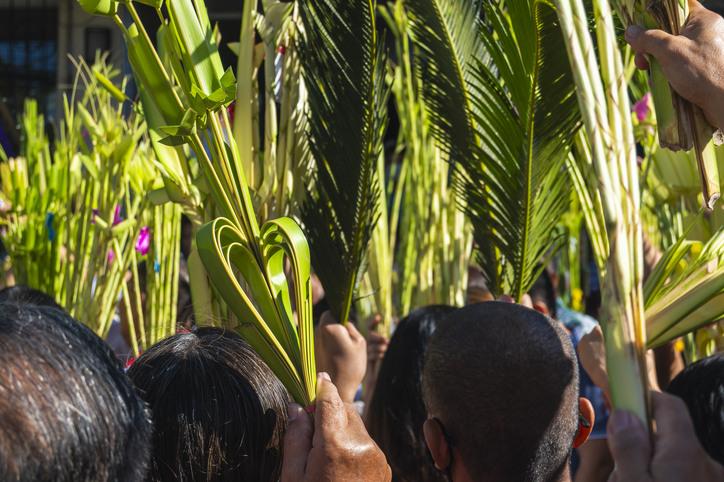
On Palm Sunday, the sixth Sunday of Lent, Christians commemorate Jesus’ triumphant entry into Jerusalem, as described in all four Gospels (Matthew 21:1-11, Mark 11:1-11, Luke 19:28-44, and John 12:12-19). Approaching from Jericho and arriving at Bethphage and Bethany, Jesus instructed two disciples to bring him a donkey. Riding into the city, Jesus was greeted by people spreading cloaks and palm branches on the road, while shouting hosannas, reminiscent of Psalm 118:26. This procession echoed historical events such as King David’s return and Solomon’s ride on King David’s mule (2 Samuel 19, 1 Kings 1:38) and fulfilled Zechariah’s prophecy (Zechariah 9:9).
The Historical Context
Less known is the backdrop of Jewish history nearly 200 years prior. Under Greek Seleucid king Antiochus IV Epiphanes, Judea faced suppression of Jewish religious practices. The Seleucids banned circumcision and the Sabbath, promoting Greek customs instead, leading to increased Hellenization. This oppression and the desecration of the Jerusalem Temple sparked resistance, famously led by the Maccabees.
The Maccabean Revolt
Mattathias, a local priest, and his sons, notably Judah Maccabee, initiated a guerilla war against the Seleucids, embodying the spirit of independence. Their success led to the rededication of the Temple in 165 BC, celebrated with palm branches and joy, as recorded in 1 Maccabees 13:51 and 4:59. This event is commemorated in the Jewish festival of Hanukkah.
Symbolism and Expectation
The palm branch emerged as a symbol of Jewish independence, even appearing on ancient coins. As Jesus entered Jerusalem, many viewed him as a potential liberator akin to the Maccabees, hoping for a revolt against Roman rule. This anticipation was evident as crowds welcomed him with palm branches and hosannas.
John’s Account
St John’s Gospel uniquely connects these events, recording Jesus’ triumphal entry amid palm branches (John 12:12-13) and linking it to the “Feast of Dedication” or Hanukkah (John 10:22-23). Such references highlight the significance of the Maccabean period, providing context for the events of Palm Sunday.
Understanding the Connection
While evangelical Christians might overlook this historical context, the books of Maccabees, found in the Apocrypha, offer valuable insights into the narrative of Palm Sunday. Understanding these connections enriches the comprehension of this pivotal event in Christian history.
This article was originally written by www.christiantoday.com