Immigration Processing Delays Leave Millions Awaiting Legal Status in the U.S.
Amidst a shifting political landscape, millions of immigrants find themselves trapped in an extended wait, hoping for a change in their legal status. A recent analysis by NPR highlights the growing challenges faced by immigrants under the Trump administration, as extended processing times heighten the risk of deportation.
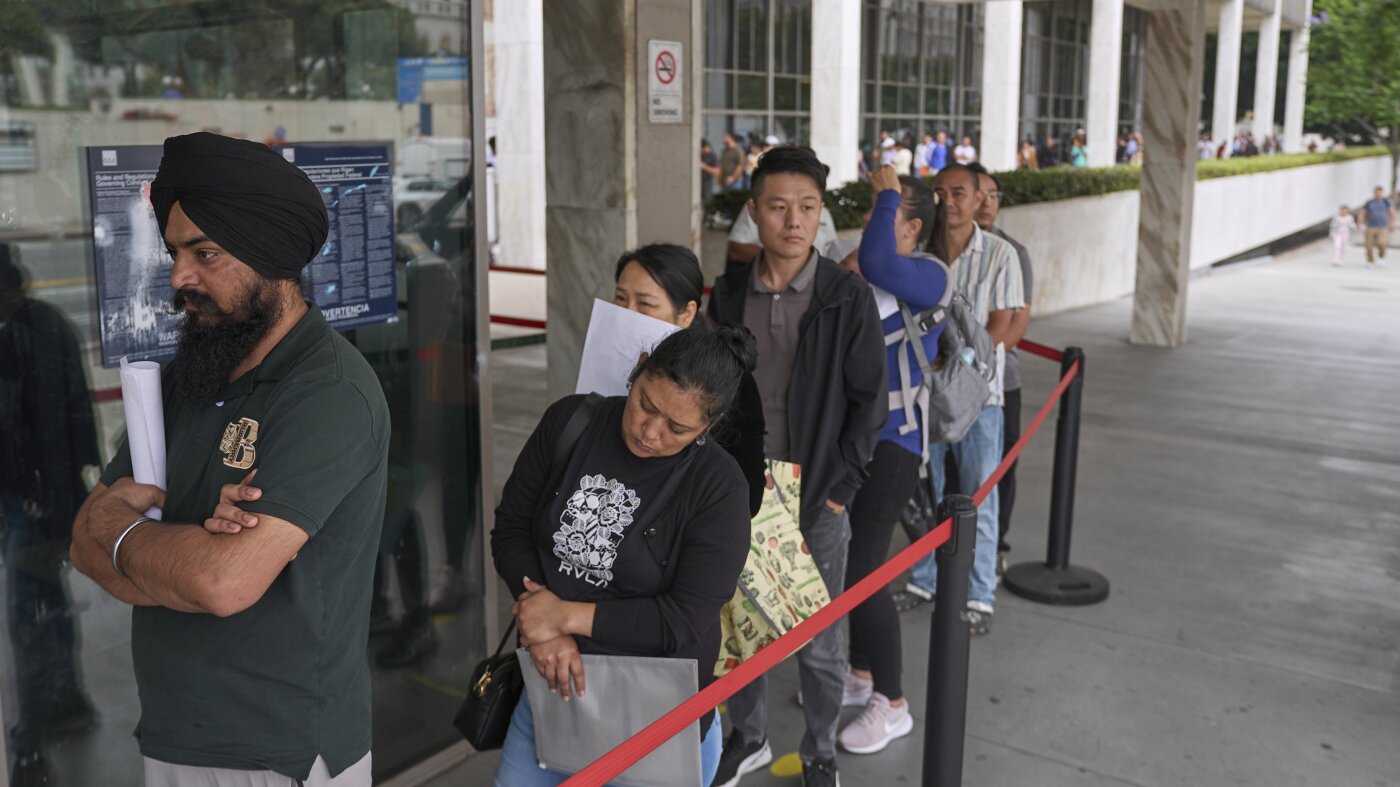
According to an NPR review of data from U.S. Citizenship and Immigration Services (USCIS), nearly 12 million applications for immigration services are currently pending. These applications include requests for citizenship, work permits, and other forms of legal residency. The backlog has surged since the beginning of the Trump administration’s second term, reflecting a broader strategy to curb legal migration.
David Bier, director of immigration studies at the Cato Institute, commented on the administration’s approach: “That is a really incredible representation of what this administration is trying to do when it comes to immigration. It’s ‘throttle everything, focus entirely on deportations and arrests as your measure of success.'” The growing backlog indicates a deliberate slowing down of the legal immigration process, leaving thousands in uncertainty.
The USCIS backlog, now at 11.6 million, includes applications for citizenship, green cards, work permits, and asylum. Additionally, 247,974 applications sit in what is termed the “frontlog,” awaiting categorization. This delay in processing is part of a tougher stance on immigration laws, with the administration citing national security as a reason for the slowdown.
Matthew Tragesser, a USCIS spokesman, explained that new “screening and vetting processes” have been introduced to ensure applicants demonstrate good moral character and attachment to the Constitution. These processes include social media screenings and neighborhood visits.
Immigration attorney Luis Cortes Romero in Seattle noted the stress and confusion caused by these delays. “It’s a very tense conversation happening with clients trying to brace for impact,” he said. Romero highlighted cases where clients have waited over a year without progress, reflecting broader challenges faced by many seeking legal residency.
The impact of these delays is uneven. Some applications are processed quickly, while others languish for months without acknowledgment. Nicole Melaku, executive director of the National Partnership for New Americans, remarked, “We are beginning to see the manifestation of data that proves that this administration is slow-walking or even denying the opportunity for these people to adjust.”
In response to rising concerns, Elizabeth Jacobs from the Center for Immigration Studies pointed out that efficient processing is in the interests of both the government and immigrants. Proponents of stricter immigration controls, like Brandy Perez Carbaugh, argue for a pause in new applications until the backlog is reduced, emphasizing the need to focus on fraud prevention.
Despite some progress in transitioning to electronic filings, the USCIS still relies heavily on mail, contributing to the backlog. Renata Castro, an immigration attorney, noted that immigrants might wait up to eight months for confirmation that their application has been received, complicating legal proceedings and heightening the risk of deportation.
Felicia Escobar Carrillo, former USCIS chief of staff, acknowledged the fluctuating nature of the frontlog and highlighted efforts made during the Biden administration to reduce it. However, the backlog witnessed a dramatic increase with Trump’s return to office, with applications in the frontlog rising to 247,974 by September 2025.