Airlines Navigate Turbulence as Fuel Costs Drop but Fares Remain Elevated

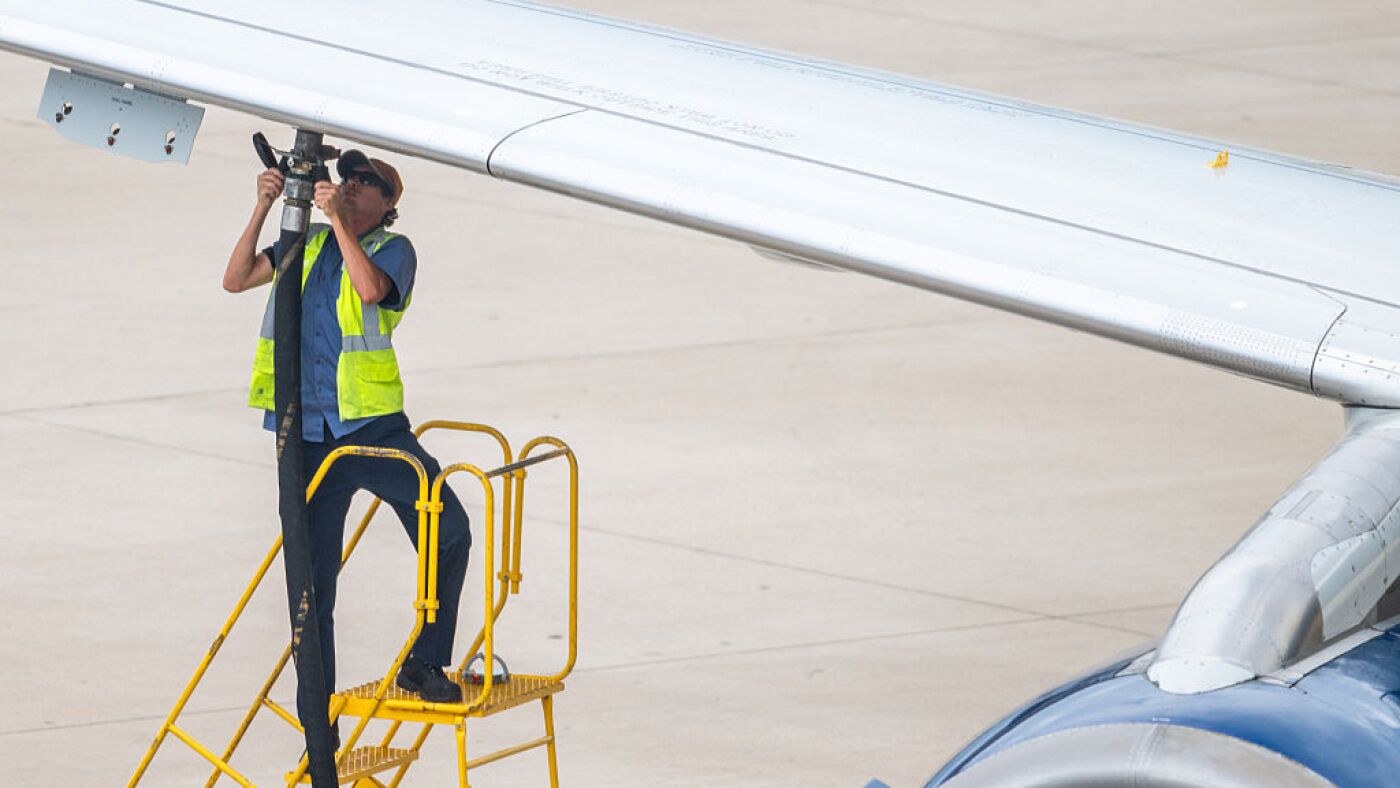
A technician prepares to refuel a Delta Air Lines plane at Austin-Bergstrom International Airport in April.
Brandon Bell/Getty Images
As the price of jet fuel retreats from its recent highs, airline passengers might wonder when they can expect relief from increased ticket prices. Despite fuel costs stabilizing, airlines are not in a rush to reduce fares.
“If people will pay it, why would you take it back?” questioned Michael Boyd, a seasoned aviation consultant. “I mean, if people are willing to pay an extra $5 to check a bag and there’s no pushback, don’t be silly.”
Currently, the average cost of jet fuel has fallen to $2.80 per gallon, as reported by Argus, marking a significant decrease from its peak earlier in the year. Nevertheless, this price is still elevated compared to pre-war levels.
While travelers have adapted to higher ticket prices, airlines are grappling with increased costs beyond just fuel. “We have labor costs coming up. We have operational costs going up at airports,” Boyd noted. “So in terms of looking forward to a future of bright low $59 fares, that was on another planet long, long ago.”
Willie Walsh, head of the International Air Transport Association, highlighted that the high fuel costs have severely impacted airlines financially. “We expect average jet fuel prices to be 70% higher year on year. And that will add $100 billion to our collective fuel bill this year,” Walsh expressed at a summit, indicating slim profit margins of just 2% for the industry.
In the U.S., airlines collectively lost a billion dollars in the first quarter, according to the Department of Transportation. The reopening of the Strait of Hormuz could eventually ease fuel costs, but immediate relief is unlikely, especially for smaller carriers like JetBlue, which hasn’t turned a profit since 2019.
JetBlue’s CEO, Joanna Geraghty, remarked, “Even if the war were to end, we’re not planning for oil prices to snap back overnight,” during an interview with Bloomberg. “We think it’s going to be a longer, protracted sort of unwind of the escalated fuel prices.”
United Airlines CEO Scott Kirby shared insights on the company’s current situation, stating that less than half of the increased fuel costs have been recouped, though he anticipates further recovery as prices continue to decline. He also noted that airfares are likely to remain elevated into the next year, explaining, “The longer this lasts, the higher the probability goes that the pricing increases hold,” during a United earnings call.
Despite a slight decrease in average airfares in recent weeks, as reported by various tracking firms, prices remain over 20% higher than this time last year.
This article was originally written by www.npr.org