
Immigration Hearings Moved to Undisclosed Locations, Raising Concerns
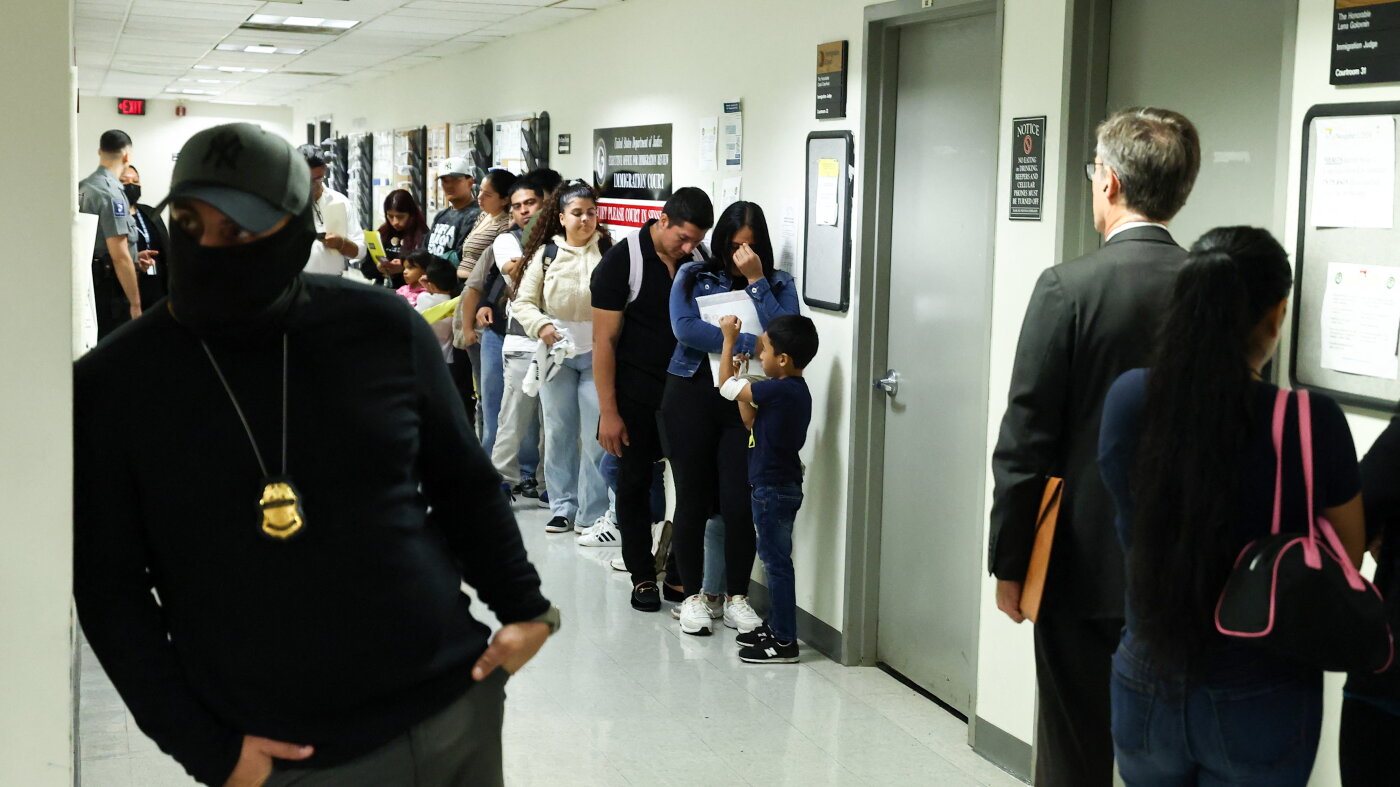
In recent weeks, a sudden shift in the scheduling of immigration hearings has left many immigrants and their legal representatives scrambling. Court appearances scheduled for future dates in Maryland and Virginia have been unexpectedly moved to new locations in Washington, D.C., and Falls Church, Virginia. These buildings are not traditionally used for in-person immigration court hearings.
This development, according to several immigration attorneys, is seen as part of a wider strategy by the Trump administration to expedite deportations by limiting due process for immigrants. Five attorneys shared their insights with NPR, expressing concern over the short notice given to immigrants about their hearings’ new locations.
These last-minute changes are causing confusion, as the new venues do not have established immigration courts. The Washington, D.C., building where some hearings are now scheduled is associated with the Federal Emergency Management Agency rather than the Department of Justice. In some instances, immigrants were not notified of the new venue or date until days before their hearings, with at least two such cases documented by NPR.
Kel White, representing the D.C. chapter of the American Immigration Lawyers Association, attended a hearing at one such location. She described the experience as “the most unusual thing I’ve ever seen” in over 15 years of practice, with the judge and prosecutor appearing remotely while the immigrant was present in person.
“People need to receive at least ten days’ notice in order for there to be a response,” White explained, citing a policy manual that mandates adequate notification for immigrants. She emphasized the risk of immigrants missing their hearings due to insufficient notice, leading to in-absentia removal orders, which permit immediate deportation.
The Executive Office for Immigration Review (EOIR), part of the Justice Department, oversees numerous immigration courts. While EOIR acknowledges scheduling adjustments due to the addition of new immigration judges, they have not clarified the reasons for these new hearing locations.
The Trump administration has focused on reducing the immigration court backlog, which currently stands at approximately 3.5 million cases. As part of this effort, the administration has questioned the necessity of certain judicial procedures, viewing them as barriers to quick deportation.
Unexpected Locations for Immigration Hearings
Attorneys express concern over the latest strategy of moving hearings to unfamiliar locations, which adds to the complexity of an already intricate immigration court system. White attended a hearing at the Falls Church venue, where the setup included remote appearances by a judge and a Homeland Security attorney.
The Falls Church location, typically used for remote hearings, is not a standard courtroom. Similarly, the D.C. venue, set for hearings beginning September 9, lacks DOJ courtrooms and EOIR facilities. The General Services Administration, responsible for government facility management, did not comment on the DOJ’s use of these spaces.
The growing need for space has led to a surge in GSA’s efforts to secure new locations for the DOJ’s immigration court agency. A public request for lease proposals has identified 18 potential sites, each requiring space for at least 10 courtrooms.
Uncertainty and Anxiety Among Immigrants
Some immigrants, relying on apps like MigraConnect to track court cases, have been informed of schedule changes that were not communicated via mail. One immigrant, who remained anonymous, shared how the app alerted them to a rescheduled hearing, avoiding a potential path to deportation.
Normally, immigrants are assigned to courts based on their address, and new courts are announced before case relocations. However, these new hearing sites were not communicated in advance, leading to situations where individuals had to travel across state lines for hearings.
Lucelia Justiniano, another D.C. area attorney, recounted a case where a client was not notified of a change in venue and date. The client, living in Maryland, was moved to Falls Church with less than adequate notice. Justiniano was informed by the court about the new center’s opening only after inquiring.
James Reyes, an attorney with 15 years of experience, noted a similar rescheduling issue for a client whose hearing was moved to Falls Church with just eight days’ notice. After Reyes entered the case, the hearing was abruptly rescheduled back to the Sterling court without a new date.
Efforts to Expedite Deportations
The administration’s rapid issuance of final removal orders has been a part of its broader strategy to manage immigration court cases. The introduction of “mega master calendar” hearings, where over 100 immigrants may be scheduled simultaneously, has contributed to a rise in in-absentia deportation orders.
Immigration lawyers assert that these changes disproportionately affect immigrants without legal representation, especially regarding notification of new hearing dates. In Baltimore, the rate of in-absentia removals for unrepresented immigrants rose from 54% in January to 73% in June, according to Mobile Pathways.
Justiniano, reflecting on the situation, remarked, “It’s just stockpiling things against respondents.” The last-minute venue changes serve as yet another example of the mounting challenges faced by immigrants navigating the court system.
This article was originally written by www.npr.org



Comments are closed.