The Supreme Court Justices’ Financial Disclosures Reveal Diverse Income Sources
While the Supreme Court’s decisions often capture headlines, the justices’ financial disclosures provide a quieter window into their lives outside the courtroom. Released annually, these reports offer a glimpse into their earnings from various sources beyond their judicial salaries.
Justice Samuel Alito, known for consistently requesting extensions, remains the only justice yet to submit his report. Despite this, the released disclosures reveal intriguing details about the justices’ financial interests and extracurricular activities.
Book deals significantly augment the justices’ incomes. Justice Ketanji Brown Jackson has notably earned over $1.1 million last year, accumulating approximately $4 million since her memoir, Lovely One, was published in 2024. Other justices like Sonia Sotomayor, Neil Gorsuch, Amy Coney Barrett, and retired Justice Anthony Kennedy also reported earnings from published works. Barrett’s income reached $849,000, while Gorsuch and Sotomayor reported $300,000 and $88,000, respectively.
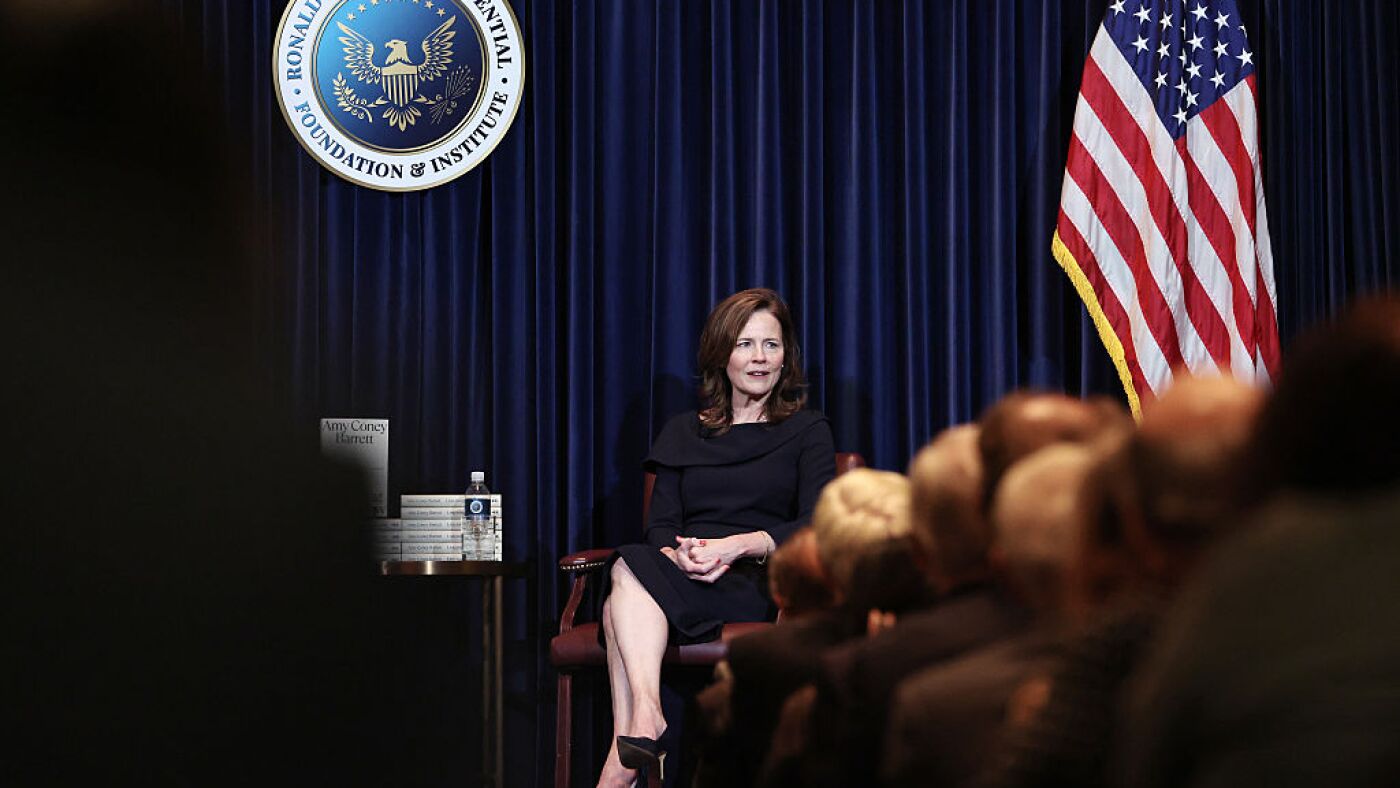
Barrett, who recently spoke at the Reagan Library, continues to engage with the public through her new book, Listening to the Law: Reflections on the Court and Constitution. Meanwhile, Justice Clarence Thomas and Brett Kavanaugh, though previously involved in book projects, reported no new earnings from publishers. Kavanaugh, reportedly working on a memoir, listed no payments for the anticipated work.
Moreover, teaching roles at law schools provide additional income for several justices. Chief Justice John Roberts earned from New England Law in Boston, while Gorsuch reported teaching income from George Mason University. Thomas, Barrett, and Kavanaugh have also been involved in academia, with Barrett and Kavanaugh teaching at Notre Dame Law School.
Beyond their professional engagements, justices also disclosed gifts and travel expenses. Jackson received a $2,500 painting for her chambers, and Sotomayor was gifted a trip to Kansas City for a musical based on her children’s book, Just Ask. Notably, she also reported receiving free tickets from Bad Bunny’s record label during a private trip to Puerto Rico, aligning with the artist’s concert series.
Travel reimbursements were also significant, particularly for international engagements. Justices like Sotomayor, Gorsuch, Barrett, and Jackson traveled abroad for speaking engagements and teaching opportunities. Meanwhile, Justice Thomas’ travel expenses were covered by the Hoover Institution for a speaking event.
The disclosures highlight the justices’ legal salaries, with the chief justice earning $320,700 annually, while associate justices receive $306,600. Despite these substantial figures, the potential earnings outside the court, particularly in large law firms, could be even more lucrative.
Investment strategies among the justices vary. Chief Justice Roberts disclosed investments in individual stocks, contrasting with others who opt for index and mutual funds to avoid conflicts of interest. Alito, previously known to own stocks, has yet to file his report. These financial practices underscore the challenges in fully assessing the justices’ wealth, given the broad reporting ranges and the exclusion of certain financial details like spouses’ incomes and home values.
This article was originally written by www.npr.org